
Higher education has been among the many important institutions of American life that have been targeted by the Trump administration. From pushing for administrators to resign or be fired to rescinding or threatening billions of dollars in federal research funding to threatening to revoke international student visas, President Trump and his allies have sought to significantly curb the independence of colleges and universities.
How are schools preparing for and responding to these threats? What would it mean for federal research money to go away — or to be denied the opportunity to welcome students from around the world? And what do we lose if some of our society’s most important fact- and truth-seeking institutions are pressed to abandon that commitment?
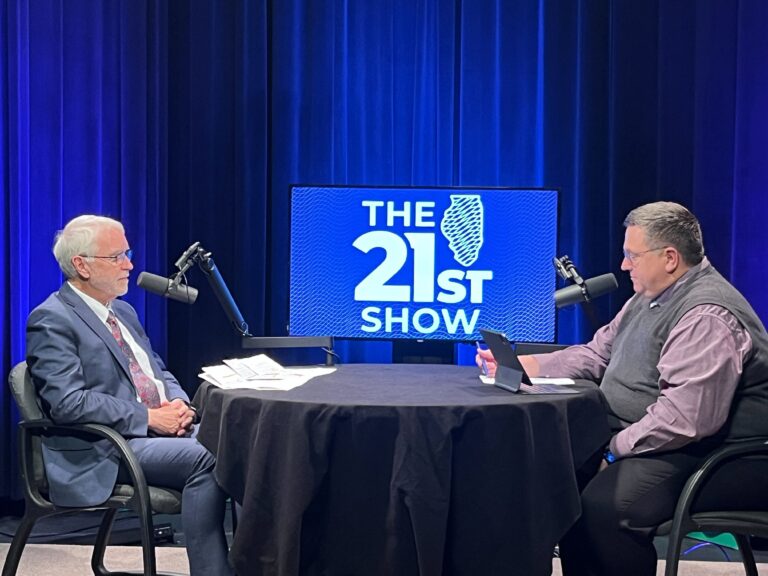
All this and more is on the mind of Tim Killeen, the president of the University of Illinois System. A scientist by training, before becoming an administrator Killeen was a researcher in geophysics — which is a way of studying the earth and the space around it, through things like gravity, magnetism and the like. Killeen sat down with the 21st show last week.
Interview Highlights
On visas for international students
“Visa delays are significant for us. These are international students who have been accepted to our university. They need to get a visa. They need to get an interview in a consulate somewhere internationally. Those have been significantly delayed, but we’re monitoring very closely the internationals student population coming in.”
On academic freedom
“So that’s the thing I would stress, is that if you lose it and you become constrained to whatever the political wind is at the moment, then that that ability to create new knowledge, which has really led to this explosion of capabilities, you know, in the US, you just look at, you know, energy, or it, or digital or whatever it is would be, would be damaged.
On messaging about political issues, foreign affairs, and current events
“We’re cautious about putting out many messages that might be seen as some as overly politicized, or as others as picking winners in a in a world where so we have, we have students of all types. We have lots of Jewish students. You have lots of Palestinians. You have Russian students. We have Ukrainian students. We have faculty of different persuasions… political persuasions.”
On handling changes implemented by the federal government
“I’d say a challenging time for higher education in general. At the University of Illinois, we’ve not been disproportionately affected, but we have been affected and and we’re adjusting to the guidance that’s coming out of the federal establishment paying close attention to it too, with our best thinkers. We’re also working collectively across the big 10. Obviously, we’re working with partners in in professional associations in DC like AC E or APLU, and we’re interacting significantly with peer institutions and professional associations to more deeply understand what’s coming, to predict, to ask the what if questions, frankly, that are needed.”