

Animal activists celebrated what they are calling their first global Sanctuary Day on April 17.
The effort to save farm animals from abuse and to educate the public about factory-farming began 40 years ago with the creation of a shelter called the Farm Sanctuary. Now hundreds of those rescue farms exist in the U.S. and around the world.
The Farm Micro Sanctuary in Indiana is one of more than a dozen farm animal shelters in the Midwest.
Jessica Wallace, who has a degree in equine sciences, bought the four acre property to have a home for her horse. Now, her mission is to provide a safe haven for at risk farm animals, she said, especially those that are older and disabled. Currently, Wallace cares for about 40 animals at the sanctuary – including two horses, chickens and goats.
“About the time that I got involved with the goats was when I went vegan,” she said, “and I started learning more about what happens to chickens and what happens to goats and what happens well to any of it.”
Wallace officially launched The Farm Micro Sanctuary five years ago. One of the goats at the shelter is 15 years old and is receiving extra care.
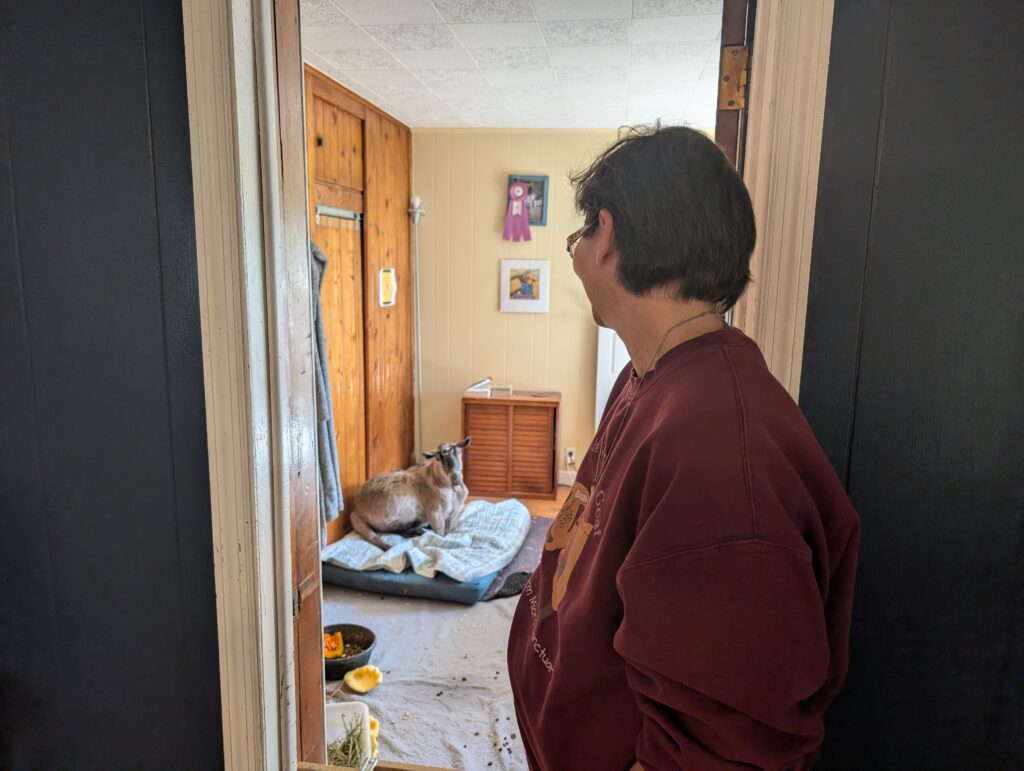
“Lucas is our original goat. He has a wealth of problems,” she said. “We actually consider him hospice care.”
Lucas lives in Wallace’s bedroom, curled up on his own bed next to hers.
“I know nobody else in the world that has chickens in their living room, but I do,” Wallace said, as she walked into the room filled with makeshift coops. “These are all of our special needs and older chickens.”
One of the chickens, Nigel, was born with a condition that caused physical disabilities.
“Nigel here has some leg deformities, and also he has a heart murmur,” Wallace said. “So he actually has his own cardiologist.”
She has saved more than 100 animals since she became involved in the sanctuary movement. Some came from hoarding situations or factory farms – large scale industrial facilities that raise thousands of animals in confined indoor settings. Some were simply abandoned, she said, like Quincy, the sanctuary’s lone quail.
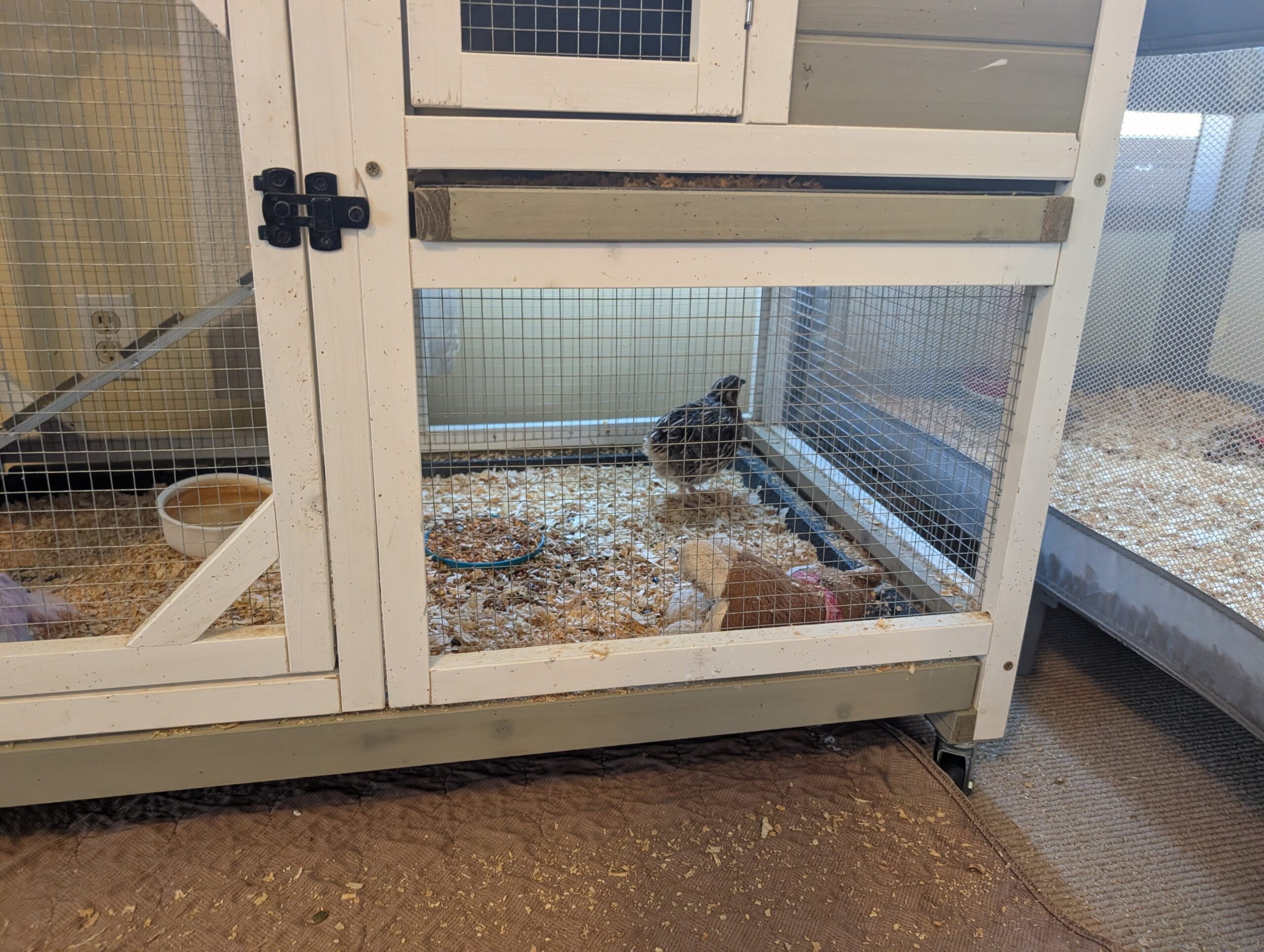 Quincy is a quail that was abandoned by his original owner. He hops around his coop at The Farm Micro Sanctuary on April 8, 2026.
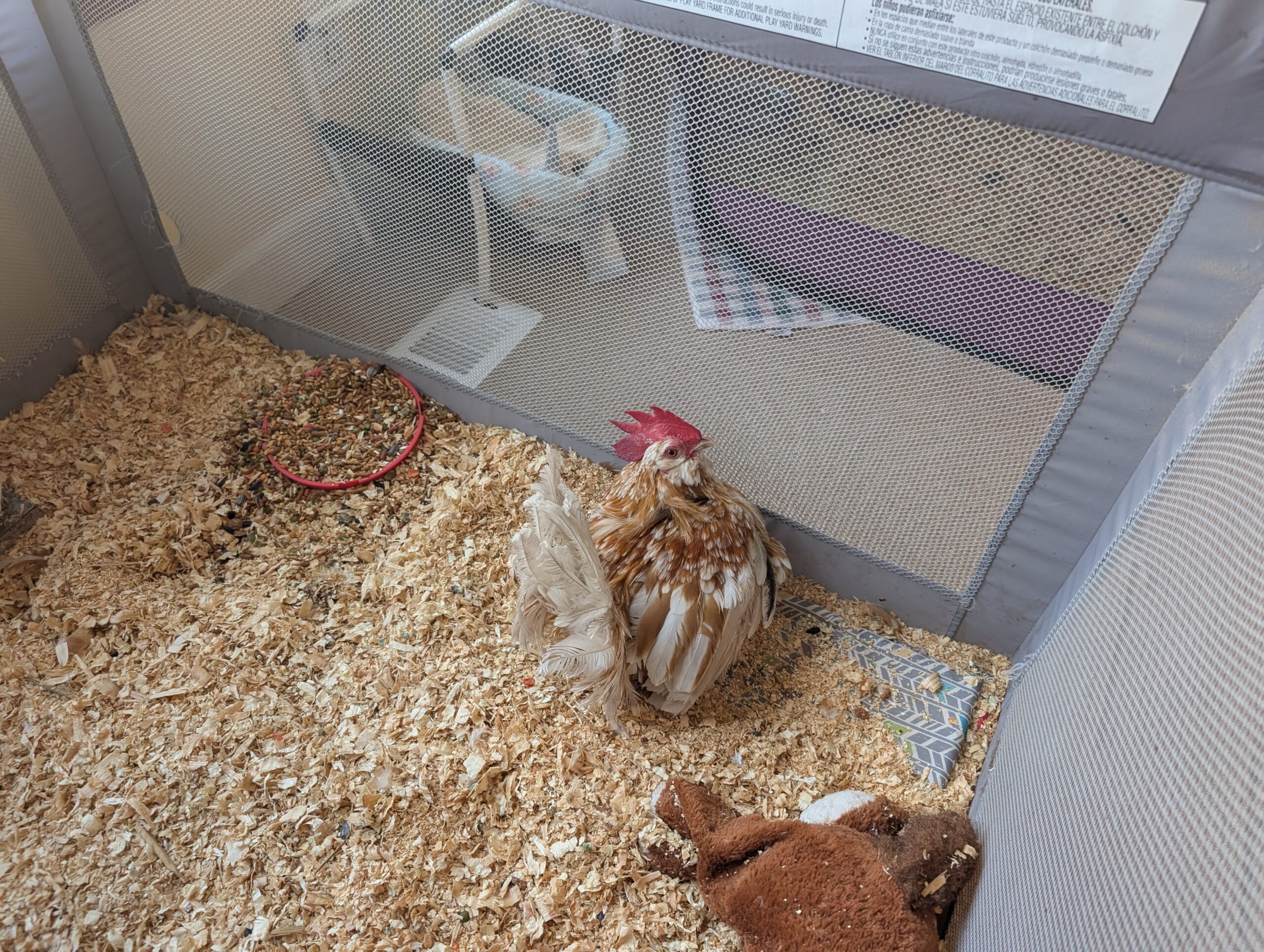 Nigel the chicken was born with leg deformities and a heart murmur. He sits in his makeshift coop in Jessica Wallace’s living room on The Farm Micro Sanctuary on April 8, 2026.
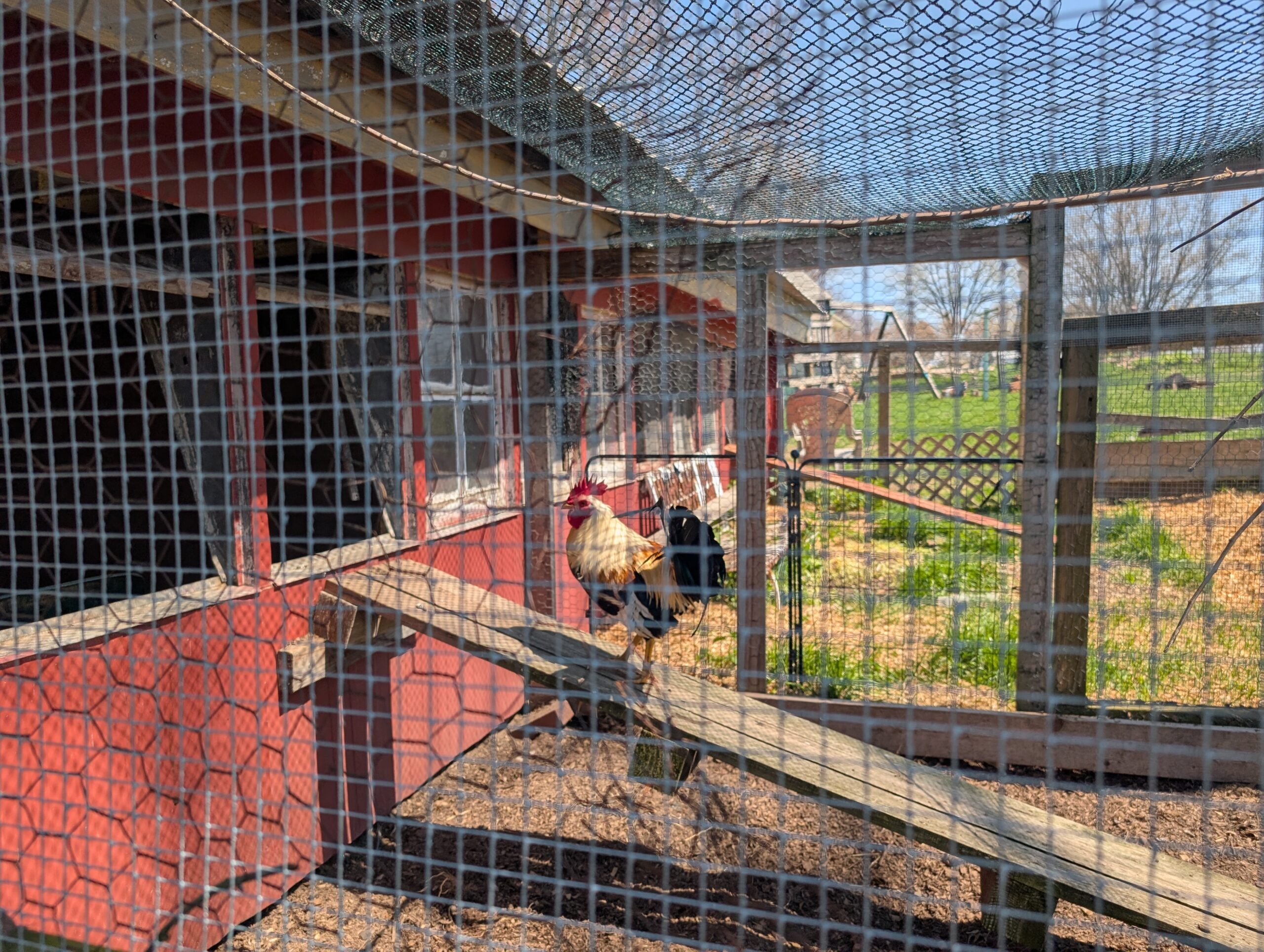 Joe is a rooster who was rescued from a cock fighting ring. He walks around his coop at The Farm Micro Sanctuary on April 8, 2026.
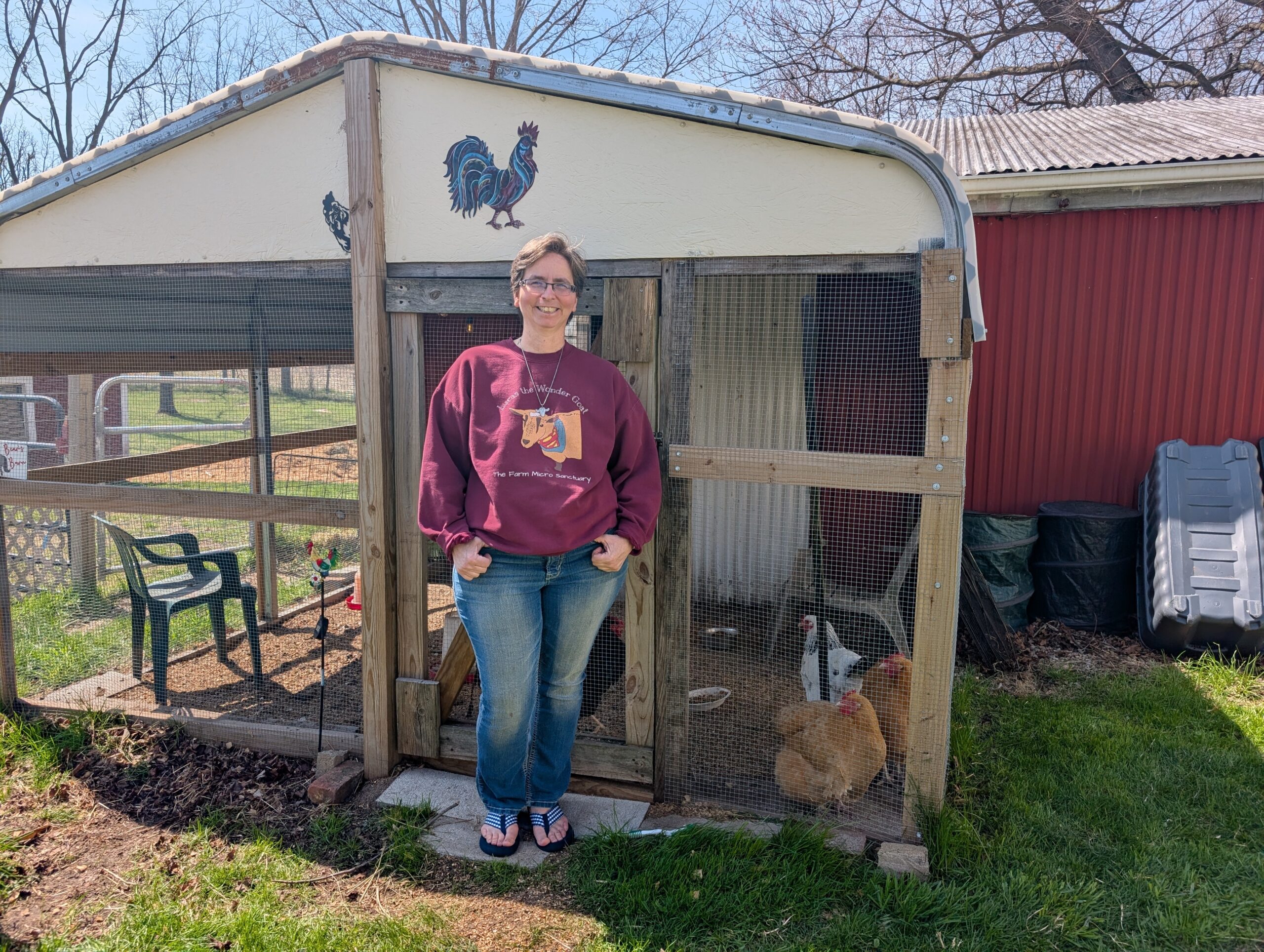 Jessica Wallace stands in front of the chicken coop at The Farm Micro Sanctuary on April 8, 2026.
“Somebody had moved out of the house, and the water department in that town actually found him,” Wallace said. “They had left this flock in their garage, and he was the only survivor.”
The farm sanctuary movement began in the 1980’s. That’s when Gene Baur opened what was considered the first shelter for farm animals in the U.S., the Farm Sanctuary.
“We were a small, all volunteer organization, and we had very little funding,” he said. “And the way we funded the organization was by selling vegan hotdogs out of our Volkswagen van at Grateful Dead shows.”
The advent of rescue groups created a political tug of war between animal activists and agribusiness, which focuses on scaling up the number of livestock for food. Early on, the Farm Sanctuary worked to show the negative impact of factory farming, Baur said, by investigating what was happening at stockyards and in farming operations.
“We would find living animals literally thrown in trashcans or left on piles of dead animals, so we started rescuing them,” he said. “And that’s how our sanctuaries began.”
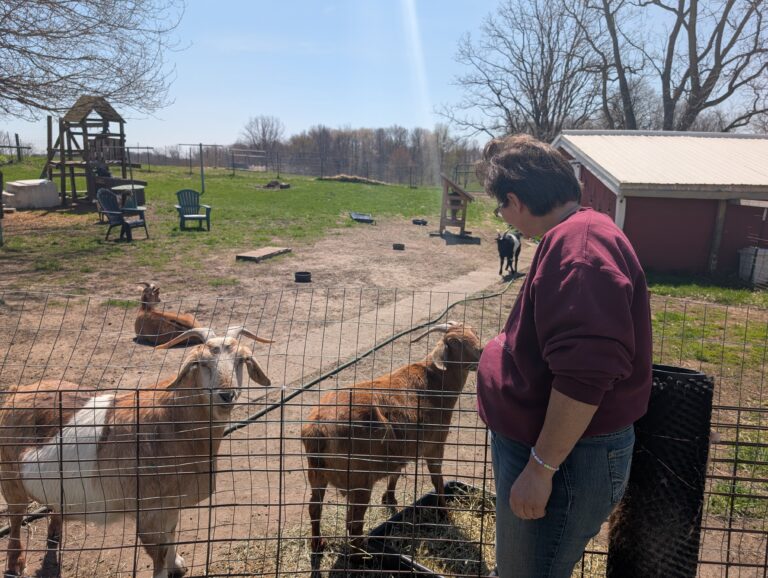
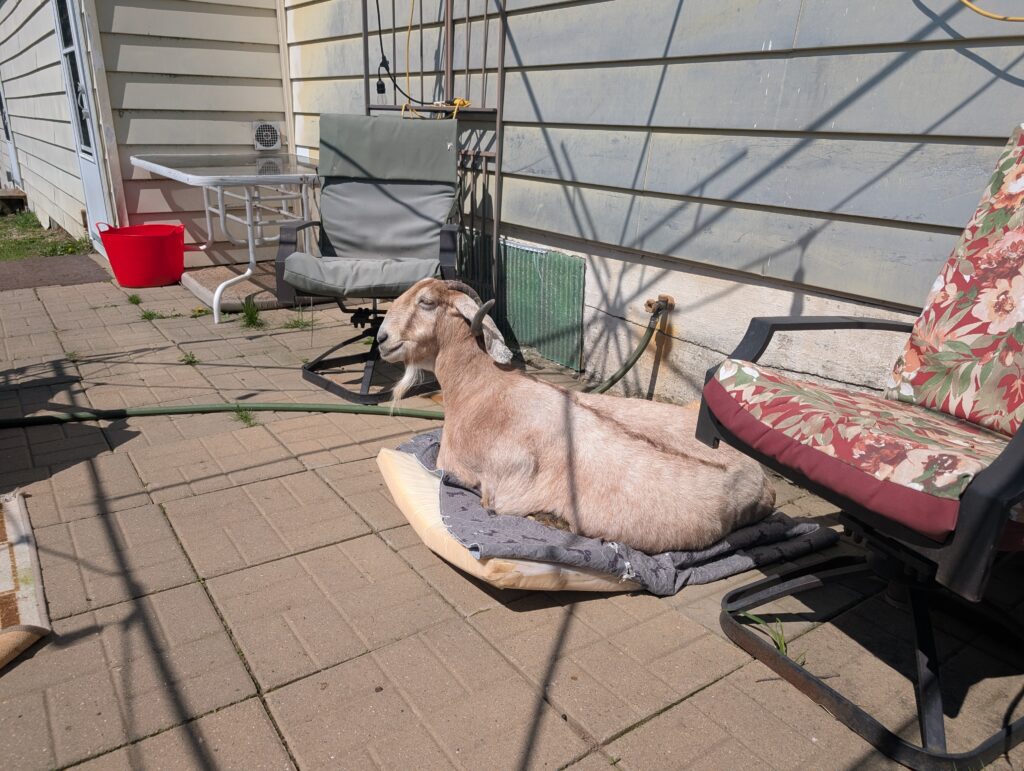 The Farm Micro Sanctuary in Indiana is one of more than a dozen farm animal shelters in the Midwest.
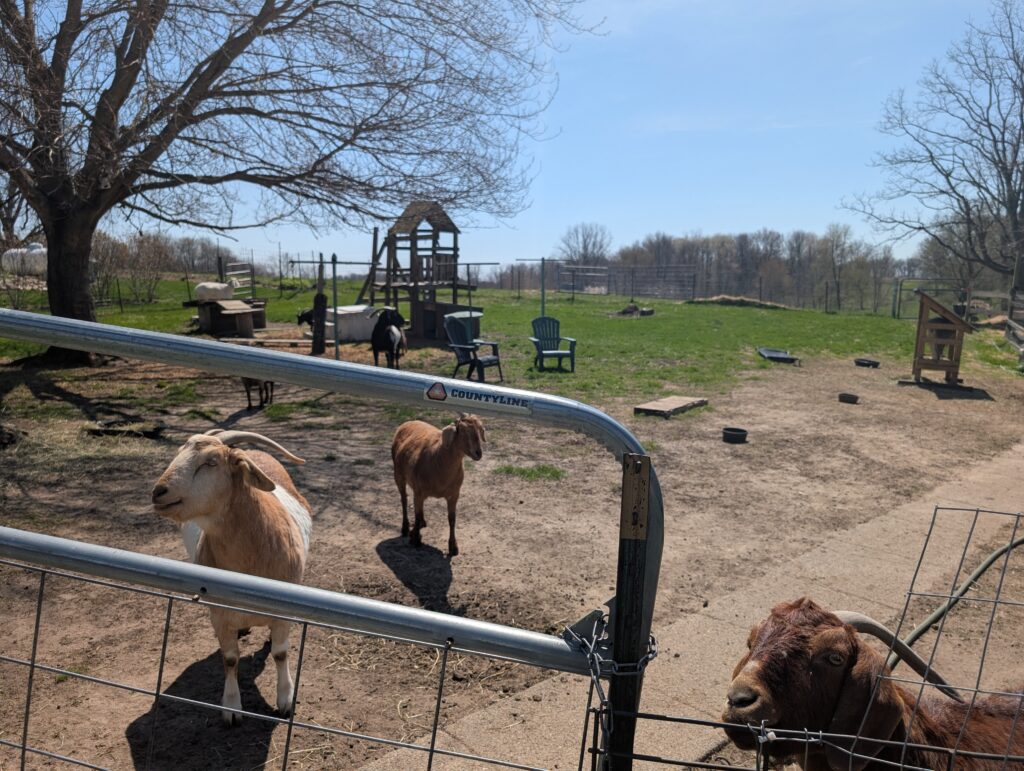 Goats run up to the gate at The Farm Micro Sanctuary on April 8, 2026.
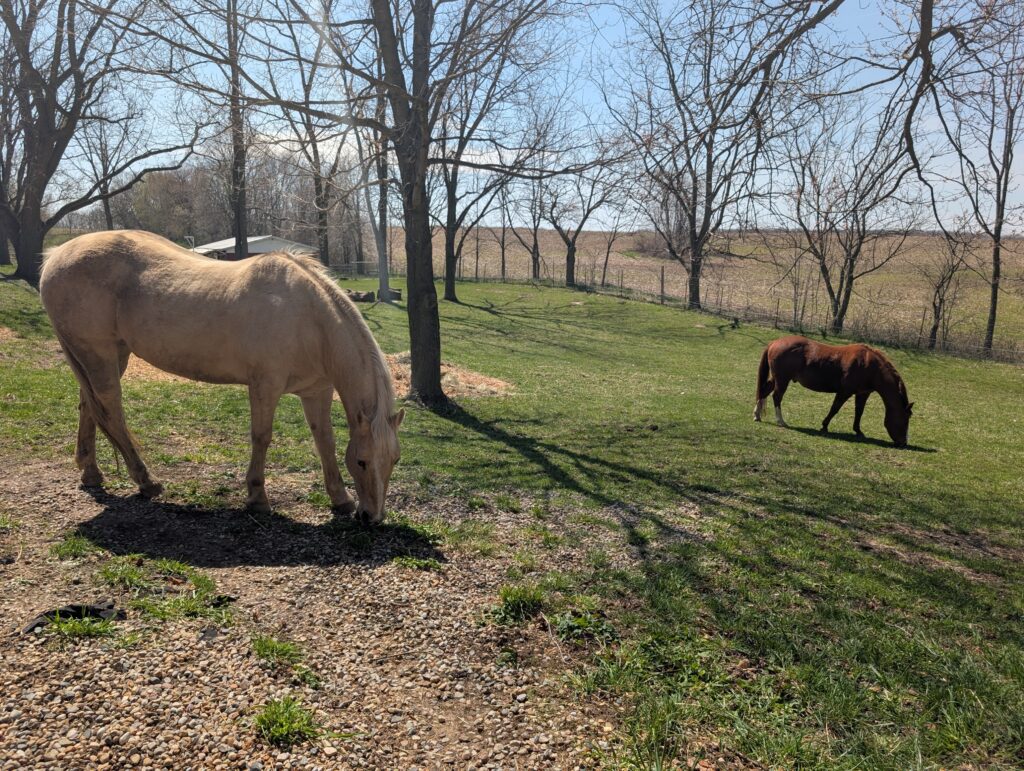 Horses Queso (left) and Tuff (right) graze in their pasture on April 8, 2026.
Since that time, at least 15 states have banned different forms of extreme confinement for farm animals, according to the American Society for the Prevention of Cruelty to Animals. Baur said such laws are critical. Beyond animal abuse, he argues the damage caused by factory farming is wide ranging – from poor working conditions for employees to elevated greenhouse gases.
“The goal of ours is just to let people recognize that when you treat somebody else with kindness, farm animals in our case, it’s not only good for the animals, it’s also good for us,” he explained.
Beyond state level protection, federal animal welfare laws do not go far enough to protect farm animals, according to Baur.
“There is the humane slaughter law that theoretically protects farm animals from cruelty, but it excludes poultry, which make up over 95% of the animals killed,” he said. “So all of those birds are excluded from the federal humane slaughter law.”
There’s been pushback from agribusiness giants and other farming groups who say the actions of activist groups affect farmers and ranchers’ ability to provide safe and affordable animal products.
Even so, just last month, a federal judge dismissed the Department of Justice’s challenge to a California law, which set minimum space requirements for farm animals and prohibited the sale of eggs and meat from animals confined in ways that didn’t meet the standard. The Trump administration had argued the law placed too much of a burden on farmers and raised egg prices for consumers. The judge said the DOJ lacked standing to bring the case.
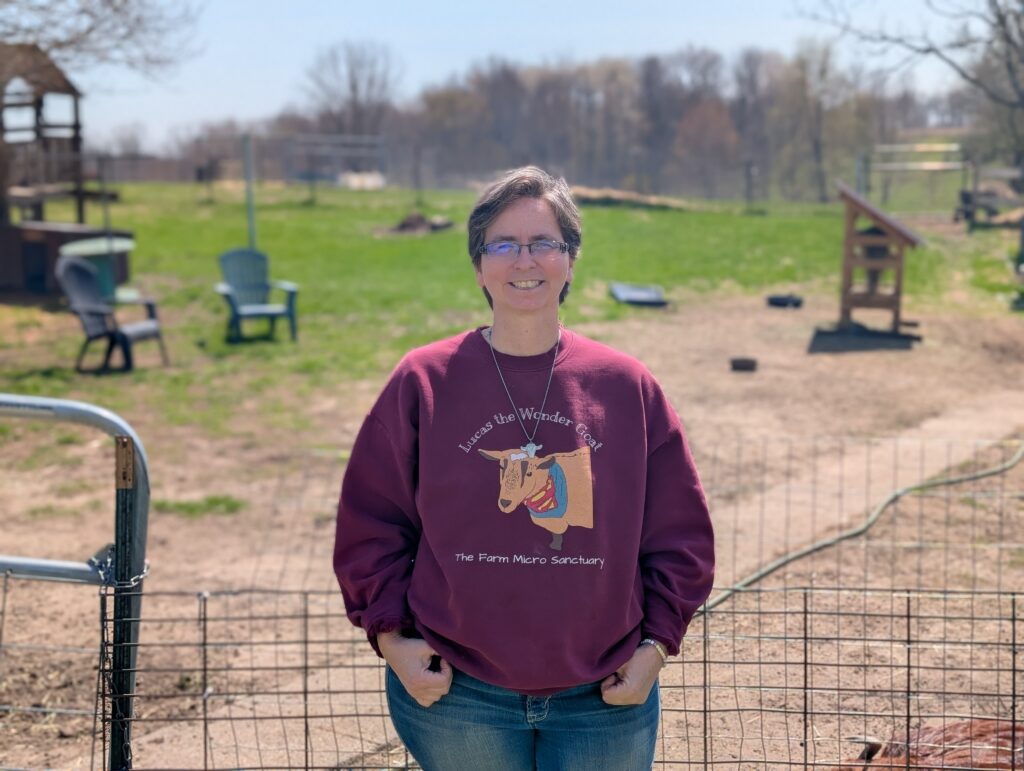
Back at The Farm Micro Sanctuary, Wallace hopes she can help people make the connection between animals and the food on their plate.
“So many people, especially people that live in the city and aren’t around it, don’t make that connection,” she said.
She’s hoping visitors can fully realize why farm animals deserve compassionate care instead of ending up as food during global Sanctuary Day and every day.
This story originally aired on NPR on April 17, 2026.