

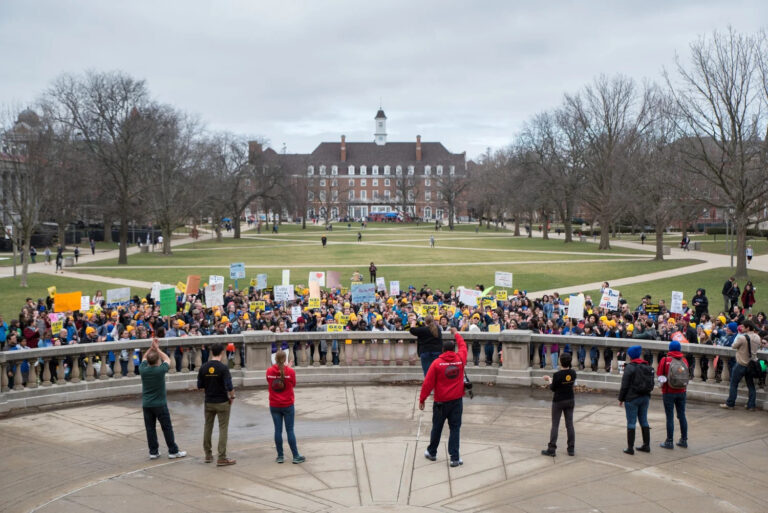
Research assistants at the University of Illinois Urbana-Champaign are now represented by the Graduate Employees’ Organization, or GEO, after the Illinois Educational Labor Relations Board certified the results of a recent union election.
The certification means RAs are now legally recognized as employees represented by the GEO and can be added to the union’s contract in upcoming negotiations with the university. Once included in the existing agreement, RAs will be able to collectively bargain for benefits.
Before the certification, the benefits of the collective bargaining agreement only applied to teaching assistants, graduate assistants and pre-professional graduate assistants.
The RA unionization campaign was led by a team of graduate students, including Xenia Osterhout and Arthur Paganini. Both students were involved in face-to-face outreach, campaign planning and organizing events throughout the year.
Paganini said conversations were essential in building trust, especially when many graduate workers were worried about funding, visa status and job security.
“These can be difficult conversations. They can be easy. They can be good. They can be bad conversations,” he said. “But the important thing is having the conversation because that conversation is how you build. That’s really what the union is in a lot of ways—the union is the conversations between members.”
Talking to research assistants also helped them understand their rights, their role in the workplace and how unionization could address shared concerns, Paganini said.
With federal threats to higher education and research funding, Osterhout said protections for graduate researchers were urgent.
“Without a union, we don’t feel confident,” he added. “We don’t feel safe that the university administration is going to protect the quality and quantity of research being conducted at this university, or that they’re going to protect our livelihoods as the university’s employees—who are carrying out the essential functions of this university.”
Adding RAs to the contract, organizers said, is expected to improve transparency and equity in funding, benefits and workload expectations. It will also give RAs access to a grievance process and the ability to negotiate their health insurance, pay and work conditions.
Patrick Wade, the university’s director of executive communications and issues, said in an email to IPM News that “Labor and Employee Relations staff will work with union leaders to include research assistants similar to the process followed when pre-professional graduate assistants were incorporated into the agreement last year.”
Negotiations between the GEO and the university to add research assistants to the contract begin next month.
The GEO will begin preparing for full contract bargaining ahead of the agreement’s expiration next year. The union will continue to gather feedback from its members to ensure their concerns are addressed, according to Paganini.
“It’s not like five people will sit in a room and make a decision and that’s it,” he said. “We’re really committed to involving as many members as possible in the decision-making process.”