

CHAMPAIGN — The Iranian community in the U.S. is watching closely as the U.S.-Israel war in Iran continues to drag on.
Among Iranians in the Champaign-Urbana area, there are a variety of perspectives on the war.
Some say they support the war to get rid of the violent Iranian regime. Others are not as hopeful, citing numerous examples of failed external military interventions for democratization of the Middle East.
Regardless of their stance on the war, many say they feel silenced by those who disagree with them.
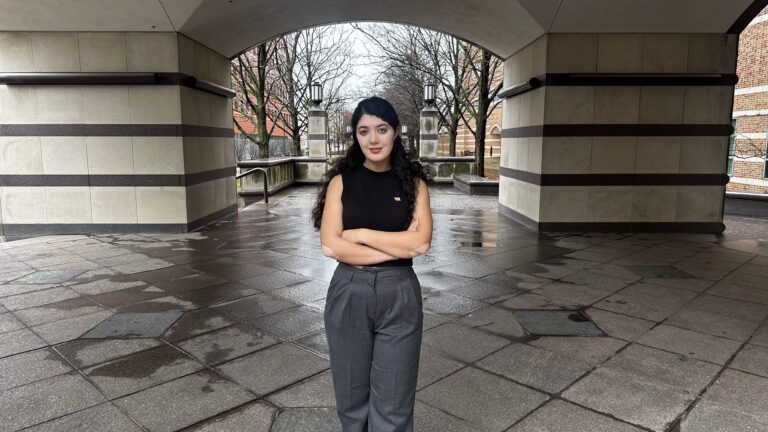
Melika Shekari, 25, said she receives messages from strangers online calling her a Zionist and a warmonger.
Pozhhan Mokhtari, 42, found his face on a list of people to be executed after the regime falls.
Shekari and Mokthhari both grew up in Iran and fled the same regime. They’re both aware of the risks they face for going public with their stance on the war, but feel compelled to speak out nonetheless.
‘Now, finally, this help is here’
Shekari left Iran on a student visa in 2023 and is now a doctoral student in computational biophysics at the University of Illinois Urbana-Champaign.
Since she has spoken out in support of the Iran war, Shekari said she cannot go back without risking jail, or even death, at the hands of the Iranian regime.
In her office at the Beckman Institute, the bulletin board next to her desk is blank except for one photograph, which she printed from a news story online about Iranians being killed by their own leaders.
It shows a woman with her arms around her dead sister’s body in a black cadaver bag.
“This regime has ruined a lot of relationships,” she said. “A sister holding the body of her sister. As a girl who hasn’t seen her own sister in a long time, I truly feel her pain, and that’s why I put her picture here, because I didn’t want to forget.”
On Dec. 28, 2025, the protesting movement started in Tehran and then spread nationwide.
After the Iranian regime killed thousands of protesters in January, Shekari watched everyone she loved go hollow.
For instance, her mother used to love the rain, which is rare in Ahvaz, in the southern part of Iran where she’s from. So whenever the rain came, she said her mom would stand outside and celebrate it — but now, that’s changed.
“She told me that she doesn’t like the rain anymore,” Shekari said. “She always thinks about the fact that this rain is washing the blood of the kids from the streets.”
She said her close friend in Iran fell into severe depression and stopped sleeping.
But then, when the U.S. and Israel attacks on Iran began, he called her and Shekari said she saw him come back to life.
“‘Now, I have so many dreams for the future,’” she recalled him saying. “‘There’s a lot of things I want to do. I don’t want to die anymore.’”
Most nights now, Shekari said she can’t sleep either. The internet blackout in Iran means she only hears from her family when they call her via landline.
The night before IPM’s interview with Shekari, the call connected for a few minutes, then Shekari heard strikes in the background, then the line went silent. She waited until morning to find out her family was okay.
Family is one of the main reasons Shekari said she advocates for regime change — and even for war, if the ends justify the means.
She said she constantly thinks about her young cousins in Iran; They’re twins and still children. The last time she saw them they were newborns. One of them is a girl.
“I don’t want her to experience what I have experienced,” she said. “I don’t want her to have the life I was forced to have. All I want is a better life for them and for all of the other Iranian kids.”
Under Iranian law, she said, a woman’s life is worth half as much as a man’s, and a woman’s testimony is considered half the weight of a man’s.
While Shekari doesn’t think war is good, she sees the hope it’s bringing to so many people.
“All these years we have realized that there’s nothing, there’s no way for us to get rid of this brutal regime and this dictatorship and live a free life unless somebody helps us,” she said. “Now, finally, this help is here, and even though that is scary, we are hopeful.”
Iranian student groups have organized gatherings showing support for the war in Iran in March, shortly after the killing of Iranian Supreme Leader Ayatollah Ali Khamenei.
‘Everything should happen from the inside’
While some Iranians in the U.S. feel hopeful about the war, Pozhhan Mokhtari said he does not share this sentiment.
Mokhtari, a postdoctoral researcher at the U of I studying materials science, said his entire family is still in Iran.
While he shares Shekari’s strong opposition to the current Iranian regime, he is strictly anti-war.
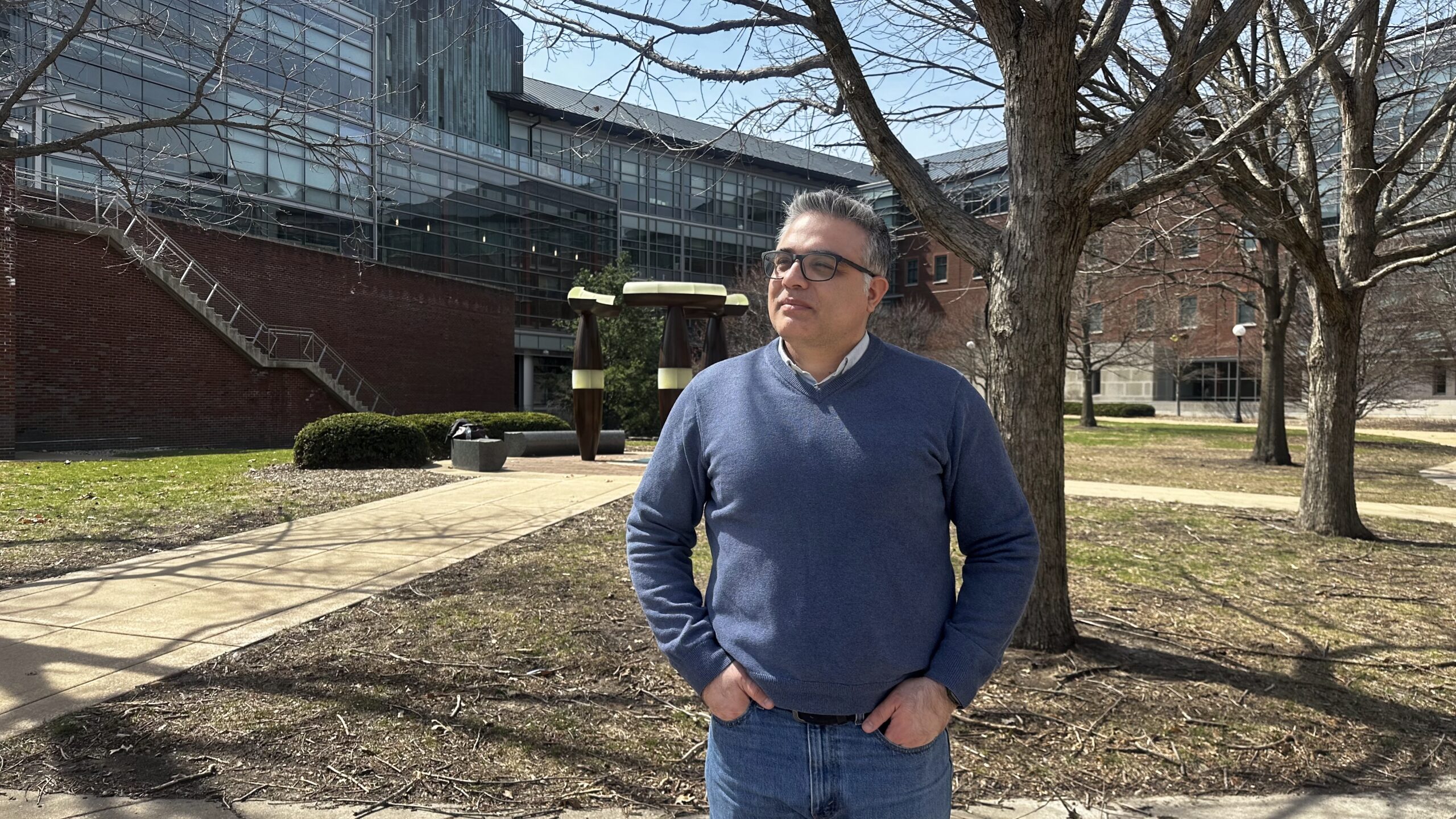
He said he’s been paying the price for his political views for over two decades. It all started when he was a student in Azad University in Tehran, where he was an activist.
He organized students and launched campaigns and said he spent 50 days in jail. When he was released, he said his interrogator gave him a simple message: “Leave this country and go anywhere… This country is ours, not yours.”
He said he’s been in exile since he left Iran in 2009: doing research in Turkey, the Netherlands, and now Illinois.
However, he understands why some Iranians tolerate or even support the war.
“The answer lies partly in a deep social and psychological exhaustion that has built up over 47 years,” he said. “Political monopoly, religious oppression, systematic corruption, violence.”
But he said history shows that military interventions in the Middle East, like in Iraq and Syria, failed to achieve what was promised, and he believes Iran won’t be an exception.
“It’s not going to end up with democracy,” he said. ”Everything should happen from the inside – It takes time.”
Other Iranians in the C-U area who also oppose the war told IPM News they didn’t want to go on the record, afraid to speak out against the actions of the Trump administration.
Mokthari said he is speaking out publicly for the same reason he protested back in Iran – he feels responsible for his homeland and family.
What does it take to bring about lasting change?
The idea that change needs to come from within is supported by research, according to Faranak Miraftab, who has spent decades studying how communities that are ignored by those in power find ways to help themselves.
Miraftab is a professor of urban and regional planning at the U of I and an Iran native. Her research is focused on Global South, particularly on post-apartheid South Africa and Latin America.
In her work, she has followed marginalized communities as they organized to resist and reshape the systems working against them.
She calls this radical care: the idea that the same everyday practices that keep a community alive, like growing food or looking out for one another, can also become the foundation for a deeper and more serious political change.
According to Faranak, history shows lasting change typically doesn’t come from outside intervention, but rather is most effective when it grows among the people within, through “practices of people educating themselves, learning, and transformations from below.”
That’s why she said she doesn’t believe that this war will liberate Iran.
“No external force… of course not through military intervention and dropping of bombs… can liberate people,” Faranak said. “We have seen this in Afghanistan. We have seen this in Iraq. And I don’t expect Iran to be an exception.”
Slow, community-built change, she said, can give people not only a new government, but also the power to shape what’s next.
Still feeling silenced
Shekari and Mokhtari both condemned the regime and paid for it personally.
Now, they both feel they’re being told that their voice doesn’t belong by people who disagree with them.
When Shekari posts online or makes comments about the war, she said she is told that she doesn’t understand what she’s talking about, that war and imperialism are bad.
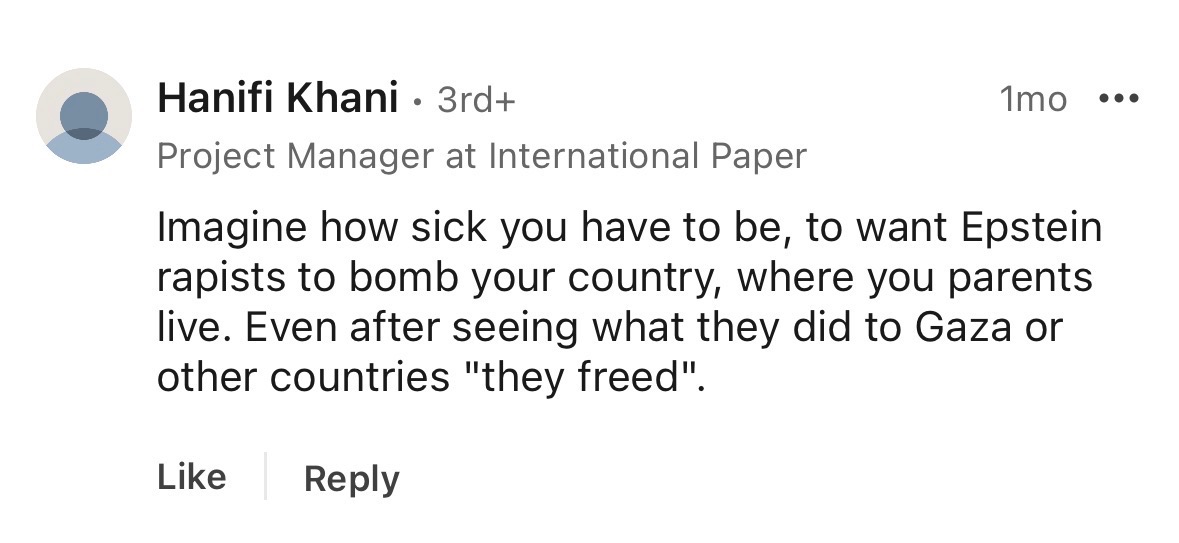
“How can you think that you can give us morality lessons?” she said. “We have seen our classmates, our friends being shot, being arrested. We have seen that, we have walked in the streets that are covered in blood.”
She blocks most of the accounts now, but some comments and direct messages still reach her.
One person told her to change her name to Karen. Another wrote: “Pay for it yourself, why am I forced to pay for your illegal regime change?”
“It really hurts,” Shekari said. “This war directly is hurting me, I can’t sleep at night… My family is there. Everybody I knew, all of my friends — they are there. And being told ‘you’re pro-violence’ or ‘you’re happy about what’s happening in Iran’ hurts so much.”
Mokhtari said shortly before the war broke out, he went to a protest in Chicago and carried signs that said, “no to war,” “no to military intervention,” “yes to revolution,” and “yes to Woman, Life, Freedom movement.”
He said someone got a picture of him that later appeared on a website listing people to be dealt with by the next leaders of Iran.
Mokthari said by opposing it, he’s wrongly labeled as someone who supports the current regime.
“They gathered information about me as a person who should be executed after the revolution,” Mokhtari said.
For Shekari, being silenced in the U.S. hits hard, because she knows what it feels like to have no voice at all.
“In Iran, if you oppose the government, they say you are fighting with God,” she said. “The punishment for fighting with God is to be hanged, so you have no voice inside Iran.
“That’s why I feel responsible for talking here, responsible to say what I know, to tell the world what I have experienced.”
The Iran of their dreams
Shekari said she allows herself to imagine what Iran could be after the revolution.
It wasn’t until she came to the U.S. several years ago that she said she tasted freedom for the first time.
“I finally realized how bad life in Iran actually was,” she said. “Now that I had the chance to live in a free country, I wish that for all of my people.”
Shekari believes that after the regime falls, Iranians will build the new country fast — if they are given a chance.
“Iran is such a beautiful country,” she said. “The nature, the history — it has everything — and I think if we finally have a good relationship with the world, it would be a fantastic place to travel.”
Shekari said she would love to contribute to this new Iran, as an educator.
“If one day I was successful in what I’m doing, I would definitely support the Iranians who want to do research and who want to do science,” she said. “I will definitely try to help them as much as I can with funding them… with supporting them, teaching them.”
Mokhtari’s dream looks different, but it starts the same: with the people of Iran.
He said the Woman, Life, Freedom movement is proof of what Iranians can build on their own.
Ten years ago, he said, no one could have imagined women openly rejecting the dress code on the streets of Tehran. Yet, they did it.
“We need to return to that paradigm,” he said. “We need life. And for this life, we need to fight by ourselves.”