

The Hantavirus outbreak on a Dutch cruise ship in the Atlantic Ocean was first documented last month. The situation has continued to escalate with three deaths linked to that outbreak. Countries from across the world have picked up their citizens and put them in quarantine. According to the Centers for Disease Control, there were 18 American passengers on the cruise ship.
Sixteen were taken to the University of Nebraska Medical Center in Omaha, and two others were taken to Emory University’s regional pathogen Treatment Center in Atlanta, Georgia. The Illinois Department of Public Health said last week it was investigating someone in Winnebago County that was believed to have contracted Hantavirus. However, in an update, IDPH said Monday that the individual is “no longer considered a potential case of Hantavirus and no further public health action is needed” based on testing from the Centers for Disease Control and Prevention.
IDPH also said in its latest statement that the risk of contracting Hantavirus remains very low for Illinoisans. Dr. Vidya Sundareshan, professor and Chief of Infectious Diseases at Southern Illinois University School of Medicine and medical advisor for Sangamon County Department of Public Health and Dr. Mamadou Tounkara, a public health administrator for the Champaign-Urbana Public Health District joined the 21st Show. They discussed how people can get exposed to Hantavirus and what protective measures are helpful.
Interview Highlights
On origin of Hantavirus
SUNDARESHAN: “This is not new. It was first recognized in the 1930s and 1940s here in the United States. The first time it was really consolidated as a notifiable disease was in 1995. Before that, in 1993, they did have a few cases of Hantavirus that was not really the Andes type. Andes type is also not new. It is prevalent in South America, predominantly in Argentina and Chile, and that’s where this originated. And what is different about this type of virus is that there is a potential human-to-human transmission.”
On exposure
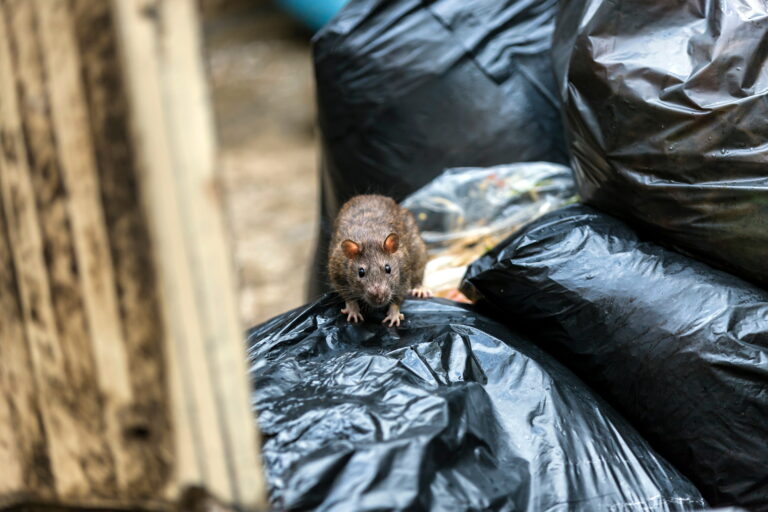
TOUNKARA: “Hantavirus can occur in anyone that is exposed to the virus, and the exposure to the virus — like we said earlier — is with saliva, urine, or droppings of rodents, or nesting material. So people that are high risk for exposure to this [are on] farms, [in] areas where there’s heavy rodent infestation.”
On protocol for rats carrying Hantavirus
TOUNKARA: “Any type of animal that can potentially carry diseases — we call them vector-borne diseases, because the animal is the vector and they will carry the disease to humans — so we really work closely with our animal control. And if there are any suspected, suspicious cases, they reach out to us and we’ll do investigation and do testing, just to make sure that we don’t see anything that will take us by surprise.”
On how to safely clean rat droppings in home
SUNDARESHAN: “First off, personal protection with rubber gloves. And to make sure that you are spraying with a disinfectant — if you don’t have an effective disinfectant, bleach is a great way to disinfect the droppings. You don’t want to sweep them or vacuum them, because that carries a risk of aerosolization if these are infected. And definitely, if it is a heavy infestation, seeking some professional help if possible.”