

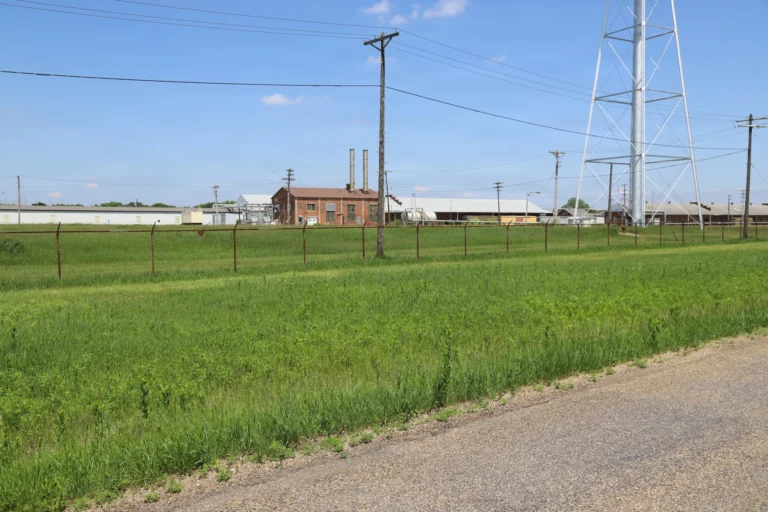
MIDDLETOWN, IOWA – The detonation of lead azide at an army ammunition plant in Middletown Iowa Wednesday morning was a success, according to officials.
The Army originally announced the detonation of the weapons material would occur Nov. 20. After backlash from residents, politicians and environmental advocates, the blast was scheduled for Nov. 23, when it was delayed again by a federal court granting an emergency motion to pause the demolition after environmental groups filed a lawsuit. A three-judge panel of the 8th U.S. Circuit Court of Appeals later cleared the way for the detonation to occur, and it was rescheduled for Wednesday morning.
The Federal Emergency Management Agency recommended Iowa residents within a five-mile radius of the detonation to evacuate until the Army gives the all clear.
Now, after the blast, there are zero detections of airborne lead, according to a press release from the U.S. Department of Agriculture.
“I am so grateful initial assessments have determined that this morning’s controlled mitigation efforts have been successful,” Secretary of Agriculture Brooke Rollins said in the press release. “USDA will continue to surge any resources needed to the Middletown area and will support and communicate with our farmers and ranchers in the coming days and weeks. I want to thank President [Donald] Trump and all our partners for not ignoring this situation and for taking action to keep our producers safe.”
The detonation should also not have an impact to soil in the Midwest, according to experts.
“I think this is basically no risk to soil or to water for contamination,” Andrew Margenot, a soil science professor at the University of Illinois Urbana-Champaign, said.
The amount of lead azide that was detonated is so small that it won’t make a difference to soil health and it will dilute as the plume spreads, he added.
“Lead is in everything. We ate it for breakfast. It’s a facetious thing,” Margenot explained. “It’s more that the dose makes the poison, so soils in Illinois, really in the U.S., have a natural background. They just naturally contain a 20 parts per million concentration of lead.”
Two hundred parts per million concentration of lead in soil is the threshold for an inhalation risk, according to the U.S. Environmental Protection Agency.
“You would have to ten times increase the lead of soil for there to be an inhalation risk,” Margenot said.
Still, the federal government tested soil from the impacted areas before the detonation and will continue to do so, Major General Eric Shirley said at a Tuesday press conference.
“We have undergone a series of, in coordination with the EPA, data collection and sampling to establish pre-detonation baseline and that will be followed by aggressive sampling,” he stated.
Researchers from UIUC will be on the ground to assist with the sampling, officials said.
USDA staff are available to support farmers and ensure the food supply chain is safe, according to officials. However, the likelihood of the detonation impacting crops is also small, Margenot said.
“You have to more than 20 to 50 times increase the amount of lead in soil for there to be detectably higher uptake by crops.”
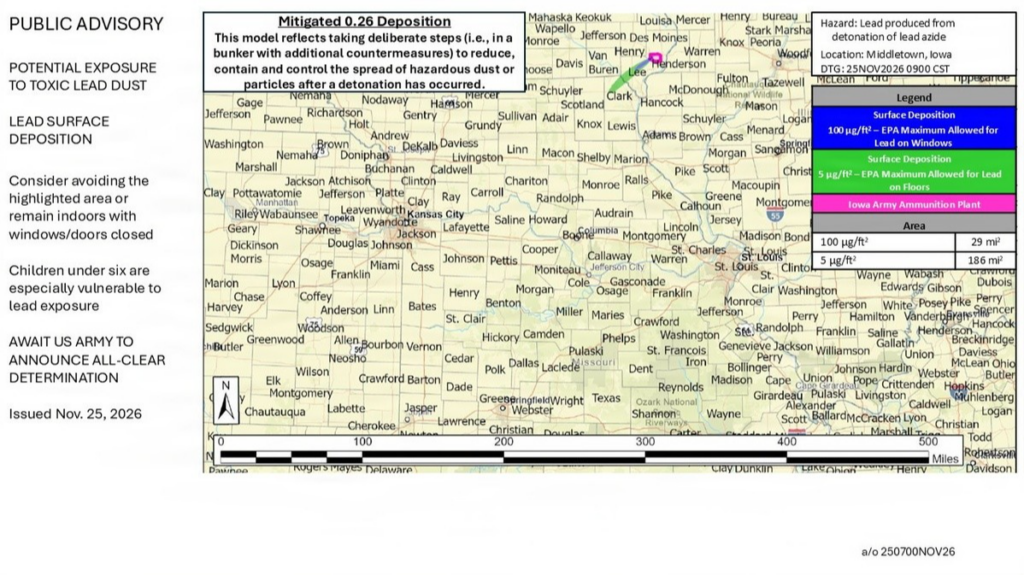
Although initial maps projected the lead may spread to central Illinois, the latest projections show the particles spreading southwest toward Missouri.
Margenot hopes discussions about lead will bring attention to the issue of high concentrations of lead in Chicago’s soil, which he studies.
“We have bigger fish to fry. I think it’s important that lead is in the spotlight now for a hot minute,” he said. “I would hope it would give our leaders some pause on there is communities that are afflicted by lead in soil, and they’re not near this plume.”