

If you or someone you know is in crisis, please call, text or chat with the Suicide and Crisis Lifeline, 988.
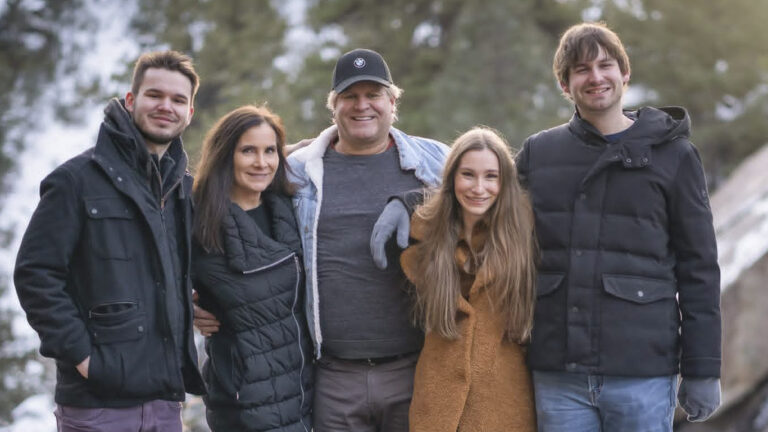
MACOMB — Solomon Hamm was born into a farm family in western Illinois.
Back in the ‘80s, before Solomon was born, his dad, Danny Hamm, was in college studying political science. But he had to drop out of school suddenly to help his family run their farm full-time.
“My dad never wanted to be a farmer, really,” Solomon said. “He was kind of forced into that by his family… because his dad had a heart attack, and they were making it his duty to take over his farm and everything.”
Solomon, who now works in IT in Champaign, said he remembers feeling the financial burden his family faced due to the tough nature of running a farm.
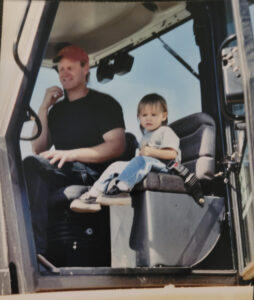
“You take on a lot of debt from all that equipment, and you’re harvesting crops, which there’s a litany of things that can go wrong,” he said. “There was that kind of feeling of instability just due to external stresses I couldn’t fully comprehend at the time.”
The family filed bankruptcy in 2002, which caused additional stress on Danny, and it was a struggle to find mental health support for him. Danny left farming and went from job to job in sales. He died from suicide in 2022.
Farmers have one of the highest suicide rates in the U.S. of any occupation — more than three times higher than the general population, according to the National Rural Health Association. And in rural communities, suicide rates tend to be higher than in urban areas.
With prices on the rise due to factors such as tariffs and the Iran war, it’s a challenging time for many U.S. farmers. Mental health initiatives, like the Farm Family Resource Center based in southern Illinois aim to help, which is good news to Mark Hortin, a corn and soybean farmer in Champaign County.
“I just know people that are having a lot of struggle and don’t have anyone to talk to. It’s a super lonely place, and it’s a dangerous place, and we don’t want that out here in the farm community,” Hortin said.
The Hamm family’s story
In 2002, the Hamms were notified that the bank was going to foreclose on their farm, according to Danny’s wife, Gisele Hamm.
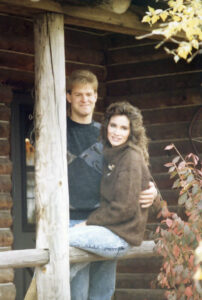
They hired a lawyer who recommended that they file for bankruptcy to reorganize their debts, she said. And her husband took this news hard.
“That’s kind of a hard situation to be in…and Danny knew it, and at some point he had a mental breakdown,” she said. “He really was more scattered and just really impulsive.”
Gisele said that around this time, the family’s attorney asked if Danny had ever thought about taking his own life, to which he responded “yes.”
“It just was a shock. I didn’t envision that he would ever think of taking his life, so that was always in the back of my mind that that was a possibility from that point on,” Gisele said.
Gisele said she looked for mental health resources in their area, but struggled. She said she felt no one in her rural community was qualified to help her husband because of his unique situation as a farmer.
“People need to be trained in how to handle those special situations when a farmer loses his livelihood,” she said. “We just struggled to find help, and gave up trying to find mental health resources at that time.”
Solomon Hamm said one of the worst things, after his dad died, was having to call people and tell them what happened “because at first you don’t really believe it.”
He remembers his dad as someone who always tried to make people laugh and feel welcome. His favorite memories included playing the guitar for him and going on drives.
“I definitely miss playing for him, for sure. That was a good memory,” Solomon said. “I think it’s important to check up on people who might seem, you know, seem even fine, especially people like my dad.”
Solomon said he has sought out his own mental health resources and said he hopes that more people do the same.
“With a better support system and better awareness and a decrease in the stigma of, you know, ‘men can’t have mental health issues, or they’ll feel weak and inadequate’… is what we need to get past if we’re to prevent things like this from happening,” he said.
The financial struggles facing farmers
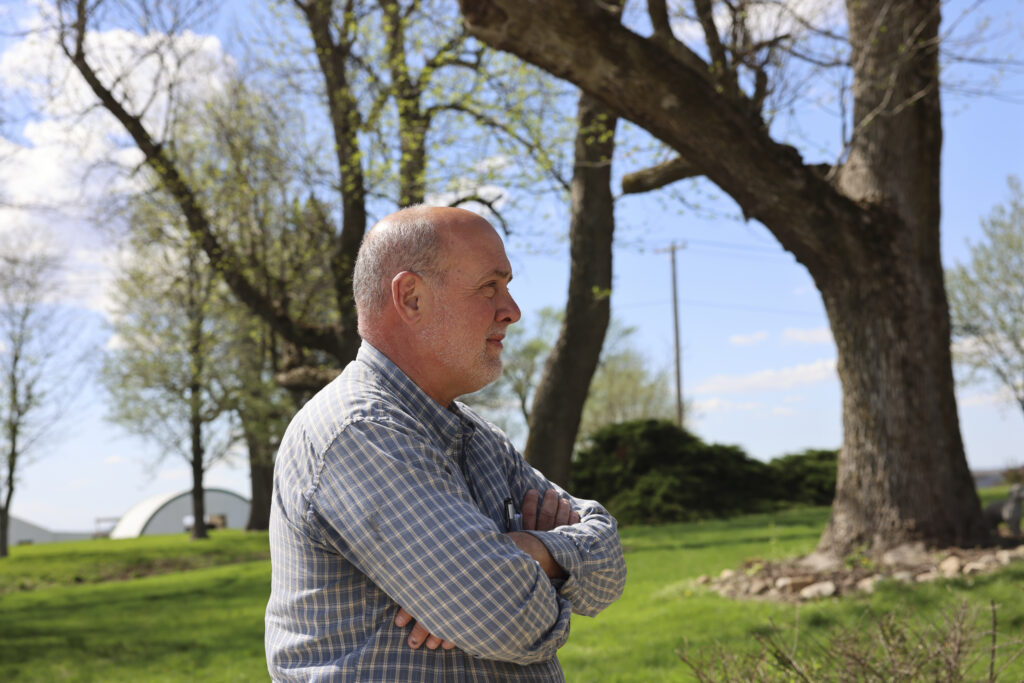
Mark Hortin, a farmer in Champaign County, said right now is a particularly challenging time for farmers.
Over the past couple of years, he said he’s had below average crop production on top of rising costs for equipment.
The war in Iran has caused prices to go up for nitrogen fertilizers and diesel, due to the closing of the Strait of Hormuz. Hortin said he has been hit by the rising diesel prices, and is hoping fertilizer prices go down before he purchases them this year.
“In the last few years, inflation has really hurt us,” Hortin said.
Some farmers are still facing trickle down effects from the pandemic as well, according to Hortin. He said his interest rates on his loans have also gone up.
“I know what the banks are looking for and, and what we have right now is not [that]. You can’t you can’t write the check and and that’s very frustrating for farmers,” Hortin said.
Hortin describes himself as an eternal optimist, which he said helps him get through these hard times. But he thinks it’s important that farmers, who tend to be private and independent-minded, seek out a support system for themselves and not struggle in silence.
A statewide initiative aims to help
The Farm Family Resource Initiative was started by Southern Illinois University School of Medicine. It began as a pilot program with six counties in 2019 and now reaches all 102 counties in Illinois.
The program aims to connect farmers and farm families with mental health and agricultural resources.
Rachel Brown, a mental health specialist with the initiative, said it’s important for farmers to have support from people who have knowledge about the farming industry.
“These are professionals who are trained in mental health, but they also understand agriculture, and they understand farming,” she said. “They can provide help when you’re in that place where you realize you need some professional help.”
Brown said the group offers individual counseling and support groups for farmers and their families both in-person and virtually so that people across the state can access them.
“I’ve seen the folks that come to the group really build that support network there. There’s a stigma that we kind of have to overcome to help people realize it’s okay, it’s okay to need help, and the help is out there,” she said.
FFRI also has a 24/7 helpline catered to farmers or family members who are in crisis: 1-833-FARM-SOS. The number connects callers to resources in their area as well as no-cost counseling sessions that are available virtually.
Illinois Extension offers a similar resource, known as the Mental Health Voucher Program, which connects agricultural producers and their families with mental health professionals. Eligible recipients include Illinois residents who are 18 or older and work in the agriculture industry.
Gisele Hamm said she hopes these programs normalize farmers seeking mental health support.
“There’s gotta be a way to kind of reach out to the farmers and help increase awareness and help them to understand that they’re not alone and that this is normal,” she said. “You’re not unusual to have these feelings.”