

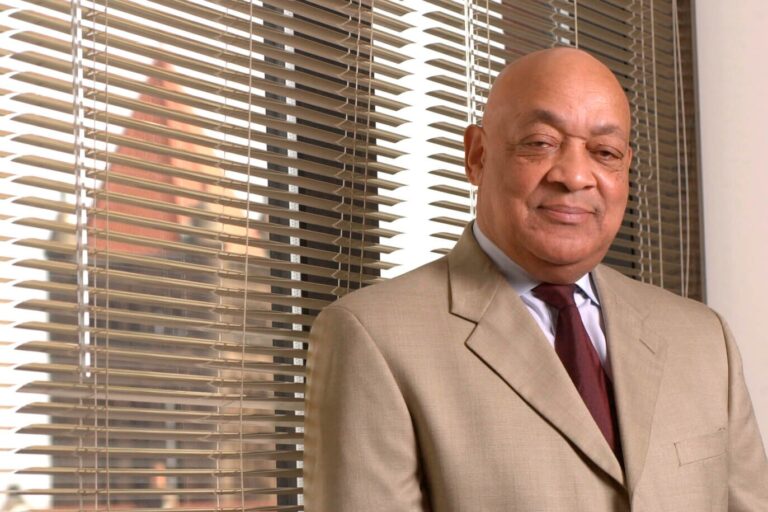
Honorary Dean Clarence Shelley Way, unveiled Sept. 14, memorializes a man who spent 50 years working to foster a learning community where everyone, regardless of background, could strive for excellence.
“Clarence Shelley brought people together from different neighborhoods, backgrounds, perspectives, faiths and life experiences to make Champaign-Urbana and the University of Illinois the amazing places we get to visit and live in and be,” said his daughter, Dana Vickers Shelley, in her opening speech at the unveiling ceremony.
A section of John Street, located between 6th Street and Wright Street, received this honorary designation through a Champaign program that commemorates figures who left an impact on the city.
Clarence Shelley’s life and impact on the community
Shelley is best-known for overseeing Project 500, a University of Illinois Urbana-Champaign program that recruited and increased retention of students from underrepresented backgrounds in the late 1960s, following the assassination of Rev. Martin Luther King Jr.
In 1967, about 1% of the U of I’s 30,400 students were Black. Shelley’s work with Project 500 led to 565 Black and Latino students joining the student body the following year.
But this was only the beginning of Shelley’s influential career at the University of Illinois.
“Over the course of five decades, Clarence Shelley interacted with, led, supported [and] advised students from all different parts of campus,” Dana Vickers Shelley said in an interview. “LGBTQ+ students, students with different learning styles, students who were Indigenous, students from different places and spaces.”
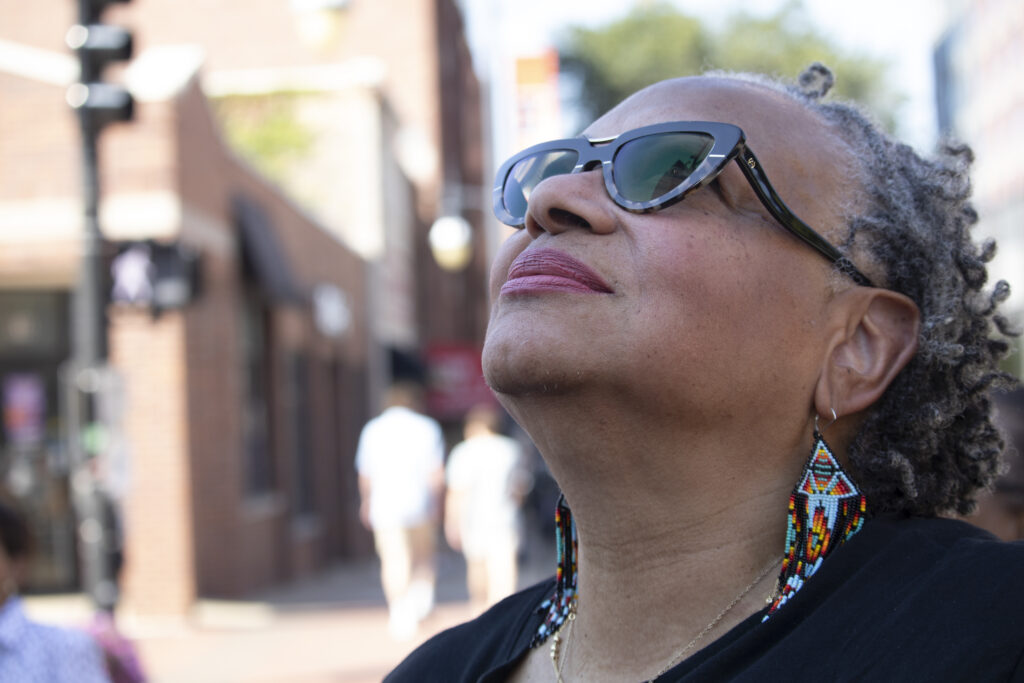
Learn more about Clarence Shelley’s life and legacy in an interview with his daughter, Dana Vickers Shelley:
Shelley didn’t just want to see more students from underrepresented backgrounds attend the school — he wanted to see them excel in every aspect of their lives.
Alicia Gilmore Catching, founder of U of I’s Black Alumni Network, said she first met Shelley when he visited her high school.
“Even as a 16-year-old, he was impressing upon me the importance of excellence, not just excellence in school, but excellence in everything that we do,” she said at the unveiling event.
Once she arrived on campus, Gilmore Catching said that encouragement from Shelley continued.
“He’d stop us along the way [walking around campus], and you’d better have a backpack on, because the first thing he’ll say is, ‘Where’s your books? You know, the library gives those away for free,’” Gilmore Catching said, earning chuckles from the audience.
Both of Dana Vickers Shelley’s parents were educators. Her mother, Dorothy Vickers-Shelley, was an elementary school librarian with a master’s degree in library science.
“From both of them, we learned to be curious about the world around us, to be prepared to engage with people from different experiences and backgrounds, and to want to read and create and make a difference in our communities,” Dana Vickers Shelley said.
Commemorated with an Honorary Street designation
After Clarence Shelley died in 2022, his family and friends began looking for ways to honor his legacy. They found Champaign’s Honorary Street Program, which commemorates individuals, organizations, entities and events with significant connection to the city.
The Dean Clarence Shelley Legacy Committee came together with many who had played a part in his life: university alumni, community members, his fraternity brothers at Kappa Alpha Psi, city and university colleagues, book club members, church friends and others who worked at the Boys & Girls Clubs. They pushed for the honorary street sign.
At the unveiling ceremony held Sept. 14, several people shared memories and thoughts about Shelley’s legacy.
“His leadership wasn’t confined to campus,” Illinois Sen. Paul Faraci (D-52) said in his speech. “In fact, I’ll always remember how Dean Shelley had a way of showing up everywhere. Official ceremonies, he was there. Community meetings, there. Random events you didn’t even know existed until he showed up, somehow there, too.”
When the time came to unveil the sign, the crowd of several dozen people moved down the block to the corner of John Street and 6th Street. The group counted down to zero, but the veil did not fall. Moments later, Shelley’s grandson, Cory Sutton, ascended the tall post to pull off the bright orange veil and reveal the sign bearing his grandfather’s name.
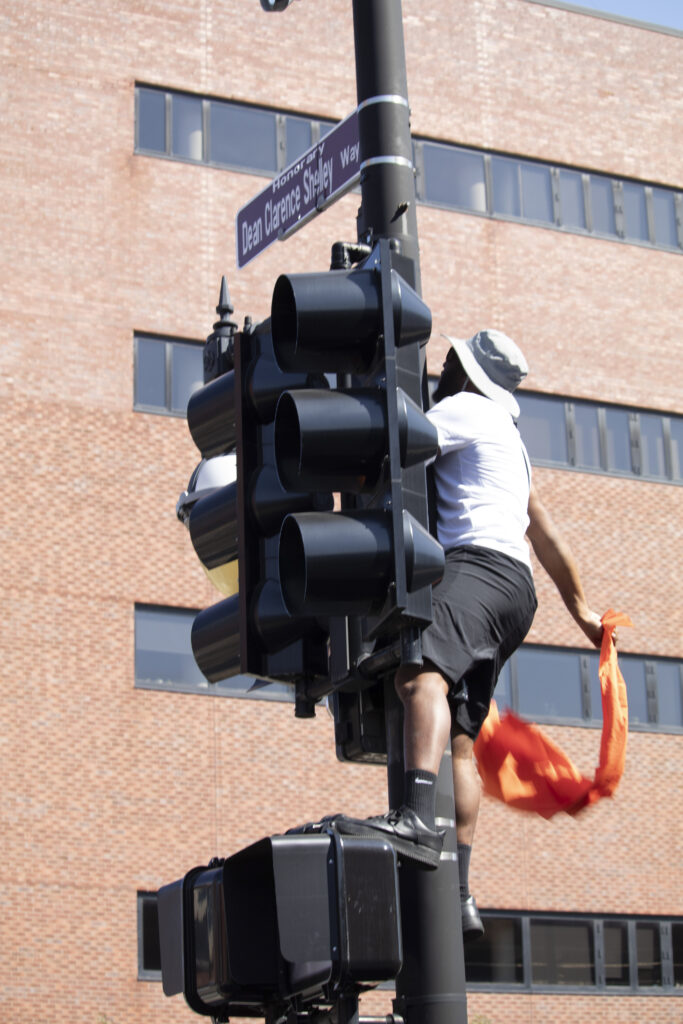
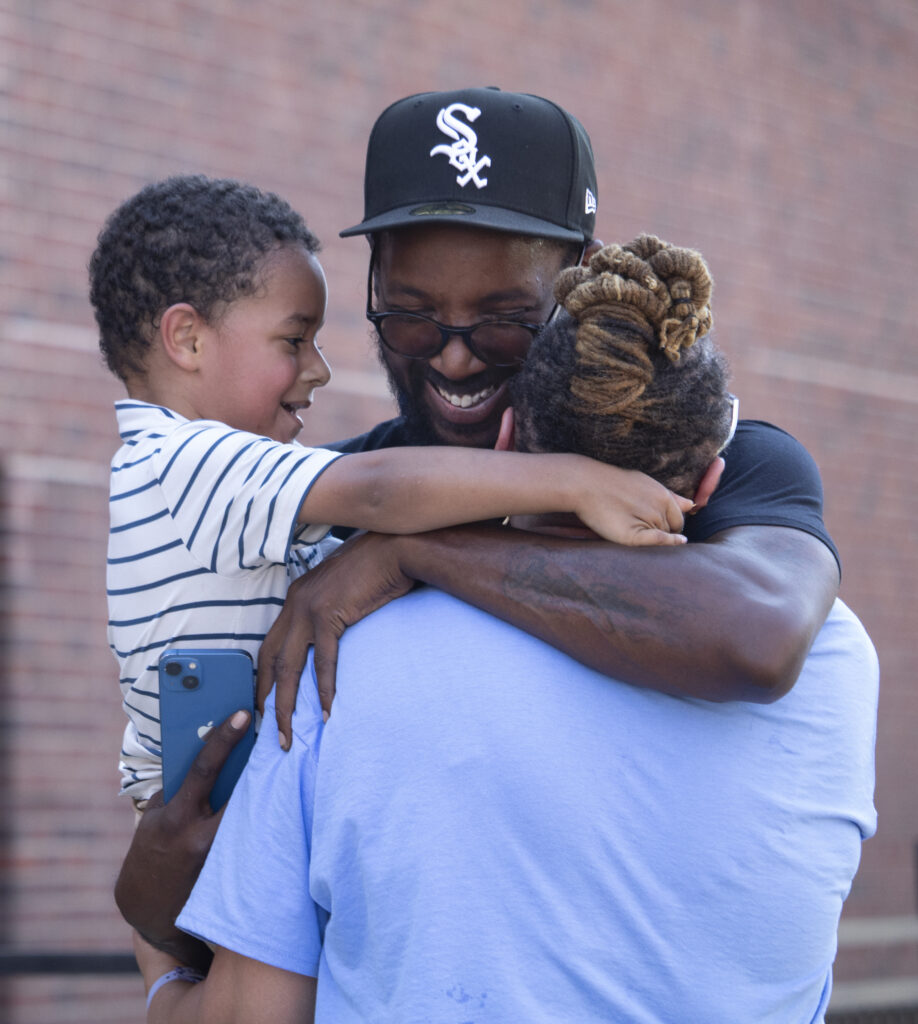
The crowd cheered, and several attendees helped Sutton down before jumping with elation and hugging one another.
As the event wound down, Dana Vickers Shelley went to see the sign for herself, along with her sister, Pamela-Alyse Vickers Shelley.
“Wow,” Dana said, chuckling as she looked up at the sign against the bright afternoon sun. “I can see the look on his face. If he were here, I don’t know if he would come to this, because he didn’t like stuff like this.”
As the sisters held each other, Pamela-Alyse added: “But he then also, for those who knew him best, would look at you with that little smirk and that smile, like, ‘Of course I deserve this. And more.” Dana laughed knowingly.
In Champaign, honorary street name designations last for 10 years, except for city employees who lost their life in the line of duty, in which case the designation is permanent. Honorary street names do not replace the official name of the street, meaning addresses stay the same.
A lasting legacy
Another part of Shelley’s legacy is the Shelley Ambassador Program, or SAP — a volunteer program within the Bruce D. Nesbitt African American Cultural Center.
Jae’da Thompson, a student intern with SAP, said she is grateful to see Shelley receive an honorary street designation.
“This is a predominantly white institution, so to have someone honored in a street name, named after a Black man — I think that’s a huge, huge deal,” she said.
Thompson noted that Honorary Dean Clarence Shelley Way is in a busy area with high traffic.
“People are going to see that street,” she said. “They’re probably going to wonder: Who is Dean Shelley?”
The SAP works to increase enrollment and retention of Black students at the University of Illinois Urbana-Champaign through large school visits, professional development and social events — just like the work Shelley was known for.
Thompson considers herself service-minded, wanting to put her community first.
“Seeing that Dean Shelley had that same passion and same vision … it just shows you how far having that community mind, having that service mind, can really take you,” she said.
As for Dana Vickers Shelley — she sees her father’s legacy represented in libraries.
“I think of places where people learn about the world around them, learn about people who are not like them, learn about leadership, take their curiosity to newer heights than they might have ever imagined and take their own personal and professional journey to new places where they can make a difference,” she said. “I think that is an important part of Clarence Shelley’s legacy.”