

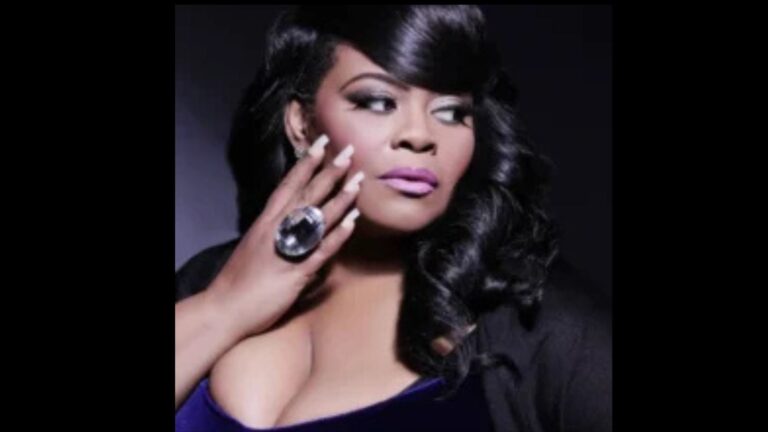
URBANA — MAYSA is helping Illinois Soul celebrate two years of bringing R&B, jazz, soul music and Black stories, news, and culture to the Central Illinois area with a performance at Krannert Center for the Performing Arts on Saturday, Feb. 7 at 7:30 p.m.
IPM’s Morning Edition host Kimberly Schofield spoke with MAYSA about her long-standing career and Illinois Soul’s Two Year Anniversary Celebration.
This interview has been edited for clarity and conciseness.
KIMBERLY SCHOFIELD: Maysa Leak has a performance legacy spanning over 35 years. From performing in Stevie Wonder’s powerful female backup group Wonderlove, to being the lead vocalist of Incognito, over a dozen solo albums, plus a Grammy nomination, MAYSA has cemented herself as a top voice in jazz, R&B and soul music. And she’s helping Illinois Soul celebrate two years with a live performance. I spoke with MAYSA about her career, the changes in today’s music and what we can expect from her performance.
Maysa, you grew up on the East Coast. How did that impact your pursuit of music?
MAYSA: The East Coast has been so good to me. I mean, it’s amazing how my parents played so much music in my childhood. A lot of people think I grew up in church and I didn’t. My musical background is from literally what my parents played in the living room. And so we had a lot of great music coming out in the, you know, 70s when I was coming up. So yeah, it’s impacted me heavily, a lot of great music.
SCHOFIELD: My friend always says that she loves learning what people listen to because she can then figure out how they’re performing and how they’re singing nowadays, because it’s fun to see.
MAYSA: Right, yeah, absolutely.
SCHOFIELD: I saw in an interview that you knew that you wanted to pursue music from the time that you were a child. Was your family also musical, other than listening to records and listening to the radio?
MAYSA: Yeah, my mom was a singer, but she was young singer, but her family didn’t support her, so she kind of gave up. She had a beautiful voice. My dad had a beautiful voice too. He’s like a baritone type, but he was a mechanic. He didn’t think about singing, but he was very supportive. They were both very supportive of my career. They sacrificed so much for me to go to school, go to Morgan State, and my first venture out in LA when I moved out there to sing with Stevie Wonder. They scraped up all this money for me to get an apartment and stuff out there back in the early 90s. So it was a lot. They were very supportive.
SCHOFIELD: Yeah. And now you support your son, who’s also involved in the music industry.
MAYSA: Yes, yes. He’s a photographer, videographer and music producer. He’s getting back more to his producing now [that] he’s established himself here in Maryland as a top photographer. So now he wants to make music for his films and stuff. So he’s going to do that.
SCHOFIELD: That’s incredible. I love people who follow their dreams. It’s beautiful. MAYSA, you mentioned Stevie Wonder. You’ve shared the stage and the studio with Stevie Wonder, Will Downing. Did those experiences teach you anything about musicianship or finding your voice? How did that influence you?
MAYSA: Stevie influenced me greatly. I mean, being a senior at Morgan State University and auditioning for him, first of all, was mind blowing. And passing the audition was mind blowing. So when I got to LA and was, you know, singing background amongst his seasoned background singers. I was so scared, so scared. But he was very supportive in that he was kind of like a strong mentor back then. He wanted me to make sure I was comfortable, you know. I was in the corner trying to sing the right notes and make sure I had my notes right, and he was like, ‘Oh, we here you girl. You got your notes right. You all right.’ You know, that kind of thing. It was just wild.
And so from him, and then from when I started working with Bluey, from Incognito, of course, when I auditioned for them over the phone and got that gig, then I learned so much about music and being a band leader and touring and stuff like that. So my time at Morgan State also prepared me, because the Morgan State University Choir, we toured a lot. So I learned about hotels and how to carry yourself, how to do interviews and all those things. So my whole life has been preparing me for my life.
SCHOFIELD: Yeah, absolutely. You’re a quick learner too. As a lead singer for Incognito, you were a defining voice in the acid jazz movement, and obviously that kind of projected you, I’ll say, to your solo career. How did that feel, coming from working with these artists and growing yourself?
MAYSA: It was surreal in the beginning because England had such a love — and London, of course — such a beautiful love for Black music, that I felt like a queen over there. It’s like, ‘Oh, she’s got an American singer. Oh, my God. What?! Okay!’ It felt so good to be, you know, respected as a singer over there. I was just starting, you know, and then when the recording the songs with Incognito, especially the song “Don’t You Worry About a Thing” by Stevie Wonder, of course, that became our biggest hit at that time. It was like a fairy tale. From just being an obscure singer from America, you know, then all of a sudden, I’m the lead singer of this group who’s internationally known, and we’ve traveled the world, and I had to have bodyguards in Japan and all this kind of stuff. It was just … wow, feelings that I can’t describe.
SCHOFIELD: You were also nominated for a Grammy. What was your response like when you were nominated?
MAYSA: I screamed and screamed and screamed. I was so excited because I waited so long, like I’ve waited my whole career. I’ve done so many albums by up to that point, I was like, ‘Man, I mean nothing? Nothing I’m doing is even getting recognized? It’s taking so long.’ And so it’s my son’s birthday party — it was December 6, I’ll never forget it — and I was cleaning up, and the executive director of the DC chapter called, she said, ‘MAYSA.’ And I said, ‘Hey, what’s going on?’ Just casual, like, you know, wonder what they’ll talk about. And she said, ‘Oh, I just want to let you know you got nominated for a Grammy.’ I was like, ‘What?’ And I screamed so loud. The kids came running, and they’re like, ‘What’s wrong? What’s wrong?!’ And I was like, ‘I got nominated for a Grammy!’ So it was just so surreal. I couldn’t sleep that night. It was just so fun.
Going to the Grammys. It was very expensive, but it was fun.
SCHOFIELD: I love that. I love the kids coming in. ‘What’s going on?’ It’s an extra celebration.
MAYSA: Okay, I’m telling you!
SCHOFIELD: Illinois Soul is Illinois Public Media’s latest station. So we’re celebrating our second anniversary, which thank you for coming to do that. But Illinois Soul’s one of their missions is to amplify Black voices and music. What does it mean to you to be part of this milestone with a station that’s so rooted in soul and in culture?
MAYSA: It’s an amazing honor that you guys chose me to come and sing out of all of the singers. [Out of] all the R&B, soul, jazz singers that y’all could have chosen, you chose me to to come and celebrate with you. And that means a lot to me, because we don’t have stations like, you know, Illinois Soul, people that can help us get the music out there and get the names out there and get the exposure. It’s difficult. It’s very difficult to navigate this industry, and so the support that you guys give us is amazing. And thank you.
SCHOFIELD: MAYSA, your music is synonymous with grown and sexy vibes. What can the Illinois Soul audience expect from you on our anniversary night?
MAYSA: Oh, wow, we’re going to actually have such a party. What I call them is, I call them concert parties. I’ve been doing that on my birthday for several years now. But basically we span the music, we go through all the music of my career. Basically try to go into the vault. I have a 35 year career. So I have so much music, so many albums, about 15 with Incognito and I’m working on my 15th solo album. So I have a lot. Plus, I’ve had hundreds of guest appearances. So it’s amazing how, with all of that, we’re gonna somehow put a lot of that into the show. And then we’re gonna do some Incognito, we’re gonna do my music, and then we’re gonna end the show with a big old school dance party, which has been a tradition in my concerts for quite a long time now.
SCHOFIELD: You already mentioned that you have over a 35 year career. You have such a powerful legacy. Are there any specific songs or any moments in your career that you look back on that excite you the most or that you look forward to sharing the most?
MAYSA: Of course “Deep Waters.” I think that song was the pivotal in my career. It changed my life. And you know, it’s amazing how … I expected one day people would get tired of me singing the song. They don’t. They ask for it every time.
Every time. And it’s so funny because it’s young people. That’s what’s really blowing my mind. It’s the younger generation that’s, ‘Oh, yeah, it’s my whole childhood. My mother played this every day,’ you know, kind of thing. And so, it’s nice to know that at almost 60 years old, I still can reach the younger people too, without having to change anything about myself or try to be somebody I’m not. And that’s pretty cool.
SCHOFIELD: Do you think that there has been a significant shift in music or how music is presented or received since you were first coming up?
MAYSA: Yeah, you know, it started, you know, unfortunately, I think that if I started my career maybe five years earlier, I would be in a different space. I guess I’m grateful for where I am. You know, I’m kind of like this underground kind of, I don’t know, I can’t really explain it. Even though I’m known internationally, I’m still in this underground … like a lot of people know my name around the world, still don’t know the music that I’ve done. I know that when I first came out, it was a big deal about the Milli Vanilli and the C+C Music Factory stuff was going on, where they were putting these supermodels in front of the camera and using other singers, voices, you know, to do the music. And it was, you know, devastating.
And also, we didn’t do a video for Deep Waters because they didn’t think I was the right size. And I was small then. I mean, they would die now, but I was small then. I was little then. So, you know, that wasn’t small enough. And, you know, I think they wanted, it was a, you know, a certain look that they wanted back then. And so, you know, I came up in the middle of all of that. Luckily, the music has carried us through. Incognito, and myself, you know, carried us through the whole thing. So we got past that.
And now these days, I think it’s turning back to [the] soul thing. So this is the thing with the introduction to this AI thing. And it’s AI artist, and AI this. You can’t feel the soul. And music connects us through soul, and that’s all, that’s it. So, you know, you can make money off of it, but, yeah, you can get some nice songs and some nice remakes, and it is interesting and it’s fun. But when people want to see a live human being. That’s how we’re gonna stand out.
And that’s why I’m not really worried about the AI thing too much. As long as nobody tries to steal people’s voices and make whole albums and make money … that’s where we’re gonna have to get the legislation to really stand tall. But other than that, live, you know, I don’t think people want to pay a lot of money go see a hologram. I don’t think so.
SCHOFIELD: No way. I could go on about AI all day. I don’t like it. What do you hope that fans feel when they leave your performance for our anniversary concert?
MAYSA: I want them to be smiling, and I want them to say, I’m glad you got her. That’s what I want. That’s what I hope and pray for.
SCHOFIELD: No doubt that will probably be definitely what they say, if not more. They’ll be shouting, just like you did for the Grammy’s. Thank you so much for taking the time to do this.
MAYSA: Thank you, honey. Thank you so much. I can’t wait to see Illinois Soul. We’re gonna have a good time.
Krannert Center for the Performing Arts is a financial supporter of Illinois Public Media.