

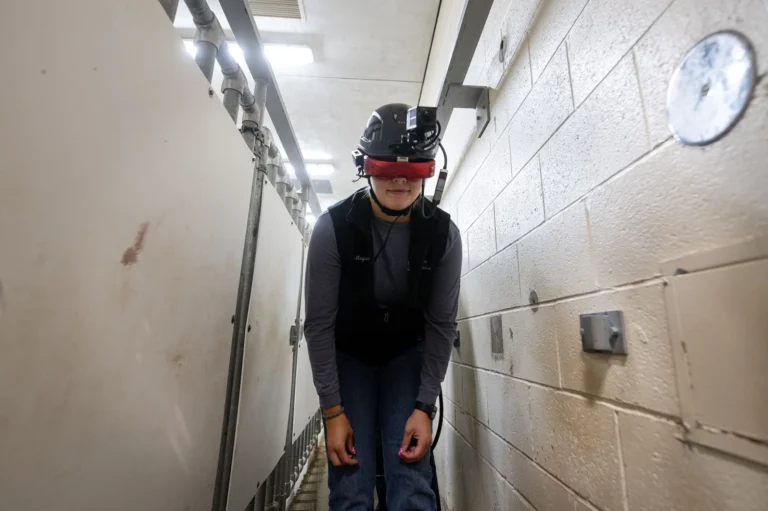
A Wisconsin university is using augmented reality to show staff from meat processing plants and farmers what it’s like to look through the eyes of livestock.
From farm to processing plant, people working in animal agriculture try to keep stress down for cattle, pigs and other livestock.
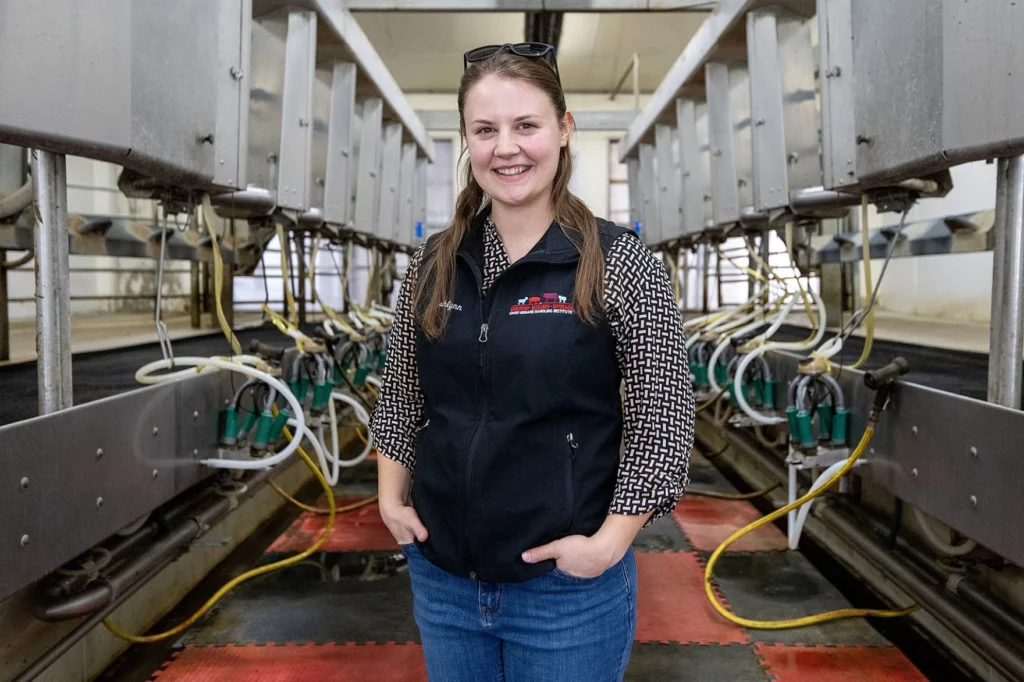
But it requires an understanding of how these animals see the world, according to Ashlynn Kirk, the program manager at the University of Wisconsin-River Falls’ Humane Handling Institute.
“When you are designing facilities for animals, you’re trying to imagine how they would experience it,” Kirk said. “But you don’t know unless you see it like they would.”
That is why the institute is using augmented reality to let farmers and staff from meat processing plants see their facilities through a cow’s eyes.
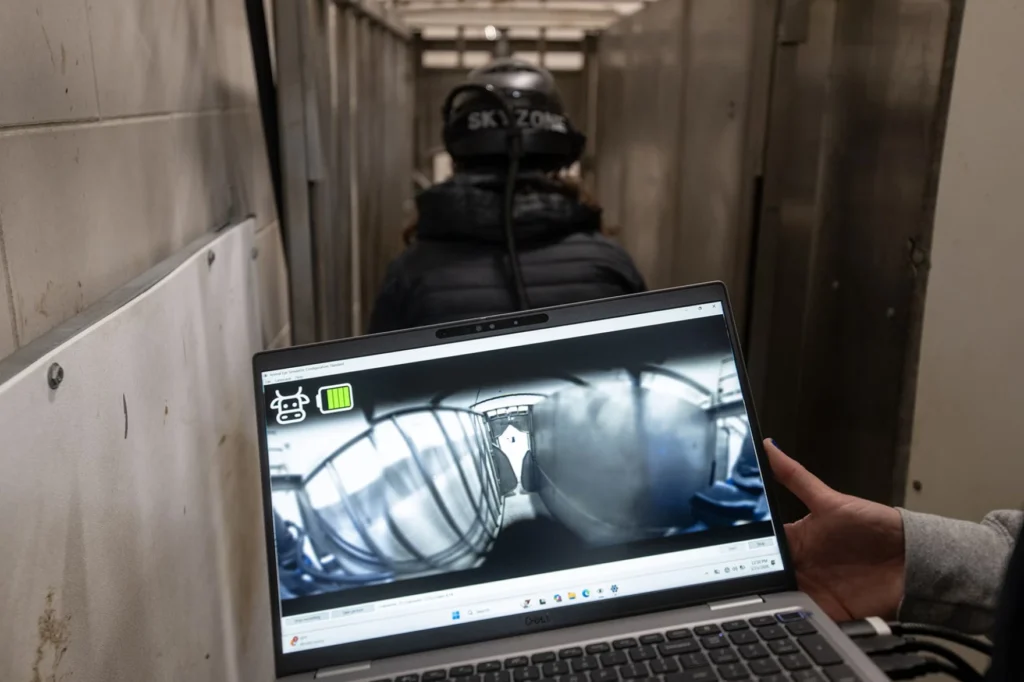
The Animal Eye Simulator, developed by German software company Computer Output Management, uses virtual reality goggles and a 360-degree camera mounted on a safety helmet worn by the user.
The program mimics the panoramic vision of cattle, who can see more than 300 degrees around them versus humans’ roughly 180-degree field of vision. The clearest point of vision is directly in front, while much of the cow’s peripheral vision is blurry because their eyes are located on the sides of their head.
Cows also have dichromatic vision, meaning they can only see in shades of mostly blue and yellow. A red jacket or safety vest looks brown through their eyes. They lack depth perception, making steps or other changes in terrain difficult, and their eyes take a lot longer to adjust when moving from a dimmer indoor environment to a sunny day outside.
“Imagine you’ve been in a building all day, and it just snowed, and you walk outside and that really bright vision hits you,” Kirk explained. “That’s essentially what cattle see.”
These differences often explain why a cow might suddenly stop or change their behavior, Kirk said. The hope is that putting on the simulator can help a farmer or processing plant staff identify the source of the problem.
It’s already helped UW-River Falls improve their facilities. While walking through the on-campus meat plant with the goggles on, Kirk realized the vertical metal bars used in their pens were disorienting for cattle.
“So we put up solid sides, and you can see through the augmented reality goggles that it’s really easy to tell which way is out of the pen,” she said.
Better animal management
The idea of designing a livestock facility from a cow’s perspective is nothing new for animal agriculture. It was pioneered by Temple Grandin, animal science professor at Colorado State University, in the late 1970s.
Grandin said she got her start by getting down into the chutes used for cattle and noticing how a shadow or jacket hanging from a fence post could disrupt the animals’ movement.
She sees the new augmented reality tool as a way to get people working with cattle to practice the same perspective shift. She recently got to try out the “cow vision” goggles after financially supporting the purchase by UW-River Falls.
“It makes people realize that the cattle see differently,” Grandin said. “That alone is valuable.”
Agricultural engineer Benito Weise had the idea for the augmented reality program after years of trying to use pictures and graphic representations to teach people about these differences in vision.
Weise said it’s easy for people handling livestock and horses to miscommunicate with their animals.
“Often we make mistakes and we don’t understand ‘Why does (an animal) stop here? Why doesn’t he go on?’ and maybe he’s getting aggressive, because our communication isn’t good,” Weise said.
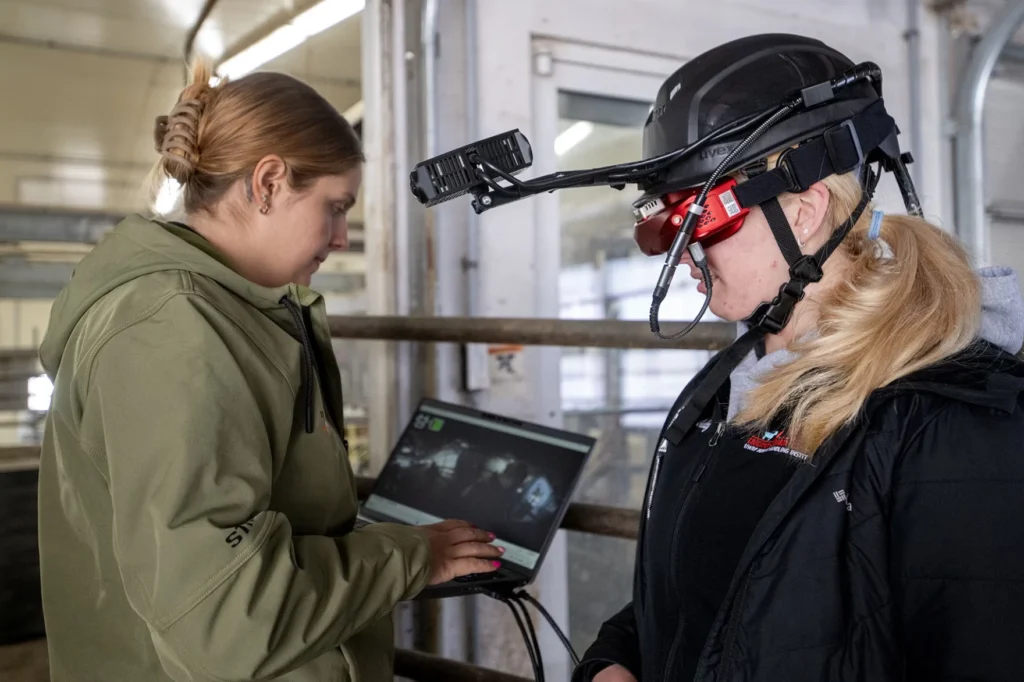
Weise partnered with Peter Menzel at Computer Output Management to build the augmented reality program using existing scientific data on a cow’s eyes and field of vision.
The biggest success is that the tool leaves a lasting impression with most users, Weise said, allowing them to keep seeing the world through their animals’ eyes even when they’re not wearing the simulator.
“The goggles alone do nothing. You have to change the thinking of the people,” he said. “They do think, days after, weeks after.”
The simulator also has settings to represent the vision of pigs and horses. Menzel said a setting for sheep vision is already in production, and he’s received requests for other animals including dogs.
The company has seen interest from customers across Europe, including Germany’s national insurance program for farmers.
“They are constantly training their members with the system to make them aware of how the animals perceive their environment and to reduce accidents,” Menzel said, adding that there are between five and 10 deaths related to animal handling per year in Germany.
Menzel said they’ve also seen support for the technology from OSI, an American-owned contract food manufacturer that supplies burgers and other products to McDonald’s around the world. The manufacturer even highlighted the Animal Eye Simulator in a 2024 sustainability report for helping it work toward its animal welfare goals.
Technology and animal welfare
There are many benefits of keeping cattle’s stress levels low, from better meat quality and milk production, to saving time and reducing injuries on a farm.
Ron Gill, extension livestock specialist at Texas A&M University, said there’s also new pressure from consumers who are thinking more about the treatment of the animals they’re eating.
“Welfare is important to the general public as well; that’s the number one thing our consumers are concerned about,” Gill said. “So if we can manage the welfare of the cattle better than using these kinds of technologies, I think it’s a win for everybody.”
He said the shift means going back to the fundamentals of caring for animals – what’s referred to as animal husbandry – and to systems that utilize cattle’s natural instincts.
In Wisconsin, the Humane Handling Institute is already using the augmented reality tool in their training programs for staff at meat processing plants. But Kirk said she hopes to also use the technology on dairy farms, allowing producers to improve their milking parlors and barns.
Since announcing the new program this winter, she’s already heard from a number of farms, food companies and industry groups that are hoping to use the technology.
Kirk said even seasoned professionals have been surprised by how the goggles have brought a new perspective.
“There’s a lot of like, ‘Oh, I’ve been doing this for a long time, but I never realized why it was like this,'” she said.
She said they leave with new ideas about how to make their own facilities better suited for their animals.