

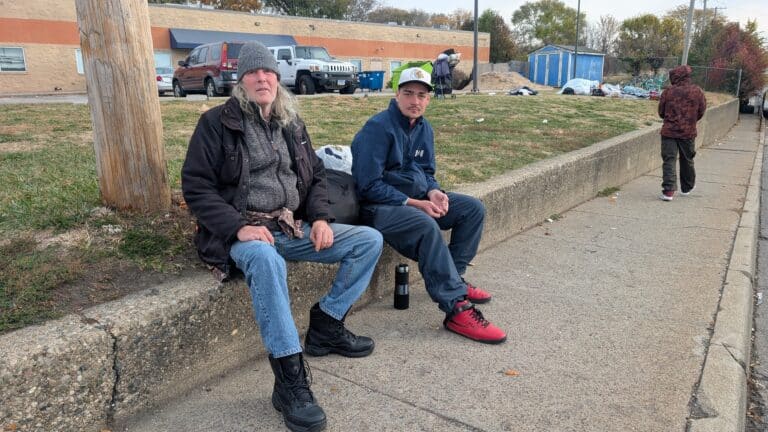
CHAMPAIGN — James Thompson had been sleeping out in the cold until someone told him about Strides, a homeless shelter in Champaign. He said he’d moved to the area and was stranded by his ex-wife, so he ended up on the streets.
“I’ve been here a year and almost a month and been through some hard times,” he said. “Lost my mom two years ago, lost my aunt two years before that, so I lost my place to live in North Carolina.”
As the only low-barrier shelter in the area, Strides does not have sobriety or abstinence requirements, and does not conduct criminal background checks before accepting guests.
“There are a lot of people who have drug addictions because of their past,” Thompson said. “PTSD, military service, trauma, psychological problems, they’ve got all kinds of disorders, and a lot of places won’t take them because of that.”
Now, Thompson worries some of those people could end up sleeping outside in the dead of winter, if Strides runs out of money to operate.
Strides first opened in 2022, with funding from the American Rescue Plan, a federal COVID-19 relief fund. But funding is set to run out as early as February, according to Kathy Shannon, a Champaign Township board member.
A new temporary winter homeless shelter recently opened in Champaign, but like other shelters in the area, it’s not low-barrier, so not everyone from Strides will qualify.
Now, Champaign Township officials are exploring the possibility of shifting away from the low-barrier model in the hopes of more easily securing additional funding to keep Strides open.
“I think it’s going to be very difficult to have Strides continue as it is,” Shannon said. “It’s a very difficult thing to run a low-barrier shelter; It’s extraordinarily difficult,” because area residents don’t like the idea of people who are homeless using drugs and alcohol nearby.
A place to turn when there’s nowhere else to go
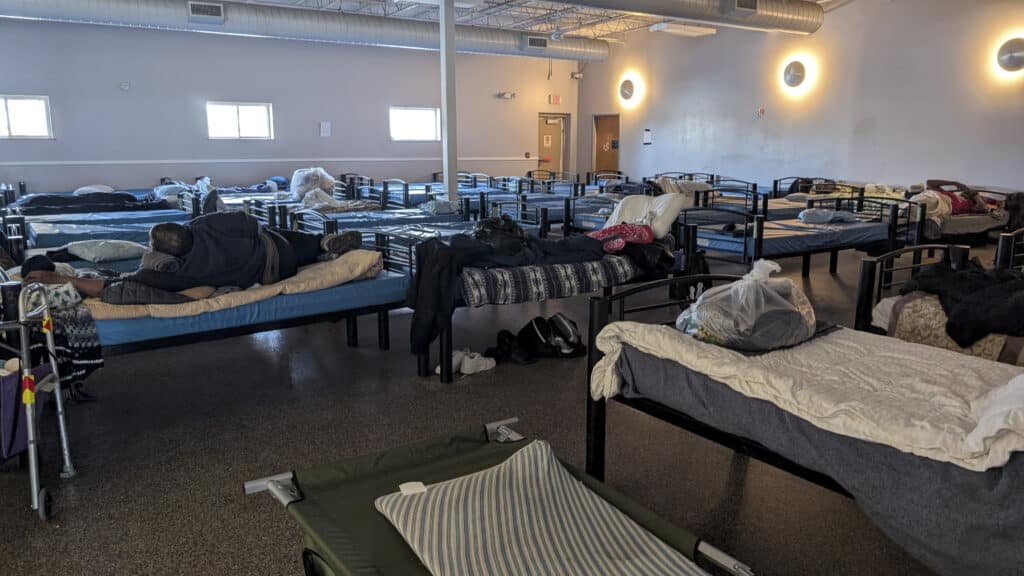
James Wood, another Strides client, said before coming to Champaign, he worked a well-paying job, then lost it all when he became addicted to crystal meth. Originally from Danville, Wood said he returned to the area after getting out of jail.
At first, Wood said he tried to get a drug rehab center but was turned away because he had only gotten high on crystal meth once within the last year. The center pointed Wood to Strides, and without the shelter, he said he doesn’t know where he’d be.
“You have a lot of mentally disabled people that are stuck with no medication, no support, no nothing,” Wood said. “It’s a mess, and I don’t understand what’s going to happen with these people.”
An employee of Strides, Mike Maher, said he was a guest of the shelter for five months in 2023. He, too, fears for its closing, because he’d lose his job and his ability to help keep others safe.
“It would affect me emotionally because you gain rapport with some of these people; I don’t want to see them in dangerous situations like being in the cold,” Maher said.
The shelter is important, he said, not only to assist people who are homeless but to keep the surrounding community safe by eliminating loitering and preventing unhoused people from breaking into places for shelter.
Toby Sartain, who goes by the nickname “Money,” said he worries that if Strides closes, it will push some residents to resort to crime out of desperation.
“Crime rates will rise because at that point when you’re homeless, you catch a minor misdemeanor and you at least have a bed and three meals, and that’s all we’re trying to get,” he said.
Sartain said he came to Champaign in early October after being released from jail, and he chose Strides because of its proximity to his son.
“The last time I talked to him was October 7— that was his birthday, his first day of school,” he said. “It’s hard, it’s really hard, it’s hard not to just give up and fall into the darkness out here; They’ll easily take you over.”
Money said he’s on the waitlist for a permanent bed at Strides — and on the nights they’re full, he sleeps on the street and returns to use the day center, where he can eat, take a shower and do laundry.
Failed referendums eliminated a possible funding source
Within the past year, two referendums were proposed to solve Strides’ funding issue, but both failed. In the latest attempt, nearly 60% of voters rejected a property tax referendum that would have increased annual homeowner payments for a property valued at $200,000 from about $19 to $138 a year.

Additionally, Kyle Patterson, who was elected to the role of Champaign Township supervisor this spring and had been overseeing Strides, resigned from his position on Nov. 18. The new supervisor will be selected by Jan. 17.
Champaign City Council and City of Champaign Township board member Kathy Shannon said Patterson had difficulty meeting the reporting requirements and the board had to schedule additional meetings in order to meet budget deadlines. In an email response to questions for this story, Patterson said that he was able to pass both FY25 and FY26 budgets before their statutory deadlines.
Shannon said that for the shelter to continue, it needs to be a collaborative effort across Champaign County—involving not only Champaign, but Urbana, Rantoul and other populated areas.
One of the ways Strides could be reconstructed is by becoming a mid-tier shelter, she said. But Thompson worries about the people who would not qualify for admittance, if that were to happen.
“It’s going to restrict a lot of people from coming here because they’re all drug addicts,” he said. “You’ve got crackheads, you’ve got heroin addicts, you’ve got alcoholics, just you name it and you’ve got it here.”
Thompson said he had been an advocate for homeless people in North Carolina and often spoke at hearings. He thinks the county should consider converting vacant buildings in downtown Champaign into affordable housing to help alleviate the problem.
Despite the looming funding issues, Wood said he’s holding onto hope that it all works out.
“We need to take care of each other, we’re one body,” he said. “We have to take care of each other, and I have faith that somebody will step forward to help that out.”