

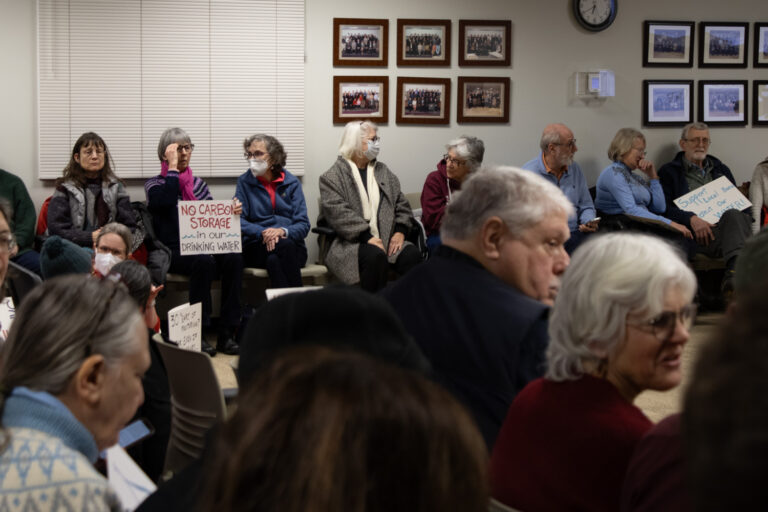
URBANA – A Champaign County task force assigned to research carbon sequestration wrapped up its work Wednesday night and submitted recommendations for a new zoning ordinance to regulate the process with the goal of protecting the Mahomet Aquifer.
Carbon sequestration is the process of capturing and storing atmospheric carbon dioxide to reduce its presence in the air and mitigate the climate crisis. The process captures the carbon dioxide straight from industrial sources before it enters the atmosphere. It’s then compressed into a liquid-like state and injected deep underground.
“There was concern or interest that one of these, another carbon sequestration facility might be made in the vicinity of Champaign County and have some effect on, especially, the Mahomet Aquifer,” task force Chair Christopher Stohr said.
Carbon sequestration could pose a risk to the Mahomet Aquifer if carbon dioxide were to leak into the water source and contaminate it.
Stohr cited a natural gas leak at Manlove Field near Fisher in 2016 that affected private wells, according to the Illinois Environmental Protection Agency.
There were also two leaks at an Archer Daniels Midland facility near Decatur discovered in 2024 that raised greater concerns about carbon sequestration. The facility was the first commercial carbon sequestration plant in the country. It received a violation notice from the U.S. EPA and halted injections that year but has since restarted.
A moratorium on carbon sequestration has been in place in Champaign County since January 2025, and the county board created the task force to research the issue that March, before Gov. JB Pritzker signed a bill banning carbon sequestration around the Mahomet Aquifer in August. The law took effect January 1, 2026.
The Champaign County Carbon Sequestration Activities Task Force unanimously voted to send its recommendations to the county’s Environment and Land Use Committee. The recommendations regulate carbon sequestration to protect the aquifer from any future activities.
The county spent $500,000 in American Rescue Plan Act funding to map the aquifer and other groundwater resources in Champaign County, Stohr said. It is potentially the first of its kind undertaking in the U.S.
“That’s how much we value our water source. We were putting our money into it,” he said. “And so that’s the value that we place on protecting our both water quality and sustainable supply.”
The task force used that information to create the new zoning ordinance, Stohr said.
The recommendations will be considered by the Environment and Land Use Committee on Thursday night before going to the full board for a final vote.