

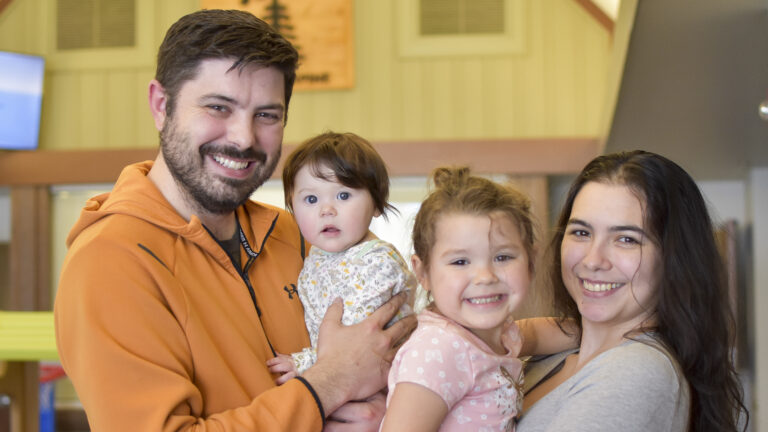
URBANA — The day Christopher McLennand deployed with the Illinois Army National Guard, his daughter Alison was 18 months old. It was his third overseas assignment, but his first as a husband and father.
His wife Alexandra McLennand suddenly had the full weight of parenthood on her shoulders.
Alexandra, a full-time student at Parkland College at the time, had heard about Crisis Nursery from one of her professors, and decided not to wait for things to fall apart before she reached out.
“We wanted to be preemptive,” Alexandra said. “We just started that connection… instead of waiting for after the fact and seeing if there was anything that was concerning us then — catching it in the moment.”
About three months before Christopher left, Alexandra called Crisis Nursery and arranged for a home visit with a family specialist.
By the time deployment day came, the McLennands had a plan:
Once a week, Alexandra would bundle Alison into the car, drive to Crisis Nursery’s building on West Hill Street in Urbana, and drop her off. She’d run errands, catch her breath and handle whatever needed handling, then pick Alison up a few hours later.
For 10 months, that rhythm held the family together.
“Crisis Nursery was big — fundamental to that entire year,” Alexandra said. “It was beyond relieving because I had a resource I could rely on.”
‘Crisis’ may not mean what you think
The McLennands are just one out of hundreds of families served each year at Crisis Nursery — the only 24-hour, 365-day emergency child care facility in Champaign County.
The organization also helps provide basic necessities like food, diapers and formula, and runs several programs that aim to strengthen parent-child interactions, support new mothers at risk of post-partum depression, and contribute to child development.
There are no fees and no income requirements to receive Crisis Nursery’s services.
The word “crisis” is the single biggest barrier to families who need them most, according to Russell Zillman, assistant director of development and marketing.
“I think there’s some stigma that if you bring your child in, you might lose custody or something like that, and that’s not what we do,” Zillman said. “We’re just there to help you when things are tough… We’re there to be a preventative measure.”
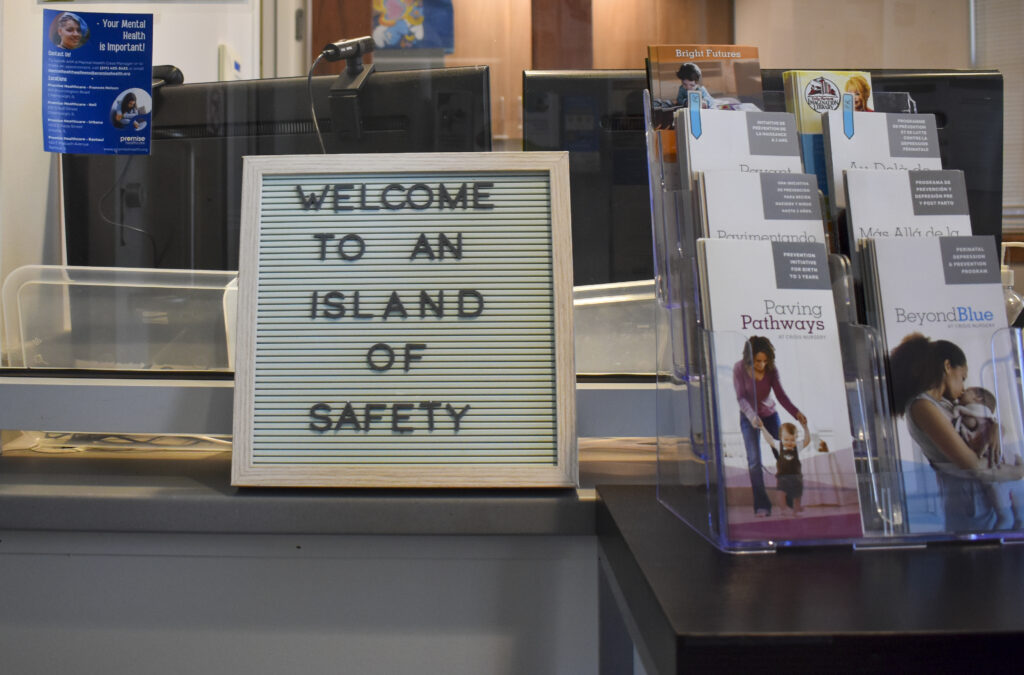
The nursery’s motto says it plainly: Asking for help is a sign of strength.
Emergency admissions data from fiscal year 2025 reflect who walks through the door: 41% of admissions are job- or school-related crises and 38% are classified as parental stress.
Housing emergencies and medical crises together account for less than a fifth of admissions.
Sarah Scully, assistant director of the Safe Children Program, came to the nursery through a practicum in early childhood special education at the University of Illinois Urbana-Champaign.
Scully had been a music therapist. What she found was a throughline she hadn’t expected: the universality of struggle.
“All families, despite their resources available, are trying to do the best they can for their kids, and sometimes they need an extra person in their corner to help them access the resources that they need so they can provide the best care possible,” Scully said.
“Being able to [allow] that vulnerability is really important. That support is how we prevent child abuse and neglect — is by being able to be that scaffolding within the community for families.”
Scully said that while Crisis Nursery is a mandated reporter, their first instinct is not to call the Department of Child and Family Services, or DCFS.
“Our first instinct is, ‘How can we help this family? What supports does this family need so they can be successful, um independent, members of our community? Is it food? Is it shelter? How can we help?” she said.
Crisis Nursery often points families to other resources in the community as well.
Scully said that in the event of a housing crisis, they may refer a family to a hotel Crisis Nursery has a connection with; If it’s a domestic violence issue, they would be connected to Courage Connection, or if the family is struggling with food insecurity, the Eastern Illinois Food Bank.
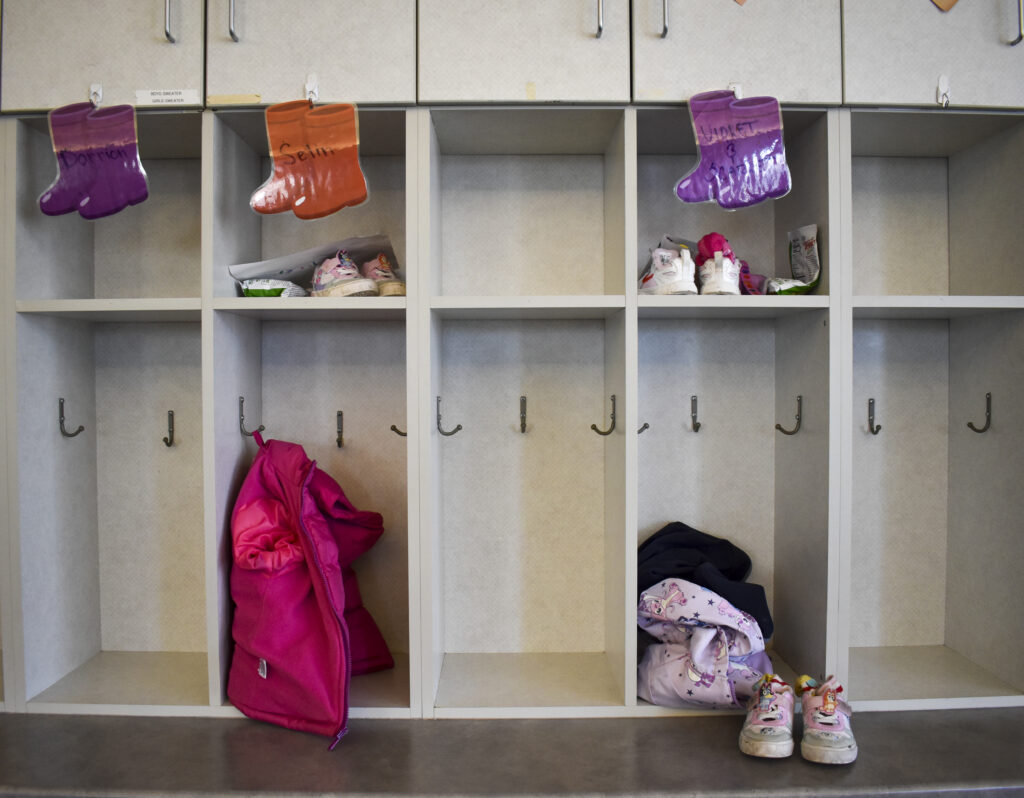
When a child is dropped off — especially overnight — Scully’s team gathers detailed information, like allergies, developmental stage, favorite toys and emotional signals.
Staff get down to a child’s level, make eye contact and offer play, she said. The food, provided by OSF Sacred Heart Medical Center, arrives hot for every meal and staff know each child by name.
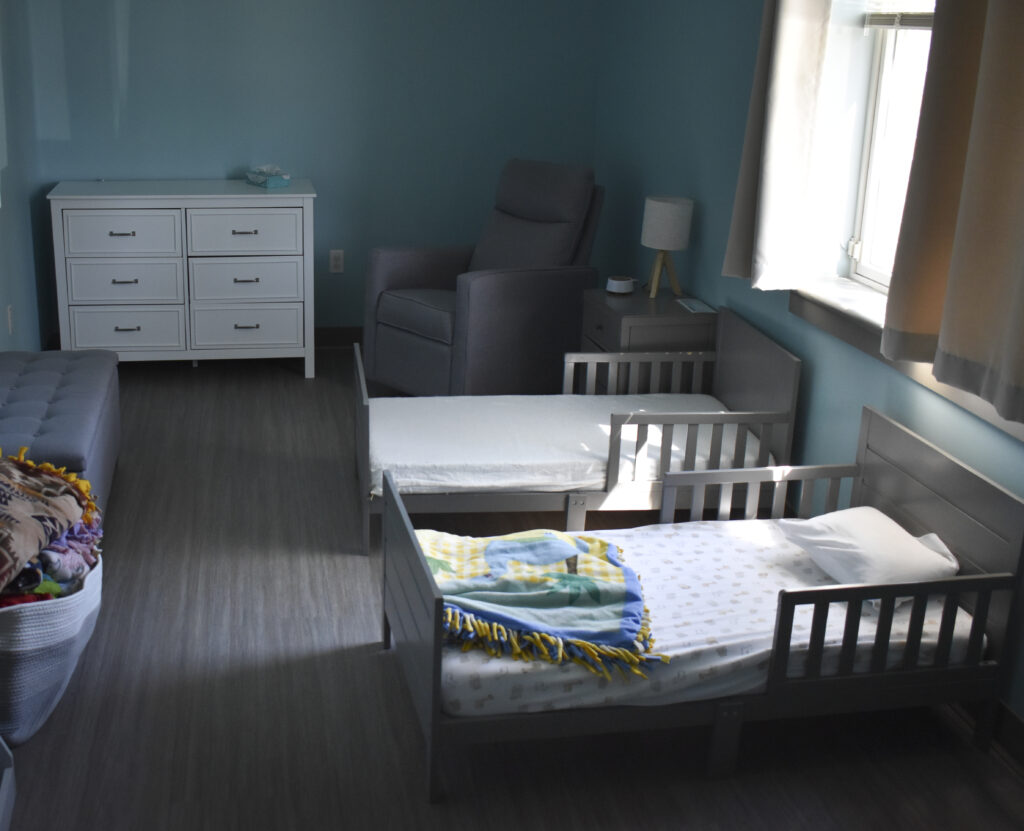
One moment that stays with Scully happened during an overnight intake. A small child walked in with their family and, taking in the sight of the bedroom, said: “Yay, we get to sleep in beds,” Scully recalled.
“That just really hung with me larger than life,” she said. “That is why we’re here. I will never forget that.”
A lasting impact
Alison McLennand is now four years old. When her family arrived at Crisis Nursery for an interview with IPM News, she could barely sit still. She was excited to be in a place that has brought her comfort.
“She saw the staff that she recognizes and they’re waving at her. She’s waving at them all excitedly and then she ran to go play,” Christopher said. “I think for a four-year-old, she had reached her level of — okay, now I know what I’m here to do.”
At first, Christopher said he’d experienced the same hesitation many parents might have.
“I heard the name ‘Crisis Nursery,’ and I’m immediately thinking, ‘Well, I don’t think that we’re in an emergency situation here,” he said.
It was Alexandra — and a conversation with a staff member who reframed things — that shifted his thinking.
“It’s not necessarily my or Alex’s crisis,” he said. “But also, you know, [Alison’s] losing her dad for a year. That’s certainly a crisis for a two-year-old at the time.”
After touring the facility, his hesitation dissolved.
“Just knowing that there were people that Alex felt comfortable with, who could help her — a lot of relief on my part,” he said. “I could focus on what I need to do overseas, knowing that she had this assistance here.”
For Alexandra, the year of solo parenting was harder than she’d anticipated. At the time of the deployment, she was an undergraduate student in psychology with a full course load. She dealt with mental health struggles and other outside issues.
What Crisis Nursery provided was both practical and something harder to name.
“Whoever would be coming to see me as I drop off and stuff, they let me vent a moment, or they let me pick their brain about this thing that’s going on with Alison,” Alexandra said. “It was very validating and just helped a lot for that bit of my mental health.”
The support went to places Alexandra hadn’t planned to go.
“One of the things I talked to Crisis Nursery about is — hey, if I get the news someday that Chris isn’t coming home, can I just come here?” she said. “I literally don’t know where else I would go, where I feel supported. They were willing to talk to me about that.”
There were hard weeks. After Christopher left, Alison entered what Alexandra called “a denial phase” — every drop-off brought tears for nearly a month.
“But they always had her. They knew her steps… they knew how to work with her,” she said. “And so it’s not just merely dealing with the kid or kind of just managing them. They very much knew Alison.”
Alexandra said it was the right decision: “Out of everything that felt hard, I felt like I at least did Allison right, and part of that was Crisis Nursery.”
What the brain science says
Stressful situations can negatively affect a child’s brain development and make it harder for a child to regulate their emotions, said Rachel Jackson-Gordon, a postdoctoral research associate at the Family Resiliency Center.
She said a place like Crisis Nursery can function as a buffer — providing children with a break from the stresses of life.
“A quiet space to allow that regulation, especially with trained child care providers, so that they’re not constantly feeling like they’re in survival mode,” Jackson said. “It allows the hormones to regulate.”
Having a safe place for children also helps parents in high-stress situations, according to Jacinda Dariotis, director of the U of I’s Family Resiliency Center and a health innovation professor at the Carle Illinois College of Medicine.
Dariotis studies how stress moves through families and what it takes to interrupt it. She said there’s a whole cascade of effects that can happen long term when parents cannot find a safe place for their children.
“They can’t go to work, they can’t go find whatever other respites that they need or resources that they need,” Dariotis said. And if a parent can’t go to work, they may lose their job, which can make a bad situation even more stressful.
High-stress situations can make it harder for parents to regulate their own emotions, which could lead to “decision-making that might not match your intentions” as a parent, Jackson said.
For example, a parent might snap at their child without intending to, simply because they’re stressed. When someone is under high stress, it becomes harder to respond in ways they would feel proud of.
If a parent finds themselves in a domestic violence situation that is escalating, she said, a place like Crisis Nursery gives them an option to protect their child.
“Not only is that getting the child to safety, it’s also preventing them from seeing a potential very violent situation, and we know that child exposure to violence leads to a lot of negative outcomes later in life,” Jackson said.
Jackson encouraged people to think about themselves facing a similar situation: Many people’s first priority would be safety.
“If you don’t have your own network or other individuals to help with that, who are you going to turn to?” she said.
Knowing that a facility like Crisis Nursery is available, Jackson added, can help a parent handle next steps “without the stress of having to figure out, ‘How do we make sure our child is cared for while I navigate this incredibly difficult situation?’”
Dariotis said children who are exposed to stress at a young age can face consequences down the road, including dysregulated behaviors.
“It can lead to aggressiveness, violence, other issues, lower employment, and so forth,” she said. “I think investing, not just in young children, but their families, the entire community, [is] for everyone’s benefit.”
Dariotis said society would benefit from modeling social services after the medical model, in which there are emergency rooms, chronic, long-term care, and also preventive medicine.
Each aspect is understood as a necessary tier within a functioning health system, and social services, she argued, deserve the same framework.
“People will have crises and emergencies. They will also need longer-term care and support and resources,” Dariotis said.
“As much as we can have different entities providing those different tiers of support, the more likely that we’re going to build resilience within families — that when adversity happens, yes, their functionality goes down, but once they get the resources needed, they go back up.”
Jackson said stigma is one of the biggest barriers; Many people worry asking for help will be perceived as seeking “handouts.”
“Because that’s what other people call it,” she said. “We might assume that someone’s going to judge me for seeking the service, but in reality, I think a lot of people would say, “I’m glad people are using this resource that our community has.”
What comes next for the Crisis Nursery
Crisis Nursery closed out its 40th year with $2.7 million in revenue, 307 families served, and a new strategic plan in development.
It has also become a model for other places: A group from San Antonio visited this year to study how to replicate it, and a former staff member launched her own Crisis Nursery in Effingham.
Zillman said the hardest part of the job is one most people don’t think about: Sometimes the nursery has to turn families away because of staffing constraints.
“We want to serve as many families as possible,” he said. “One day we’ll be at full staff and then we won’t be again. That’s just how it goes in childcare.”
What he wants more than anything, he said, is simpler than a capital campaign:
“If you can’t give monetarily, that’s okay. If you can’t spend time volunteering, that’s okay too. But if you can just get the word out there about us, …then we’ll be able to serve more families and with that comes more safe children and less child abuse, which is really our our main mission.”
Another goal is to provide specialized training to staff and build a stronger support network within the nursery, said Sarah Scully.
“One of the biggest goals and successes that I could hope for is that all of our staff are trained in a way that we can support a wide variety of needs,” she said, “because it can go beyond just babysitting or daycare care to truly develop mentally appropriate care that helps to get kids ready for kindergarten when they’re in our care.”
Back in the nursery’s playroom, with Alison somewhere among the toys and baby sister McKenzie, six months old, in Christopher’s arms, Alexandra shares what she’d say to another parent who feels ashamed to ask for help:
“You’re not failing for needing help,” she said “Something like Crisis Nursery takes so much off your shoulders and off your mental weight that it’s so worth it after you’ve taken that plunge.”
And, Alexandra noted, “it’s not even that much of a plunge. You’ll go and meet them, you’ll get the feel and you’ll immediately be put at ease.”