

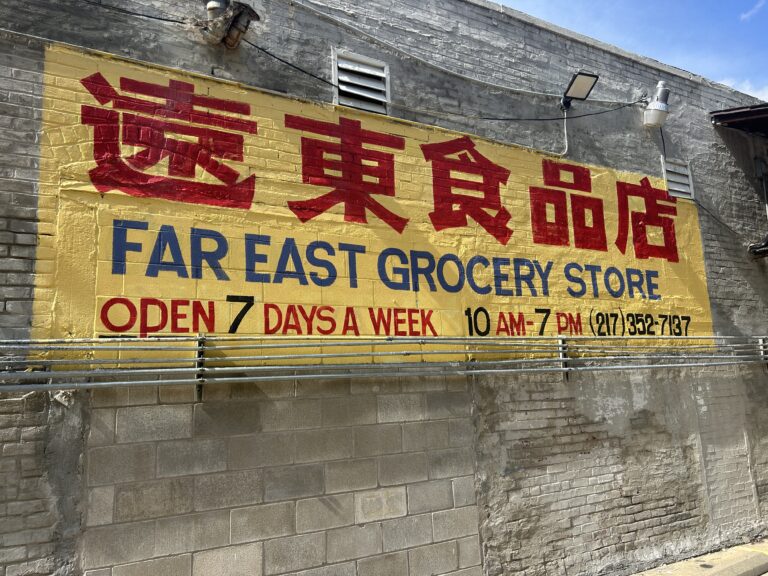
CHAMPAIGN — At Far East Grocery, store manager Vivia Diep stands behind the counter, ringing up customers.
Diep’s parents, Cuong Diep and Hong Tran, have been running the store since 1987. She said she’s been helping out for as long as she can remember.
“Maybe since I was eight, just helping my parents come in, say hello to customers, bag groceries and it’s been a part of my life,” said Diep.
For their family of immigrants from Vietnam, Diep said that the store represents the American dream.
“It’s also a reminder of what immigrant families can build through perseverance,” she said. “We’re proud that what started as my parents’ dream has become a palace that so many people consider part of Champaign-Urbana’s history.”
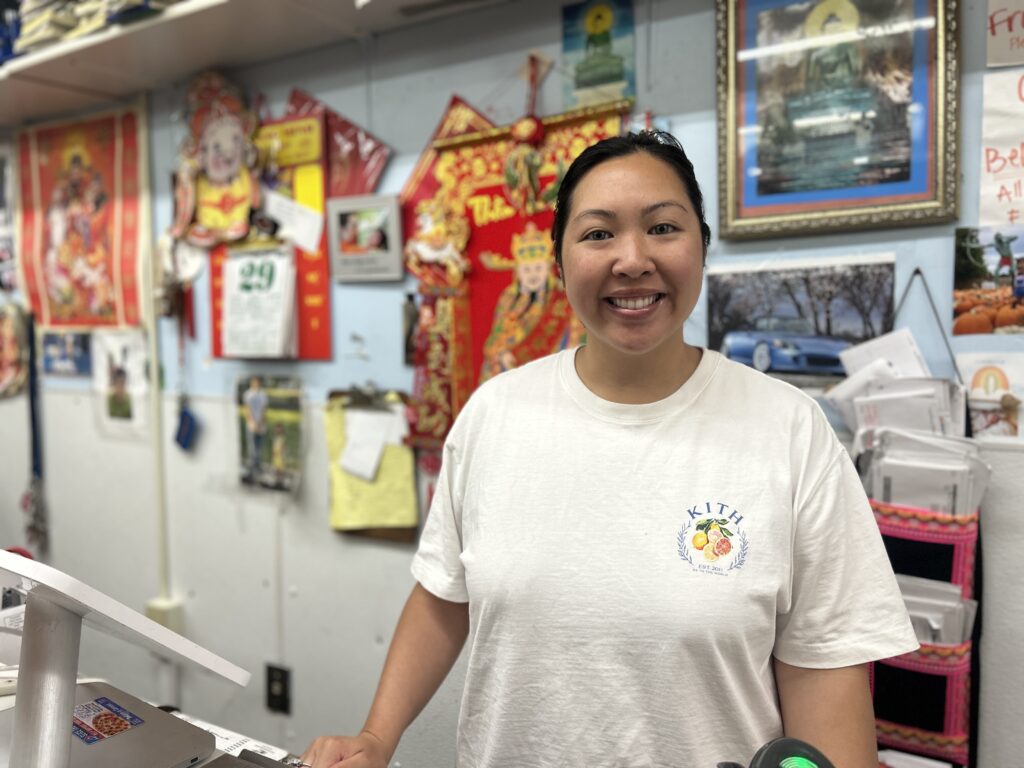
Sitting north of Campustown, Far East serves the growing local Asian community with a variety of produce, international foods and things you might not find at another supermarket.
And Diep said the store gives the community more than just groceries.
“I think it makes them feel happy to have a little taste of home and familiar faces,” she said.
Now, Far East’s impact is being honored with a landmark as part of a new Asian American Heritage Trail.
Trail aims to engage community members
The project started back in 2021, according to Kevin Tan, associate dean at the University of Illinois School of Social Work. He said he and his colleagues were asked by former dean Steve Anderson to consider ways to better teach social justice.
“I do quite a bit of community-engaged work,” said Tan. “And it often made me wonder how best we would be able to amplify those voices — the lived experiences of community members around here in Urbana-Champaign.”
That idea grew into a heritage trail meant to honor the local history and contributions of Asian Americans.
Asian-Americans have had a longstanding presence in the area
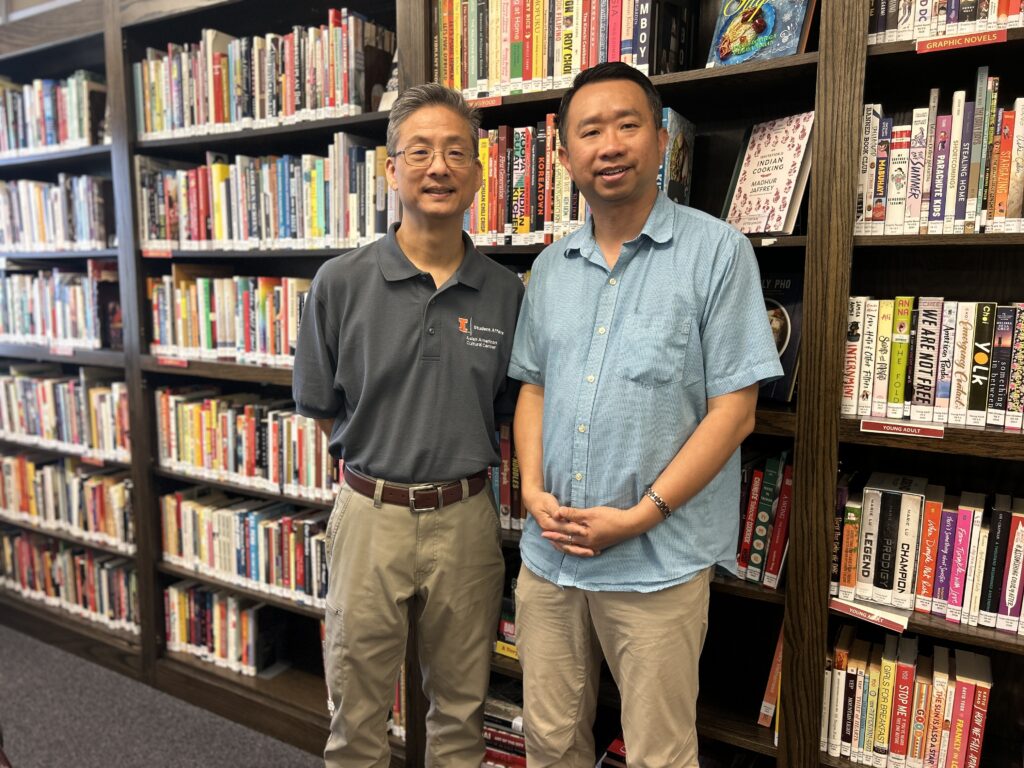
David Chih is the senior director of the Asian American Cultural Center at the University of Illinois and worked with Tan to kick off the project.
He says archival records show the first Asian international student came to the U of I in 1872 — just five years after the university was established.
“So we Asian people in Champaign-Urbana have had a long history of creating community, influencing others and being an asset to everyone who lives in Champaign-Urbana,” said Chih.
To select the initial landmarks for the heritage trail, Chih and Tan considered long-established institutions in the area that represented different aspects of the local Asian-American experience.
“So something from food, something from religion, something from new immigrants,” Chih said.
They landed on the Refugee Center, the Sri Maha Saraswathi Hindu Temple and of course, Far East Grocery.
Chih and Tan said they worked closely with the Champaign County Historical Archives to assist their research.
Chih said they were valuable in helping uncover facts from hundreds of years ago that they were not aware of.
“They found photos and detailed documents from the News Gazette that has helped inform us for this first trial,” Chih said. “We have a lot more that we need to uncover.”
Another heritage trail in the area has a similar mission
Chih and Tan also leaned on community partners while designing the trail.
Tan said that they attended sessions led by Barbara Suggs-Mason and Angela Rivers, former co-chairs of the African American Heritage Trail, and took inspiration from their work.
The trail is run and maintained by Experience Champaign-Urbana and has evolved to include 23 landmarks around Champaign County. The former co-chairs said two more markers are expected to be added this summer.
Rivers said they designed the African American Heritage Trail as a tool to teach the community about over 170 years of local Black history — and to address racial injustice.
“Go to the markers, visit the murals, and all of that through their own initiatives, they can educate themselves,” she said.
Suggs-Mason was excited to hear their project inspired others, with a similar goal of bringing visibility to untold stories.
“Isn’t that wonderful?” she said. “There are many stories in our diverse society, and we don’t always know it. The more we know about our diverse community, the more we can appreciate that diversity and [its] contributions to it.”
Fostering awareness for a growing community
In Champaign County, 12.5% of the population identifies as Asian. Chih said a variety of factors have driven Asian communities to settle in Champaign-Urbana.
“People come to the U.S. and come to Champaign-Urbana for opportunity — economic opportunity, for educational opportunities at the U of I,” he said. “They come for reunification with family who are already here, and they may be trying to escape something — escape war, famine, poverty, looking for new opportunities.”
Organizers for the Asian American Heritage Trail hope it fosters awareness, curiosity and solidarity among all residents in the area.
And for young people like Tan’s son, the trail could spark a deeper connection to their culture.
“I have a young boy, 10-years-old right now, exploring the world. I would love for him to also understand his own Asian identity, his own Asian roots, for him to be able to connect to the people around,” Tan said. “I think [the trail] helps to foster greater understanding.”
Right now, the Asian American Cultural Center is forming a committee to help put up signs at the landmarks.
And while the trail is still in its infancy, Chih and Tan say they’re continuing to research local Asian history and plan to add more landmarks over time.