

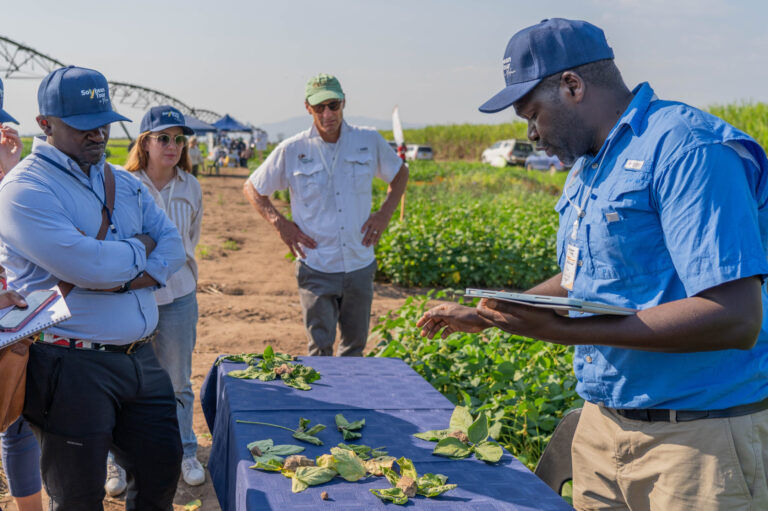
CHAMPAIGN — The Soybean Innovation Lab is awaiting final approval for a $1.5 million grant from a research foundation. The money will help expand the lab’s efforts to combat global food insecurity and poverty by increasing the number of soybean varieties available to 28 African nations.
“It’ll be a way for us to be present in different countries and to provide proof that you can scale up these [soybean production] activities to make a big difference,” said Earl Kellogg, a member of the lab’s international scientific advisory board.
For the past 12 years, the lab at the University of Illinois Urbana-Champaign has worked with 31 countries to implement soybean crops in their fields. Earlier this year, the lab was nearly shut down after President Donald Trump’s administration cut funding for the U.S. Agency for International Development.
“I don’t think anyone would have thought that you could get rid of USAID, but it happened, so we had to deal with it,” said Peter Goldsmith, director of the lab. “We’re just picking up the pieces and making do with what we have, and we’ll see what the future holds.”
An anonymous $1 million donation has helped the lab keep its doors open with limited staff.
Though the Soybean Innovation Lab was forced to cease operations in 30 countries, the donation allowed the lab to continue its work in Malawi in hopes of registering new soybean varieties in the country.
“It was kind of a light in the end of the tunnel for us,” said Julia Paniago, product lead of the Soybean Innovation Lab.
What new funding could accomplish
Soybean varieties are different types of soybeans bred with genetic traits that suit specific environments. The lab has created and supported the introduction of soybean varieties in African countries.
The Soybean Innovation Lab helps countries choose which ones best suit their climate to achieve higher crop yields.
“If you don’t have new varieties, your yields will always be low,” Paniago said. “If you have new varieties coming in every year, every year you have new technologies, more adaptable varieties performing better each year, your general production will increase.”
But in order for a country to access soybean varieties, they need to be registered in regional catalogs. According to Paniago, it can be time-consuming and cost thousands of dollars. Countries often need to go through government bureaucracy to test soybean varieties for multiple seasons, which could take years.
Michelle Santos, associate director for the lab, said the new funding could speed up the process for countries to access soybean varieties. Countries can go straight to testing the soybean variety of their choice for a season.
“They don’t need to go to any other step, they don’t need to deal with the government,” Santos said. “They just go to the owner of this soybean variety, and say, ‘I want to commercialize this variety in my country.’”
To accomplish this, the lab needs to approve soybean varieties in two countries. The lab has already registered seed varieties in Malawi. The $1.5 million in additional funding would help the lab do the same in Zimbabwe.
Once that happens, these seeds will enter into the Southern African Catalog and the COMESA variety catalog and countries across Africa will have soybean varieties to choose from.
The importance of soybean varieties
Africa is home to nearly 60% of the 512 million people projected to be chronically undernourished by 2030. Last year, the percentage of African people experiencing food insecurity surpassed 20%.
Paniago said greater access to soybean varieties can boost a country’s economic development and make food more affordable.
“The local community will get more money,” she said. “The industry will produce more poultry, the meat industry, all the industry will develop so you rely less on importing grains, and you will be stronger economically.”
Kellogg said growing Africa’s agricultural and economic sectors could benefit the U.S. by creating good markets and making them effective trading partners.
“It’s in the economic interests of American exporters that we find ways to help countries increase their incomes and become much better customers over the longer run,” he said.
How the USAID shut down impacted the SIL
With help from previous USAID funding, the Soybean Innovation Lab provided countries with technical support to implement soybean production. The lab guided them with the best agronomic practices to plant their soybean crops, gathered data on their crop yields and registered soybean varieties.
When funding was cut, Santos said the lab was unable to help countries sustain their soybean development.
Some countries stopped planting soybeans because a disease called soybean rust killed many of their crops. The lab also lost communication with many countries. Very few nations are continuing to work with soybeans with the help of external funding sources.
Santos said many countries were close to finally registering soybean varieties before USAID shut down.
“All the time we put in were all wasted, they could not advance and register the [soybean] line,” Santos said. “So for the Soybean Innovation Lab, it was very sad to see everything stopping the clients and dropping off.”
Hope for the future
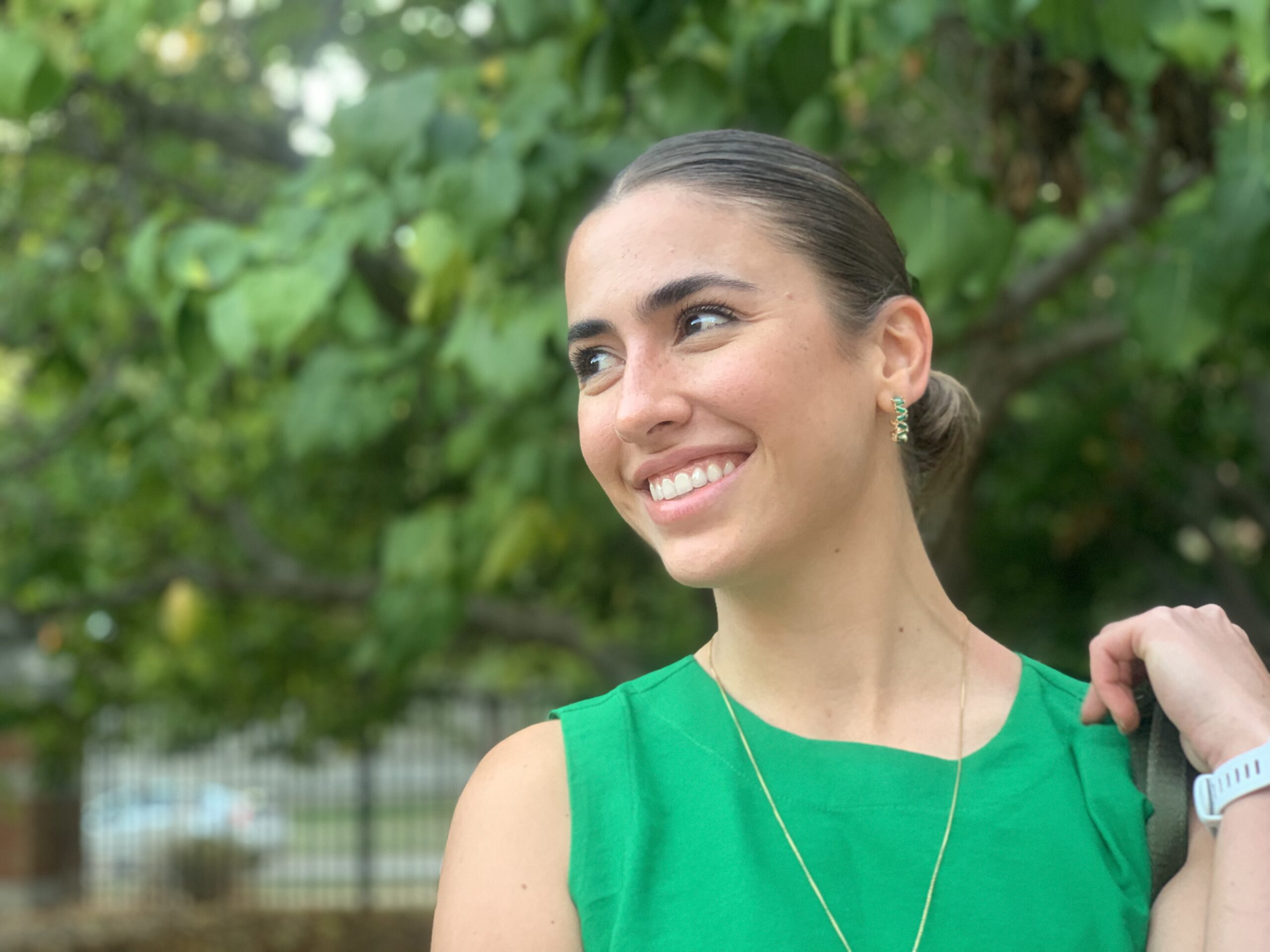
With the prior anonymous donation and potential new funding on the horizon, Paniago has hope for the lab’s future and its impact on African countries.
“I’m so happy we are back, I’m so happy we had this gift,” Paniago said. “I’m so happy we had the chance to move forward with this work and be able to help so many people [and] so many companies.”
So far one crop, 16 FM, has been registered and entered into the catalogs — one of many soybean varieties to come.
“Getting the first one was like, ‘Okay, we broke all the barriers, we can do that,’” Paniago said. “And that was one of the biggest achievements for SIL.”
The lab hopes to give African countries access to 10 to 15 new soybean varieties by 2027.
“We really like what we’re doing, we’re having a real impact,” Goldsmith said. “It’s been a good ride since 2013 and to be able to continue it is fantastic.”