

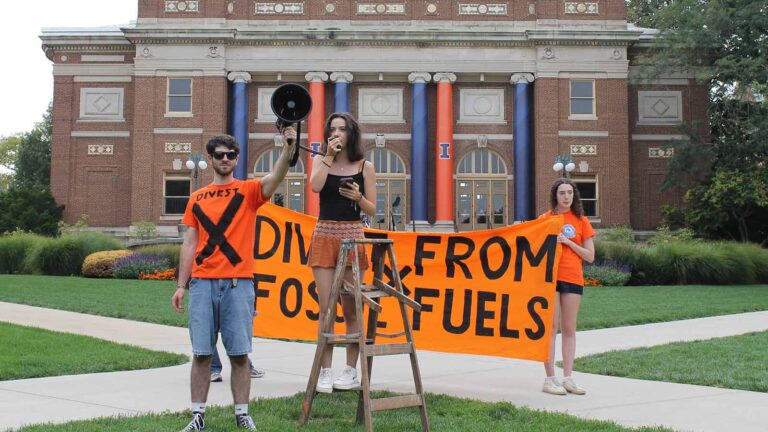
The University of Illinois Urbana-Champaign said in 2020 that it would aim to stop investing in fossil fuel companies by this summer.
It hasn’t happened yet.
“Those investments are with our tuition dollars, and what we’re doing here today is asking them to not invest our tuition in fossil fuel companies. It’s a pretty simple demand,” said Grayson Hodson, Students for Environmental Concerns UIUC action coordinator.
Hodson is a junior and helped organize a protest on Friday urging the administration to complete the plan.
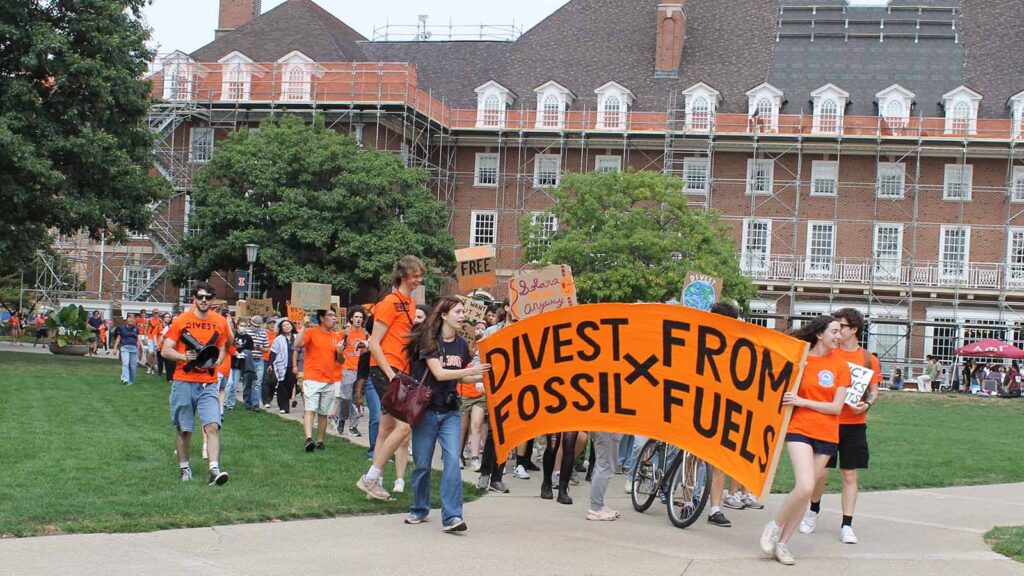
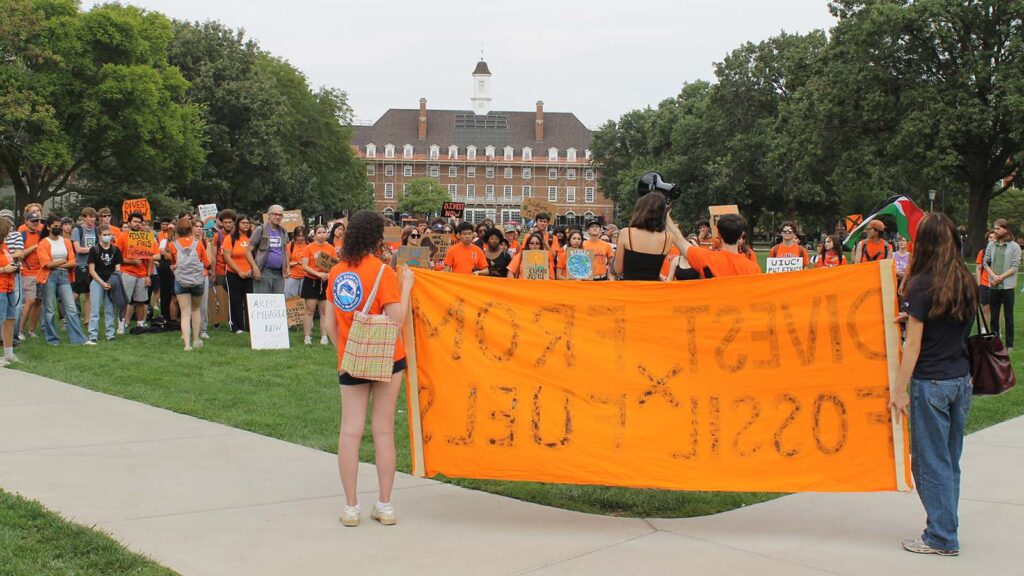
About 70 students, and some older adults, marched down the U of I Quad, chanting, “We will not rest until we divest.”
Undergraduates from SECS, the Young Democratic Socialists of America, Students for Justice in Palestine, Illini Democrats and Amnesty International spoke, as did a member of the Graduate Employees Organization.
U of I spokesperson Pat Wade said the divestment goal in the 2020 Illinois Climate Action Plan (iCAP) reflected student interest, but that the larger University of Illinois System makes the investment decisions.
“As we prepare the 2025 iCAP, the plan has been refined to focus on what our campus can directly do to cut emissions, improve efficiency, and advance research that supports a carbon-neutral future,” Wade said by email.
He also said that divestment may not do what the students want it to do.
“There is little evidence or research indicating that divestment or other exclusionary strategies meaningfully achieve the goals of such campaigns,” Wade said.
IPM News reached out to a researcher who has published about divestment to check this claim.
Todd Ely is an associate professor and the director of the Center for Local Government at the University of Colorado Denver. His research focuses on public finance, and he published a policy brief on university divestment in April 2025.
Ely said that one university’s divestment doesn’t cause meaningful financial loss for one company or country – but the goals of divestment proponents go beyond the economic outcomes.
“Such efforts have been more effective in gaining attention and legitimacy for a cause while stigmatizing the targeted entities through what is a largely symbolic action,” Ely said.
Hodson also said that one university’s divestment will not end climate change. He said it does help other universities with their decision and lead to change in that way.
Hodson used the Transparent and Open Resource for Institutional Investments website and the University of Illinois System annual investment report, along with documents requested through the Freedom of Information Act, to calculate that the U of I System has invested about $170 million in fossil fuels.