


DECATUR— Illinois is once again moving forward with an effort to bring a new fertilizer production facility to East Central Illinois.
At Tuesday’s Farm Progress Show in Decatur, Gov. JB Pritzker announced Cronus Chemicals is investing over $2 billion to build an ammonia production facility in Tuscola.
The state renewed an Economic Development for a Growing Economy tax incentive agreement with Cronus on Monday.
Pritzker said the facility would help combat rising agriculture costs.
“At a time when the new administration in Washington has imposed tariff taxes and cuts to programs at the USDA, and they’re taking their toll on farmers and on rural communities, this new Illinois investment is a critical boost to our most important industry,” he said.
Officials claimed the project would reduce the reliance on imported fertilizers in Illinois, the state they say consumes the most ammonia.
According to a news release, the plant will produce 950,000 short tons of ammonia a year and reduce carbon emissions through carbon capture and storage.
“Nothing can be more important than addressing the needs of our growers in this part of the United States of America,” said Melih Keyman, chairman of Cronus Chemicals’ Board of Directors, in a recorded video at the show. “Farming is arguably the most difficult of professions in the world as it continuously faces challenges and uncertainties, from weather to input prices and ever-changing regulations. It should be everybody’s business to make sure that our growers have access to affordable inputs.”
The project has been of interest for years in Douglas County, as Cronus has sought to build the plant for more than a decade.
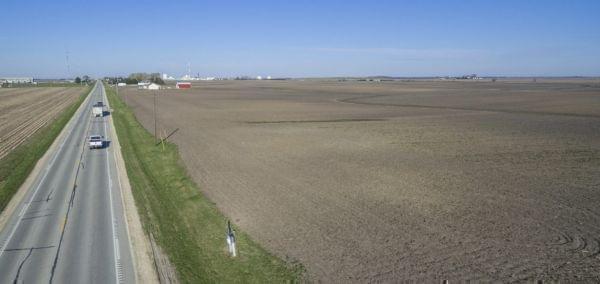
The company first announced the project alongside state officials in 2014, but construction was delayed due to financial challenges and permitting requirements.
The company recently received construction and air permits from the Environmental Protection Agency to move forward.
The project previously qualified for nearly $40 million in tax credit incentives from the Department of Commerce and Economic Opportunity.
Brian Moody, executive director of the Douglas County Economic Development Corporation, said the project is now one step closer to becoming a reality.
“Tuscola and Douglas County are proof that rural communities can compete and win on a global stage,” he said. “We may be small in population, but our strengths are big: expansive natural gas and utility infrastructure, first-class rail and highway connections, and most importantly, a workforce and a community that understands what it means to get things done.”
Officials say the plant will create around 2,000 union construction jobs and have 130 full-time employees when it opens.
Officials did not announce when construction will begin — or when the plant is expected to be operational.