

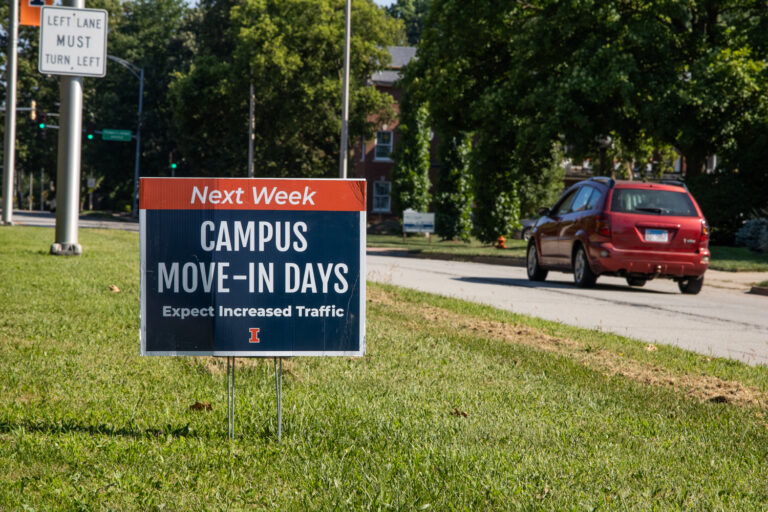
URBANA — McKinley Health Center sent an email to all University of Illinois faculty, staff and students Tuesday warning them to protect themselves from measles. As thousands travel to Champaign-Urbana for the fall semester, the risk of an outbreak could increase.
“People are traveling to places where measles cases are more endemic, and they’re coming back here,” said Awais Vaid, the executive director of McKinley. “So what happens is, if there are enough people out here who are not vaccinated, then the cases continue to spread.”
Measles was declared eliminated in the U.S. in 2000, but as vaccination rates have declined, cases are increasing. In 2025, there have been over 1,300 confirmed cases nationwide — higher than any year since 1992.
According to a new report from the U.S. Centers for Disease Control and Prevention, vaccination rates among kindergarteners decreased for all reported vaccines in the last year, leaving about 138,000 kindergarteners exempt from one or more vaccines during the 2024-2025 school year.
Measles is considered highly contagious, and there have been 10 confirmed cases in Illinois so far this year — but more are expected.
Vaid said young children and the elderly are most at risk from measles.
“Their immune system is not as good when [they] are young, so they are also at a higher risk,” he said. “But you know, we have seen measles affecting all age groups, especially if you’re not vaccinated.”
Students enrolled at the University of Illinois must provide documents proving their vaccination or immunity status, otherwise they may file a petition for an exemption. Exemptions are given for medical purposes, like a severe allergy or other complicating conditions, or religious purposes.
The CDC’s report showed an increase in vaccine exemptions among kindergarteners, largely for non-medical purposes.
Vaid encouraged adults who may not have received the vaccine, or who may only have one dose, to talk to their health care provider about getting vaccinated. He also shared advice for preventing the spread of disease and illness regardless of vaccination status.
“The best thing you can do for yourself and for all of your friends and the community is to stay at home when you’re sick,” he said. “There might be a neighbor in your class or your lab partner who may have underlying health conditions, and they may not be able to take it as well as you.”
Symptoms of measles to look out for include fever, cough, runny nose, red-watery eyes and rash, which may appear within 7 to 21 days of coming in contact with the virus.
Vaid also emphasized that unvaccinated people or those who are not fully vaccinated who are exposed to measles are required to quarantine for a minimum of 21 days.
“If you were fully vaccinated and you come in contact with someone who had measles, you don’t have to isolate,” he said. “But if you are not vaccinated, for a student, that might mean missing midterms, that might mean missing finals, or all the things in between as well.”
Measles vaccines are available at McKinley, as well as several hospitals and pharmacies in Champaign-Urbana. More information about the disease can be found online on the CDC website.