

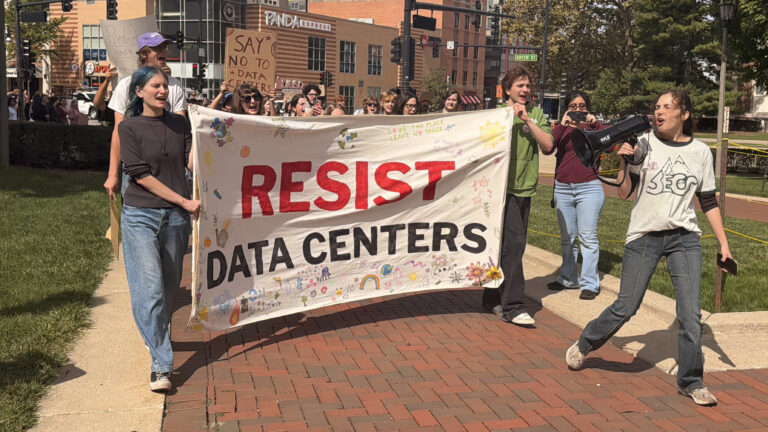
URBANA — Dozens of students and community members gathered in front of Foellinger Auditorium on the Main Quad at the University of Illinois Urbana-Champaign to show their opposition to the construction of AI data centers in Champaign County.
The protest on Friday, Sept. 25 was organized by the Students for Environmental Concerns (SECS), a registered student organization at the U of I.
Gabi DelSanto, SECS president and a U of I senior, said the group got involved with data center matters after meeting the co-founders of Resist AI Data Centers in Champaign County — Ruth Yontz and Antonia Herbstreit.
“So that really lit a fire under us,” DelSanto said. “We started planning out ways that we would get involved with them and involved with other organizations to stop [data centers] from being built in Champaign.”
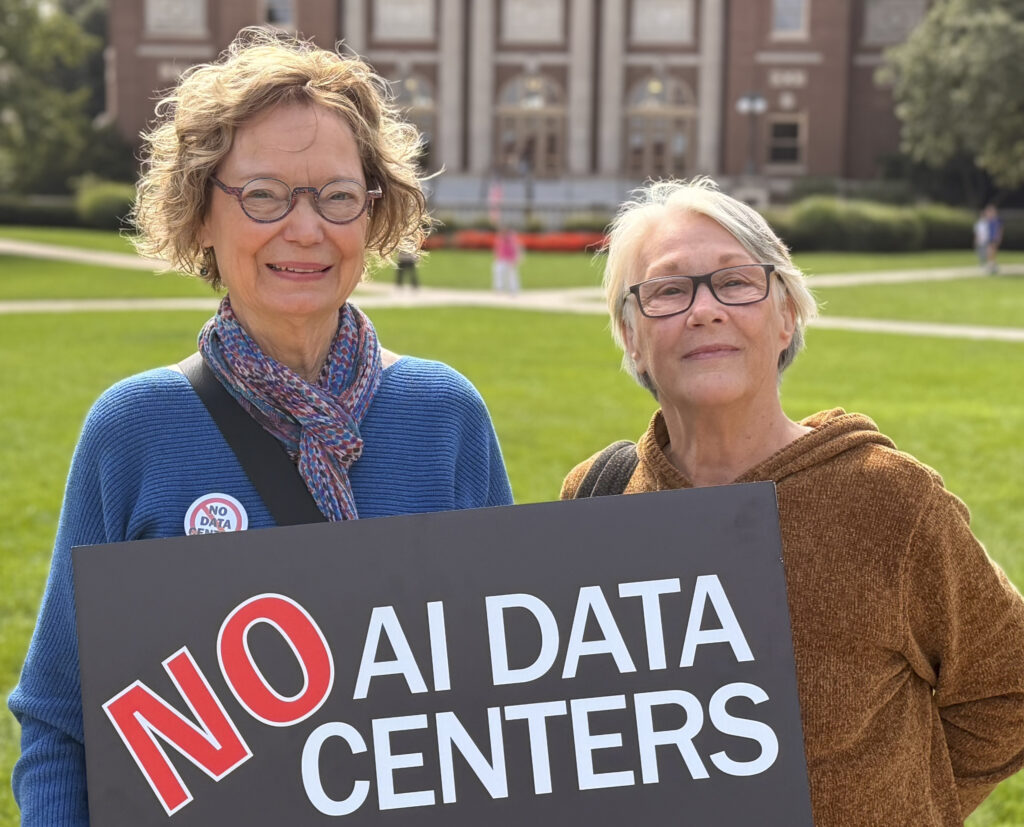

Yontz and Herbstreit were also at Friday’s protest. Herbstreit said she worries about the Mahomet Aquifer.
“If our aquifer gets polluted, there is no way to clean that back up to drinking water,” she said.
The Mahomet Aquifer supplies water to about 1 million people across 14 counties in central Illinois. Herbstreit said she worries that if this source were to become contaminated or drained by data centers, communities across the region would be harmed.
Lauryn Barnett, a sophomore in political science at the U of I, said she attended the protest to voice her concerns about protecting nature more broadly.
“I think it’s very important that we take care of our environment,” Barnett said. “We know what these data centers are doing, not only in Champaign, but in Chicago and all across the country. We want to make sure that we are protecting our environment the same way it has been doing for us for the last centuries.”
The protest hosted speakers from Prairie Rivers Network, Black Students for Revolution and Students for Socialism, and the U of I’s Thomas M. Siebel Center for Computer Science.
The speakers shared personal testimony and insights about data centers and the harm they could cause to humans and the environment.
Next steps for a local data center ordinance
Emotions are high as community members await news from the Champaign County Data Center and Activities Task Force, which is developing a local ordinance to regulate new construction of data centers in the county.
The county’s 12-month moratorium on data centers with at least 10,000 square feet of processing space expires in April 2027. Officials say that since Champaign County is not a home-rule county, its authority is limited by powers granted by the state.
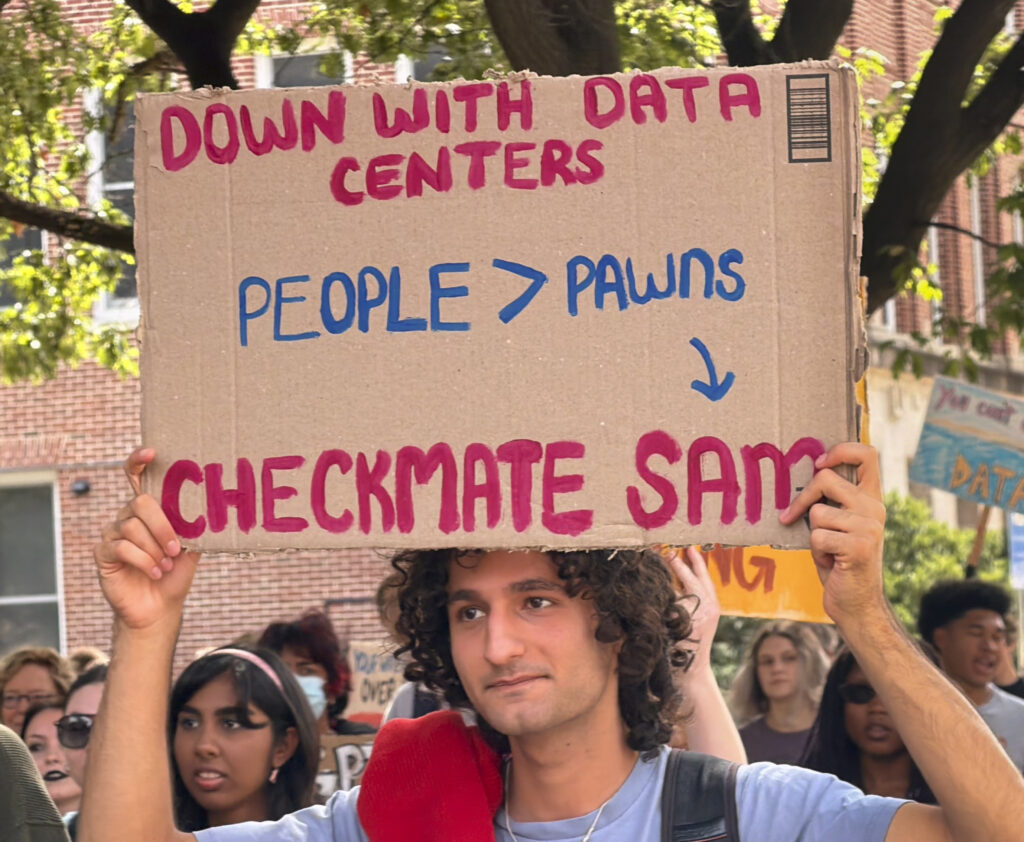
So, an outright ban is not possible, they say — but they can pass an ordinance to regulate land usage through zoning.
While they wait for news about the ordinance, Yontz said she and Herbstreit will continue to provide public input at the Data Center Task Force’s meetings.
The task force is considering adding a required decommissioning bond for data center developers, which would require developers to put money aside so that if the data center were to shut down, they can properly remove all internal equipment so the property can be repurposed for future use.

“We are already talking to them,” Yontz said. “We are going to their meetings. We [are] providing all different aspects of the ordinance that they’re working on.”
The task force discussed several potential regulations at its meeting on Monday, Sept. 21. Task force chair Emily Rodriguez, vice chair of the Champaign County Board, says they hope to have a draft ordinance finalized by November.