

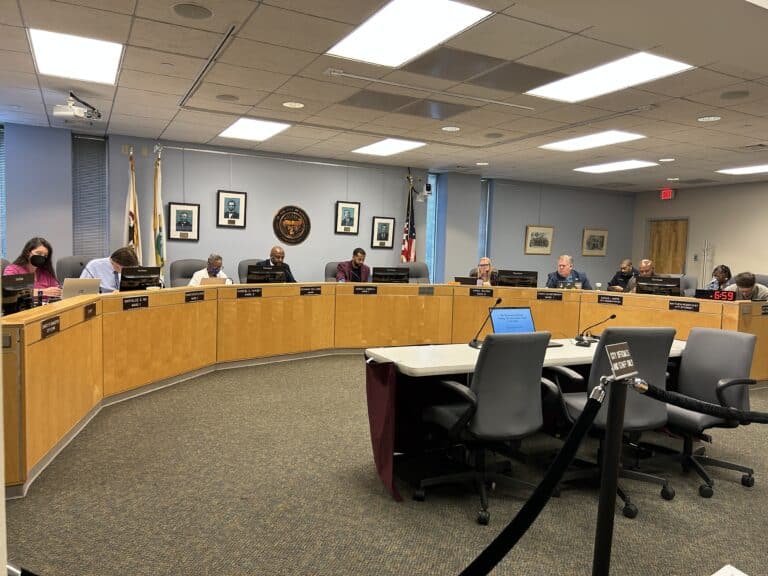
URBANA — The Urbana City Council is postponing a decision on a controversial housing project on West Main Street.
The plan to build a four-story apartment complex just north of Boneyard Creek was initially proposed to the Council in May. City officials voted to move forward with the proposal.
After a lengthy discussion during the regular meeting Monday night, council approved a motion to defer the final decision.
“Overall, I am in support of this [planned unit development],” council member Grace Wilken said. “[B]ut also I’m willing to delay because there’s some more information I think we could potentially benefit from.”
She cited a potential shared multi-use path with Boneyard Creek and potential design input for the architect as aspects she would like information on.
Council member Maryalice Wu raised several concerns, including the development’s affordability for the community and its misalignment with the “Neighborhood One” comprehensive plan.
The Neighborhood One plan aims to maintain the character of the city and preserve R2 zoning in West Main Street.
R2 zoning — which generally allows single-family homes, duplexes and low-rise buildings — is what currently governs West Main Street.
“When we did [Neighborhood One], we said we needed to maintain R2 where it currently exists within the west,” Wu pointed out. “What I feel is a disservice for us to suddenly say this comp plan that we passed less than a year ago shouldn’t be applied.”
Residents showed up to express both support and opposition to the proposed project.
Lifelong Champaign-Urbana resident Alexander Rushing said that new housing development is crucial for the future of the city.
“When you look at a 32-unit development, those are people who are more likely going to be using bikes. They are more likely going to be coming right over here to do their shopping at Lincoln Square Mall at the Schnucks, that’s just down the road over there,” he added. “That is something that will improve the character of the neighborhood.”
Others, like Urbana resident Phillip Garrett, raised infrastructure and traffic concerns that this development would bring to the neighborhood.
“Cities cannot just make the streets longer or widen land to accommodate more people,” he said. “[W]hat happens when you add 32 additional automobiles to added traffic on Main Street, where there are no street lights and only stop signs? What will the impact be on the traditional way of the road?”
Garrett also said he “would love to share Urbana with more people, but this needs to be achieved by adhering to the city’s comprehensive plan, which dictates definitively what is and is not allowed.”
The Urbana City Council is expected to take a final vote at a special meeting on July 6.