

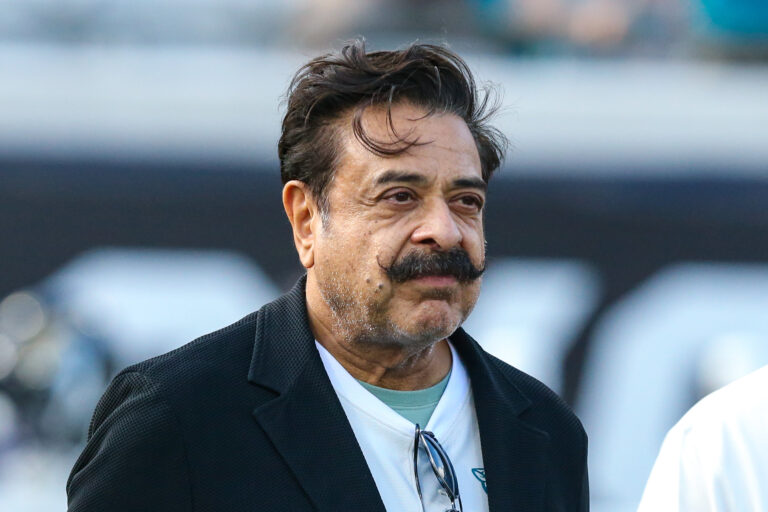
University of Illinois Urbana-Champaign alum and billionaire Shahid Khan has been nominated two times in the past to receive an honorary degree.
Khan, who graduated with an industrial engineering degree in 1971, owns the automotive manufacturing and supply company Flex-n-Gate, which is headquartered in Urbana. Khan has also given millions of dollars to the U of I for various athletic and academic projects.
The billionaire was nominated in 2013 and 2024 to receive honorary degrees from the school, but the University Senate rejected both of those nominations.
The Daily Illini reports the U of I system universities are reexamining their processes for awarding honorary degrees.
Ryan Perlman is a senior news reporter at The Daily Illini and a junior at the U of I who wrote about the timeline for those rejections.
IPM’s Morning Edition host Kimberly Schofield spoke with Pearlman to learn more.
KIMBERLY SCHOFIELD: Ryan, can you explain what an honorary degree is, and why was Khan nominated to receive one?
RYAN PEARLMAN: An honorary degree is this thing at the University of Illinois, and other universities across the nation, where it’s meant to, here, honor an extraordinary or exemplary candidate. And he was nominated for one because there were certain members of the faculty and higher-ups in the administration that believed what he has done with his manufacturing company and the support that he’s given have been something noteworthy and exemplary in that fashion.
SCHOFIELD: Your reporting mentions when Khan gave a speech to the 2013 graduating class, there were some people protesting his appearance. Can you explain what criticisms he has faced?
PEARLMAN: Yeah. So, one of the main things he’s faced in throughout the [University] Senate debates and throughout the time students picketing was actually because of [Occupational Safety and Health Administration] violations that he’s had from his company. It was originally mentioned in the senate meetings. That’s what senators were taking issue with when they were talking about honorary degrees and trying to give him one. But outside of that, there are online trackers where you can look through and kind of see the different filters for each company. So I went through and looked through everything, all the different Flex-n-Gate locations, including the Urbana location right near campus.
SCHOFIELD: Ryan, you looked over the timeline for Khan’s relationship to the university and him being considered for honorary degrees. Can you explain what you found, and if anything stuck out to you?
PEARLMAN: One of the main things that stuck out to me about the story was just how many different directions there are to go. There are some people who believe that the honorary degrees process right now should remain the exact same. There are others who want honorary degrees as an entity to be removed entirely. There are others still who think that the process should remain the same, but be changed in slight ways depending on the candidate and the situation at hand. And really, just the complexity of the situation, and the amount of different ways that even these really well-educated university members think that it could go is just something really interesting to me.
SCHOFIELD: The rejections that the University Senate did for the nominations … was it primarily the OSHA violations that made them say no?
PEARLMAN: Based on what I saw in the meetings, I would say so. And there were a couple other things that were mentioned, but it was mainly this idea that his company that’s nearby campus, has not only had some sort of history of violations within — it was between 2010 and 2012 mainly, is what I found for violations. And this was, you know, 2013 right, when he was nominated. And some of them were still pending. They were [saying], ‘we should wait until the results’ of the kind of investigation OSHA was doing before the senators wanted to vote. And then when it came time for 2024 the senators were like, ‘we already did this 10 years ago. We’re not gonna do it again.’ And the other thing was, some senators were concerned that Khan’s donations to the university were what was driving the nomination.
SCHOFIELD: Why is the U of I system now reviewing how it gives out honorary degrees? And do you have any idea what changes could actually come to the process?
PEARLMAN: So, after the 2024 December nomination was rejected by the Senate, there were multiple administrators, the athletic director, the chancellor at the time, the Board of Trustees chair at the time, and the university system president, who all spoke out to a local press outlet, and they were kind of upset with the decision that the Senate had taken. And after this, the university system president Tim Killeen, he reached out, and so did Chancellor [Robert ]Jones, at the time, two senators who were involved in the process, and they said, ‘we want this process changed. We want it to be reviewed, maybe not necessarily changed right away, but at least reviewed.’
And so senators have gone through over the last, almost two years now, since this has happened, and thought of different ways that we could change the process or alter it due to the situation happening with Shahid Khan. Because it was just something that a lot of them said they felt was something kind of embarrassing for the senate to be talking publicly about someone that has donated back to university and is such a prominent alum in such, just a negative light in general.
One of the other things that I should say they’re potentially changing is just this multiple directions of, one of them being ‘how do we secure candidate privacy?’ So they wanted, not only for the process itself to be this more private thing — some of the members were saying — but also that they wanted the candidate themselves to not know about the degree beforehand, before they are supposed to get it.
SCHOFIELD: Okay, so not notifying them.
PEARLMAN: Yes. Which also goes kind of contradictorily towards one of the things that I heard, because it was also said in one of the meeting minutes I looked at that a few years ago, there was a nominee who was passed through the senate — and the senate is just supposed to give recommendations for candidates — and they were passed through the senate, and it goes to the Board of Trustees for final vote. For this candidate, the Board of Trustees had actually rejected the vote after the senate approved it, and the Board of Trustees agendas are public, so this is, like, this public thing. After that a process was made this, again, informal process, they said, where, after a candidate is put through the very first honorary degrees committee and approved, there it goes instead to the Office of the Chancellor, who forwards it to the Board of Trustees informally, who then they say, ‘yes, we’ll let this candidate through for the vote if it goes to the Senate.’ Then it goes to the Senate for vote, and then it goes to the Board of Trustees for an official vote. Now this is all just stuff I’ve heard and seen the meeting minutes, and this would be, this is not something you can, like, track down and look for necessarily.
SCHOFIELD: What can we expect next with this entire process?
PEARLMAN: Yes, so what I’ve seen so far just looking through the meeting minutes that have come out this review commission. It’s called the Ninth Senate Review Commission, was a group established to look at the whole senate and especially the honorary degrees process. One of the things that they’re thinking about doing is creating something called the Joint Advisory Committee. This Joint Advisory Committee would have some senate representation on it, but would not be fully through the senate. It would also have representation through members like the Office of the Chancellor, for example.
And what that would do is would allow the committee that group to meet within a private setting, so that the entire way through, if the senate still gives recommendations to the Board of Trustees, that process of giving the recommendation would be a private thing. Instead of right now, where it’s public, underneath the Open Meetings Act in Illinois, which requires Senate meetings to be public. That also exists right now, there’s something called the Joint Advisory Committee, and I think it’s licensing and naming rights, where they have this group of people who don’t meet in a public light and then still do this kind of decision-making. So this would be modeled off of something like that. So they would have another sort of Joint Advisory Committee, and senators have expressed that this would be this sort of thing would be for protecting the privacy of the candidate and the process, and also just this public embarrassment they talked about would be avoided. But it also leaves this level of scrutiny that exists right now over the process and over the honorary degrees, it would be removed from the public’s eye, and we wouldn’t be able to do this sort of reporting that we’re looking at right now, where seeing how the actual candidates are being talked about in a public light would not happen anymore.