

Note: This story discusses sexual assault and child sexual abuse prevention efforts.
URBANA — A local organization recently received an award to enhance education and community engagement around preventing child sexual abuse.
RACES is the sexual violence and stalking service provider that serves four counties in East-Central Illinois. The organization provides free and confidential support for sexual abuse survivors and loved one impacted and is one of 22 recipients of the Darkness to Light Advocacy Award.
Jaya Kolisetty, RACES executive director, spoke with IPM’s Morning Edition host Kimberly Schofield about the award and the organization’s services.
This interview has been edited for clarity and conciseness.
JAYA KOLISETTY: Our response services, some of them are more crisis focused, and then some are more focused on the long term healing aspects. Those crisis services include a 24 hour hotline, and then we do also respond to the emergency department, 24 hours a day. I think a lot of folks don’t know if they go in to the emergency department after a sexual assault, if it’s within at least seven days, they can receive free care for, you know, any injuries they might have, if they have concerns around pregnancy or STIs or just to get checked out or to have evidence collected. We work really closely with the sexual assault nurse examiners at Carle. They are actually the only hospital in our whole four county areas that has that evidence collection program. So those survivors do get transferred from all over our service area and sometimes even farther, but that service is free. So we can provide information, emotional support, be there with survivors to make sure that they know kind of what that process looks like. And if they need clothes, right? So if clothing is taken as part of evidence collection, we’ll bring out brand new clothing for folks.
KIMBERLY SCHOFIELD: Are there things that the organization does in and around the community to make people aware of who you are?
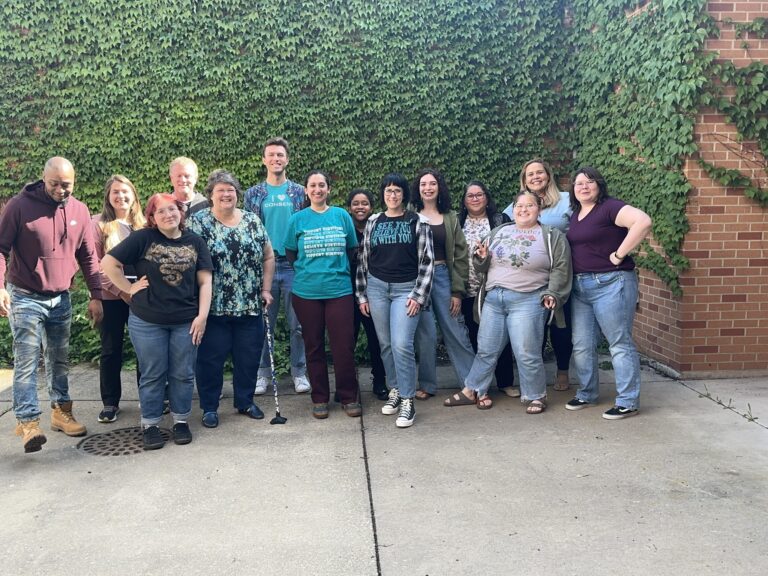
KOLISETTY: Yeah, so we do participate in a lot of community events. We have amazing partners, and we do try to make sure that we show up at their events, and are fortunate to have them at ours. April is Sexual Assault Awareness Month, so we’re planning events to create opportunities for survivors and supporters to share their art. We will have opportunities for folks to come view our space and kind of engage with different ways of healing. And then the first Tuesday of the month, we are encouraging people to wear teal. Teal Tuesday, first Tuesday of April, show your support for survivors. Teal is the color for Sexual Assault Awareness Month.
SCHOFIELD: RACES recently received the Darkness to Light Advocacy Award meant to protect children through education awareness and community engagement. Would you mind explaining what exactly that means?
KOLISETTY: What it does is it creates an opportunity for us to provide this programming for adults in our community. Our goal is to reach at least 100 participants in 2026. This is a program that we already offered, but it’s not the easiest to offer, because there’s a cost to it, right? Like we provide programming for free, but it includes a workbook. We want people to have those tangible tools. So this award allows us to have that stock of workbooks for 100 participants. And what’s beautiful about this program is it does pair so well with the work that we do with kids because it’s teaching adults ‘what are the various ways that you can be part of creating a safer environment?’
So I think a lot of times we’ll talk about, ‘how do you respond appropriately if a kid does tell you something?’ they disclose abuse. But what is amazing about the Darkness to Light program is it walks through things like, ‘what are the policies of your organization? What is the physical layout of the space within your organization? Are there opportunities for someone who is trying to cause harm, to do so without being noticed, to isolate children, to have that opportunity to groom them?’ which is so often part of the process of child sexual abuse. And so it really does help organizations kind of look at what steps they can take proactively to reduce the likeliness of sexual abuse happening and then also give them the tools to respond appropriately if a child does disclose as well.
I think a lot of people don’t want to think about this. They don’t want to talk about it. The reality is, it’s happening, right? We do see survivors for therapy services as young as three years old, right? We see survivors who are even younger than that in the emergency department. So making sure that if a child discloses they have trusted adult, they have someone who has the skills to listen to them and believe them, right? So often, children have to disclose multiple times before they’re believed. And so we want to make sure that there are more members of our community who are prepared to respond appropriately and also be part of that proactive prevention approach.
SCHOFIELD: When you say that you would like to reach at least 100 people in 2026 would this be participants of any specific age range, would they be coming to RACES?
KOLISETTY: Right now, we’re really focused on reaching out to, you know, are there parent groups? Are there other service providers? How do we make sure that the other amazing adults who are working with kids in our community are prepared to think about what is their role in keeping kids safe? How are they responding if they hear something? That being said, you know, if there’s a group of adults who are like, you know, ‘we would really like this programming too,’ please reach out to us. We will absolutely facilitate a way to make that happen. It might take a little bit of coordination to find an appropriate space and things like that. It helps create a more holistic approach to prevention because there’s so much that we can do with working with kids, but ultimately it’s adults responsibilities to make sure those kids are safe.