

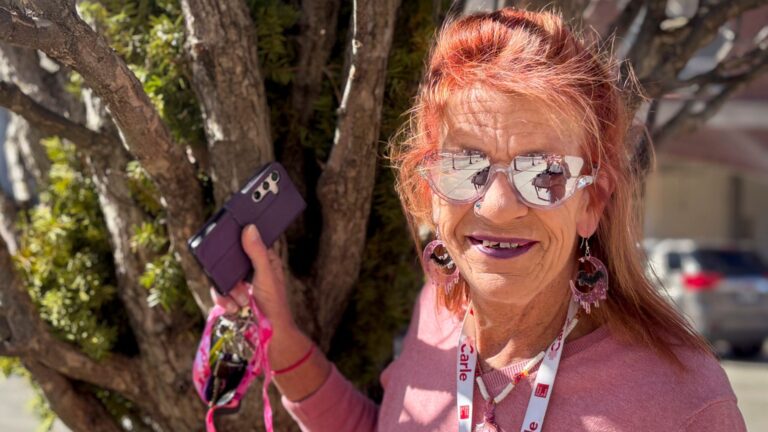
CHAMPAIGN — Christine Pierce, 50, bought her first house in 2023. She says it was a miracle.
“I’m grateful because, man, I’ve crawled out of hell with a ladder that was on fire,” Pierce said. “I don’t have ungrateful days, because it could never be as bad as what it was for me.”
She said owning a home felt out of reach for most of her life. Pierce was in active addiction for 12 years, went to jail, prison and was homeless for a period of about two years.
Pierce was able to connect with local resources and find a path to recovery and financial stability, and today, she’s an outreach coordinator at Carle Addiction Recovery Center, drawing from her life experience to support people on their journey to recovery and housing.
The rising cost and shortage of housing are driving factors of homelessness in Champaign-Urbana, and while local resources are available to help, the transition from homelessness to housing is challenging for many.
Addiction can make it even more difficult to transition into stable housing. While substance use challenges are prevalent across society, research shows the stress of housing insecurity is correlated with increased odds of substance use. Around 1 in 3 people who are homeless have issues with alcohol and/or drugs, many with lifetime histories of drug or alcohol use disorders, according to research cited by the American Addiction Centers.
“Other people in recovery showed me the way out,” Pierce said. “They believed in me, and we understood the hell we had lived through.”
The journey from active addiction to recovery
When Pierce was 30, she strained her back picking her daughter up. She said the doctor prescribed opioids for the pain. At the time she was a licensed social worker, a wife and a mother.
Pierce said she was unaware of how addictive the medication was. When her prescription ran out, she experienced withdrawals and said she jumped from pharmacy to pharmacy and even broke into people’s houses to search for pills.
Once she could not find prescription opioids anymore, she said she moved to heroin. Her life spiraled out of control.
“I used anything and everything that could potentially change how I felt, alter my reality, and I had no desire to stop, even though I had just hit rock bottom,” Pierce said.
Over the course of ten years, she said she went to six different treatment facilities. She believed that treatment would fix her, but once she finished treatment, she would begin using again within months.
“I did not care if I was sleeping outside. I did not care if I was on the bench. I didn’t care if I was asking you for change. I dug in dumpsters. I broke people’s car windows in the winter so I could get inside their vehicle and get out of the cold,” she said.
Pierce said one morning, as she was getting ready to shoot heroin, with tears streaming down her face, she realized she couldn’t do it anymore. This realization was a step in her journey to recovery — but there were still challenges.
Pierce said she ended up in prison for two and a half years, and once she was released, she had nowhere to go. She lived in her ex-husband’s basement before moving to stay on her friend’s couch, and for the first time, she said she felt hope.
For the next eight months, she worked at a grocery store, saved money and attended 12-step meetings. Pierce met someone in fellowship who offered her a house to rent, and the rent was low enough for her to pay and still save money for the down payment on the house she would soon buy in Champaign.
It’s been nine years since her last relapse.
“It’s my moment of grace,” Pierce said. “And a lot of people miss their moment of grace, or they may get it and change their minds. I can’t explain it … I did nothing to deserve it.”
‘We really need to focus on just creating more housing’
Access to housing can be made more challenging by mental health and substance use issues but “that’s not the primary driver” of homelessness in Champaign-Urbana, said Anna Hough, a social worker at the Champaign County Regional Planning Commission who helps people who are at risk of or experiencing homelessness get into housing.
“A lot of those issues are exacerbated when someone becomes homeless, making it harder for them to find new housing,” she said, noting that the biggest barriers to permanent housing in the C-U area is the shortage of homes and the rising cost of living.
To Hough, homelessness isn’t an individual failing. The majority of people she works with have a stable income, she said, but they aren’t earning enough to afford rent.
In the past few years, Hough has also seen an increase in people circling back into homelessness simply because everything is more expensive now.
She said that if the housing supply in C-U were to increase, that would help drive down the cost of housing.
Rent prices in Champaign-Urbana have increased by 57% from 2015 to 2024, according to data from Zillow cited by the City of Champaign.
“If there aren’t enough houses for people to get into, someone’s always going to be left out,” Hough said. “And those people tend to be our most vulnerable, so people with the lowest incomes, families with young children, maybe people with substance abuse or mental health concerns, so we really need to focus on just creating more housing.”
Supporting others on the path to recovery and housing
Christine Pierce is using the lessons learned in her journey to connect with — and support — those who are going through similar circumstances.
Carle was the last treatment center Pierce went to when she was in active addiction. Now, in her role at Carle Addiction Recovery Center, Pierce works with the local community, including the homeless population.
Pierce said she’s grateful she gets to help the next person and is hopeful that by helping people with their addiction, she can help them get on a path to getting off the streets.
“I work with the unhoused a lot out here,” Pierce said. “That population tends to have a lot more alcohol use and also substances, so they’ve had a long history of the disorder … Nobody makes a choice to wake up and say, ‘I’d really like to be unhoused today.’ Nor do they wake up saying, ‘I think I’m going to be an addict today.’”
Pierce said many people turn to substance use to cope with the challenges of life.
“Because we were in so much pain, reality was so painful for us that we just wanted to check out,” she said. “It’s truly a miracle that I’m here, because I should not be here… We help each other because we understand each other’s suffering and the pain.”
Carle Addiction and Recovery Center is one local resource for those struggling with substance use, providing services such as inpatient detox, addiction counseling and therapy. Other community resources include The Pavilion Behavioral Health System, Rosecrance Walnut and the Champaign-Urbana Public Health District.
Additional resources for those making the transition from homelessness to housing include C-U at Home’s Pathways for Progress program. As a mid-barrier shelter, C-U At Home provides housing to clients for 12 to 18 months while they undergo mental health counseling, substance use recovery and set goals for their future.
Reflecting on her journey, Pierce said the unspoken language of empathy and connection helps her stay the course.
“Every day I give back by helping the still-suffering addict,” Pierce said. “I stay so others have hope.”
If you or someone you know is suffering from a substance use disorder, contact the Illinois Helpline for Opioids and Other Substances by calling 1-833-2FINDHELP (1-833-234-6343), texting “HELP” to 833234, or visiting: www.helplineIL.org.