

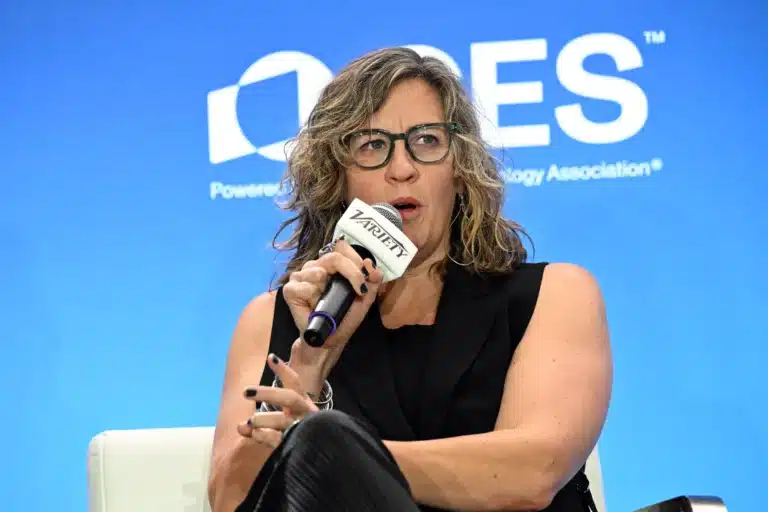
NPR has hired a new chief content officer less than two weeks after overhauling its newsroom. Nadine Zylstra is tasked with expanding audiences for the public radio network’s news, entertainment and music in an increasingly digital world.
Zylstra comes to NPR from Pinterest, where she was the global programming chief. She previously was the global head of YouTube Originals and a top programming executive for Sesame Workshop, the nonprofit parent and producer of Sesame Street. She currently sits on the board of directors of PBS SoCal.
A native of South Africa, Zylstra says her first job in the U.S. was as a producer for the cable music channel VH-1 on celebrity news and wanted something different. She has since been hailed for her work promoting understanding across racial and ethnic divides for Sesame Street and programs for women at YouTube.
Gary Knell, a former chief executive of Sesame Workshop and NPR, calls Zylstra a dynamic figure who attracts brilliant colleagues.
“She’s a creative magnet for talent,” Knell says. “She has positive vibes.”
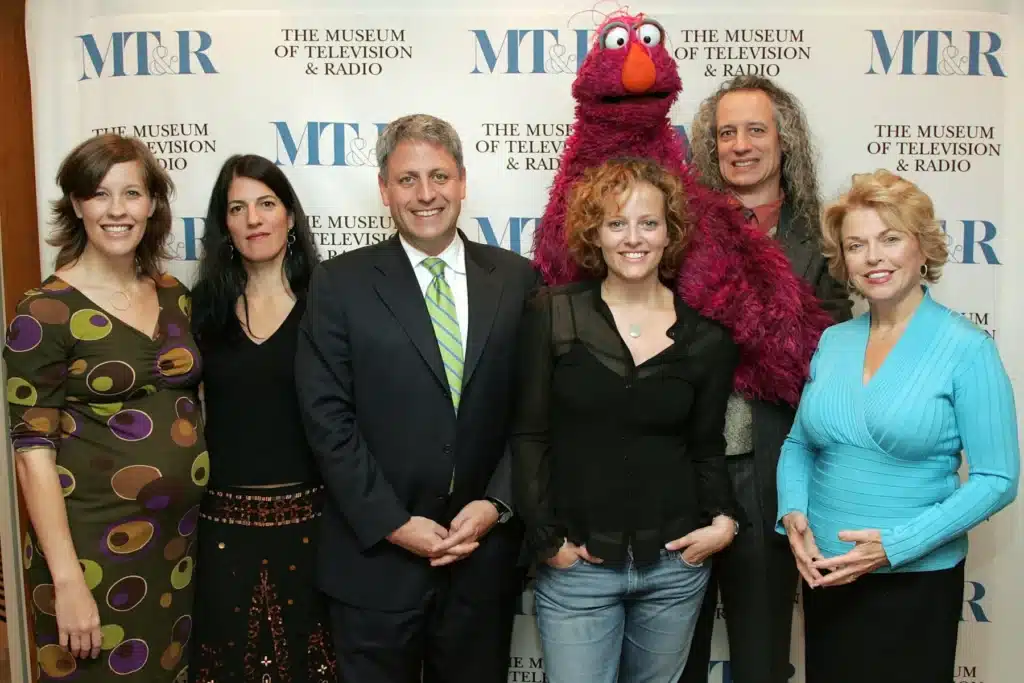
Knell says Zylstra came to work at Sesame in New York City after she collaborated with the company to develop a multiracial children’s show in her native South Africa. She later helped to create shows in tough spots, such as Kosovo, for the production company.
“I would imagine this is an NPR move to bring in someone who is very familiar with social media platforms and YouTube content and is very able to drive content,” Knell says.
Pivotal moment for public media
Zylstra will oversee the leaders of NPR’s newsroom, music department, podcasts and related departments. But Maher stresses that Zylstra will not be involved in news decisions. While NPR Editor-in-Chief Tommy Evans will report to Zylstra on strategic matters, he will remain in charge of the journalism, Maher says. He will also remain part of Maher’s executive cabinet.
“I felt as though NPR’s journalism is rock solid and we’ve got great editorial leadership, and it was not probably the place where we needed additional layers,” Maher says. “I wanted someone who was really thinking about the expansiveness of public media’s mission and how we serve our audiences, how we encourage the innovations.”
NPR remains one of the most prestigious and wide-reaching outlets in broadcast news. More than 42 million people rely on it each week, on all its platforms, though that figure represents a drop from previous levels.
It continues to win awards for its news coverage, often conducted in concert with member stations around the country. NPR’s Planet Money has just spun off a best-selling book. NPR’s video series Tiny Desk Concert has 12 million subscribers on YouTube alone. The network created a weekly radio show around it and sold the rights to the format in Japan and South Korea.
Maher recently landed a pair of gifts totalling more than $113 million to improve NPR’s tech and distribution channels, strengthen its ties with member stations and market itself more effectively.