

One year after President Trump and Congress defunded public broadcasting, NPR and public media stations in Illinois are exploring ways to provide the same quality of programing.
Congress passed legislation that rescinded $535 million a year of federal money from the public media system.
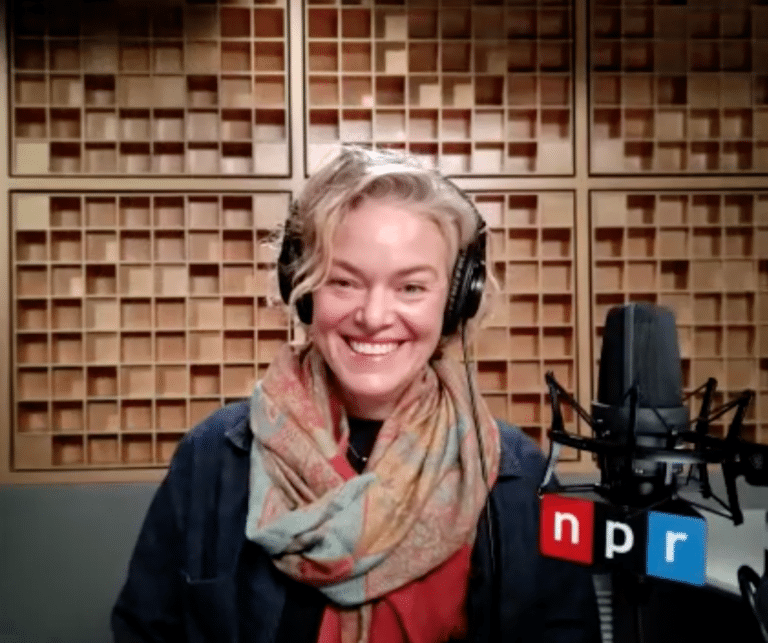
Katherine Maher, CEO of NPR, joined the 21st Show last week. She told host Brian Mackey the past year has been marked by many changes. The organization has cut some employees, offered buyouts to others and lowered fees to stations that carry NPR programming.
“The hope is to get everybody in public radio to a place of sustainability so that we can continue to be really as robust a network to our nation as we’ve been along,” Maher added.
She also said rural communities have been the most affected by the funding cuts. The stations are susceptible because they provide free programming to large geographic areas with smaller audiences than large metro areas.
“The cost of being able to cover large areas in the heartland is expensive. These towers, they also provide a public safety benefit,” Maher explained. “We know that’s the sort of thing in terms of universal service that the federal government is best positioned to provide.”
Like NPR, public radio and TV stations in Illinois are moving forward after making changes as well.
WEIU-TV in Charleston still offers locally focused news and programming on digital platforms. However, Jeff Owens, the general manager of the station, told on the 21st Show that the loss of federal support meant they had to drop their PBS membership and turn off their over-the-air TV transmitter.
“We did it to survive in the state that we are now, which is a hyper-local TV station, a hyper-local radio station that really trains broadcasting students here at Eastern Illinois University.”
Owens said WEIU-TV remains committed to providing a nightly 5:30 p.m. video newscast, hosted and produced by Eastern Illinois University students.
Heather Norman, general manager of Tri-States Public Radio and president of the Illinois Public Broadcasters Council, said NPR stations across Illinois are becoming primary news providers in communities where commercial radio stations are now automated from remote cities.
“We are the only people who could tell anyone about what’s informed, and that’s increasingly the case. Whether it’s a large area or a large population center or medium-sized population center, it is the public media stations that are mission-driven that have people in their studios that can inform the public.”
Tri-States Public Media consists of three stations across rural western Illinois, southern Iowa and eastern Missouri. It formerly had 14 employees but now has six-and-a-half.
Answering a question from a 21st Show listener, Maher said she does hope that funding is restored for public media in the future. She emphasized the significance of children’s programming.
“PBS and children’s educational programming is a crown jewel for this nation and what it is that we provide to children across the country. That is so important. Nobody else can produce that work,” she said. “That work does not make money. You do not want to run ads against children’s programming and so for the federal government to continue to fund that, it is a long-term investment in the health and well-being of our nation and our children, and that to me is tremendously important.”