

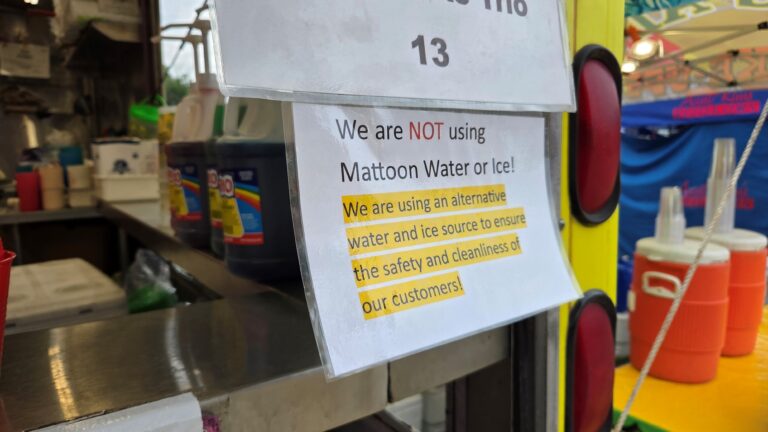
It’s been almost one year since algal blooms overwhelmed Mattoon’s water system, prompting city officials to declare do-not-drink orders for five days.
Last July, residents were told they could not use their tap water due to algal blooms sending toxins into the water supply, making the water hazardous for drinking and cooking.
The outbreak coincided with Bagelfest, the town’s annual festival celebrating a local commercial bakery. Water for the festival had to be brought in by truck from out of town.
Mattoon’s water supply has been in the clear since those orders were lifted, Public Works Director Dave Clark said.
“Ever since mid-July of last year, our test results have come back basically non-detect for any kind of algal bloom contaminant,” he said.
According to the National Institute of Environmental Health Sciences, algal blooms occur when toxin producing algae grow excessively in a body of water.
And Clark said that can happen fast.
“Of course, as we found out last year, anything can change in a heartbeat,” he said.
The bacteria within algae can create dangerous levels of neurotoxins that can cause sickness and even death. Repeated exposure can cause gastrointestinal symptoms such as vomiting and diarrhea and damage the liver and brain.
Bacteria and algae are always present in lakes and rivers. They only become a health hazard when they multiply into algal blooms.
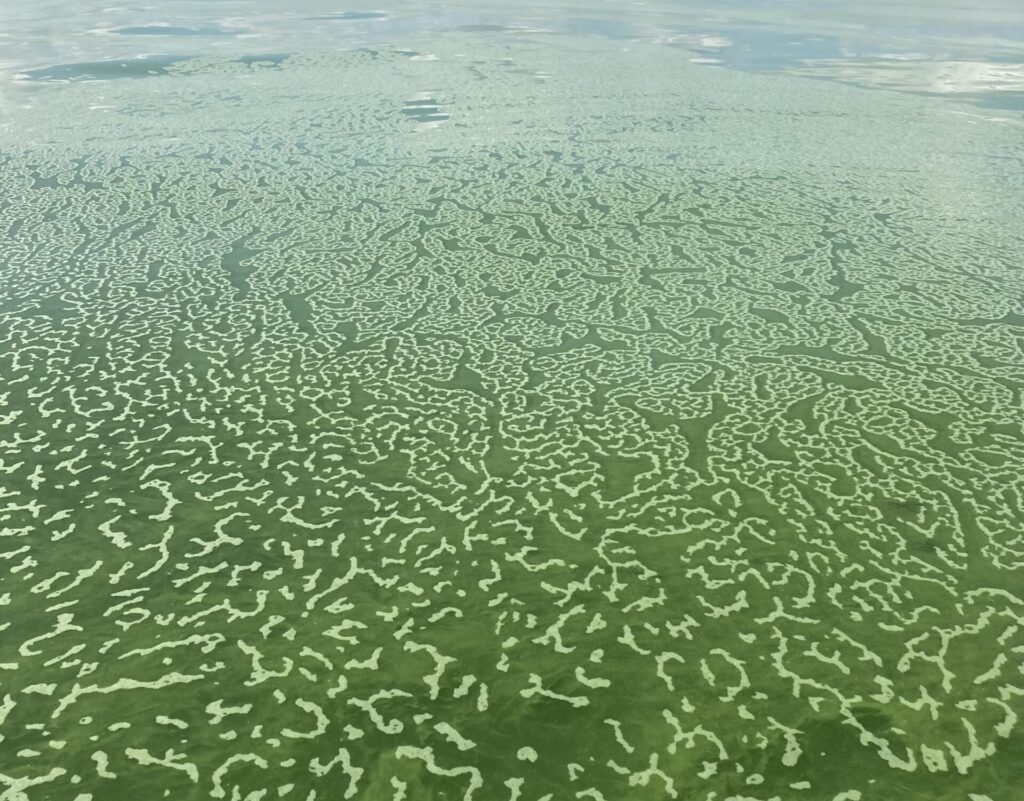
Clark said the city is installing a new pump at Lake Mattoon and algaecide, which helps control algal blooms, has been sprayed several times in Lake Mattoon and the town’s other reservoir.
City officials are still looking for a long-term solution to protect the water reservoirs.
One option would be dredging both reservoirs to get rid of sediment filled with fertilizer, which can erode into bodies of water.
“The algal blooms, they love heat, they love sun, and they love nutrients, especially phosphorous and nitrogen,” Clark said. “So when you have all those things all come together like they did last year in the beginning of July, that’s when you can get an algal bloom.”
Dredging and other long-term solutions would cost millions of dollars that the town would need to fund through loans, grants and federal and state money, Clark said.