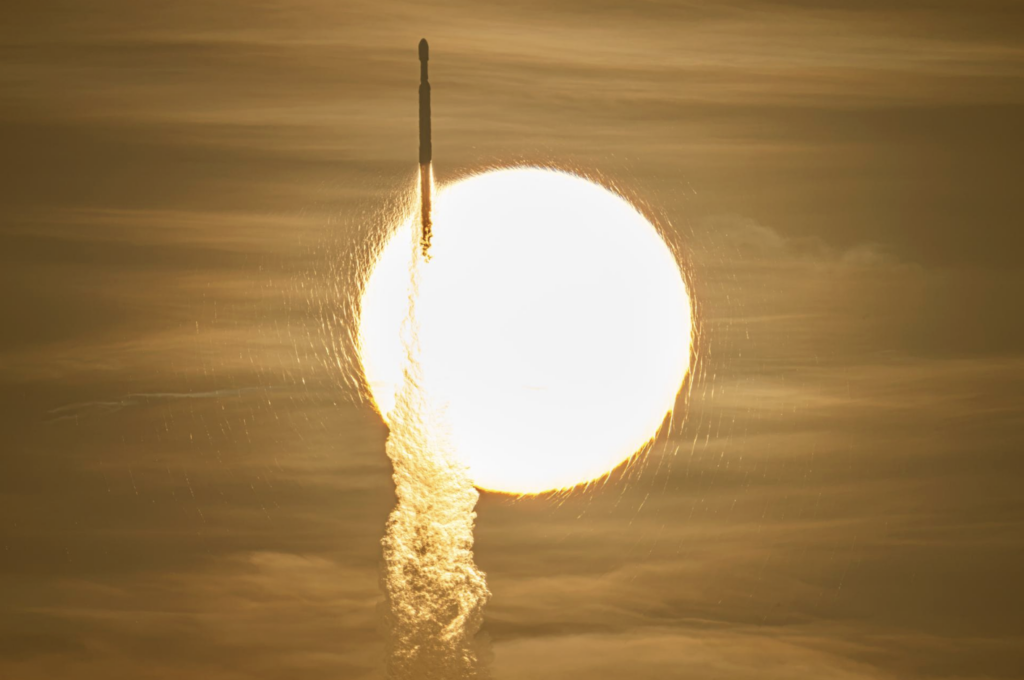

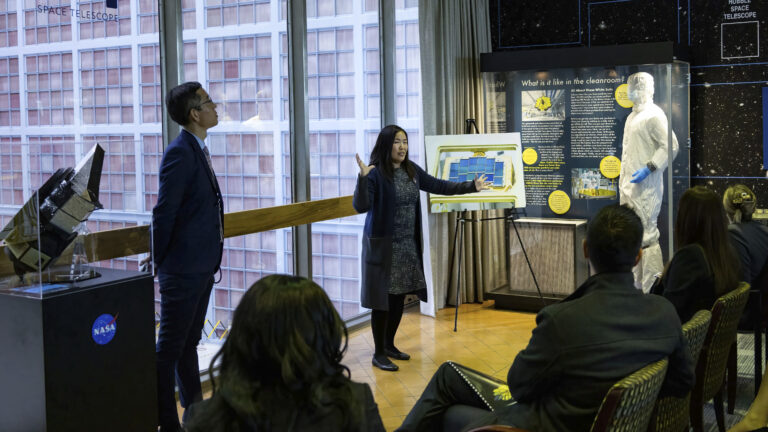
URBANA — A native of Urbana is among the many scientists involved in the launch of The Nancy Grace Roman Space Telescope. NASA’s newest observational tool took off from the Kennedy Space Center on Sunday, Aug. 30.
Ami Choi, the deputy wide field instrument scientist on the project, grew up in Urbana and graduated from the University of Illinois Laboratory High School in 1999.
She says Roman has two main goals: to better understand dark matter and dark energy and how they impacted the evolution of the universe, and to look for undiscovered planets outside of our own solar system.
“It’s the ‘unknown unknowns’ that I think are the most exciting because each time that we’ve had a more technologically advanced telescope, we’ve been able to uncover new kinds of objects and made new discoveries about fundamental physics,” Choi said.
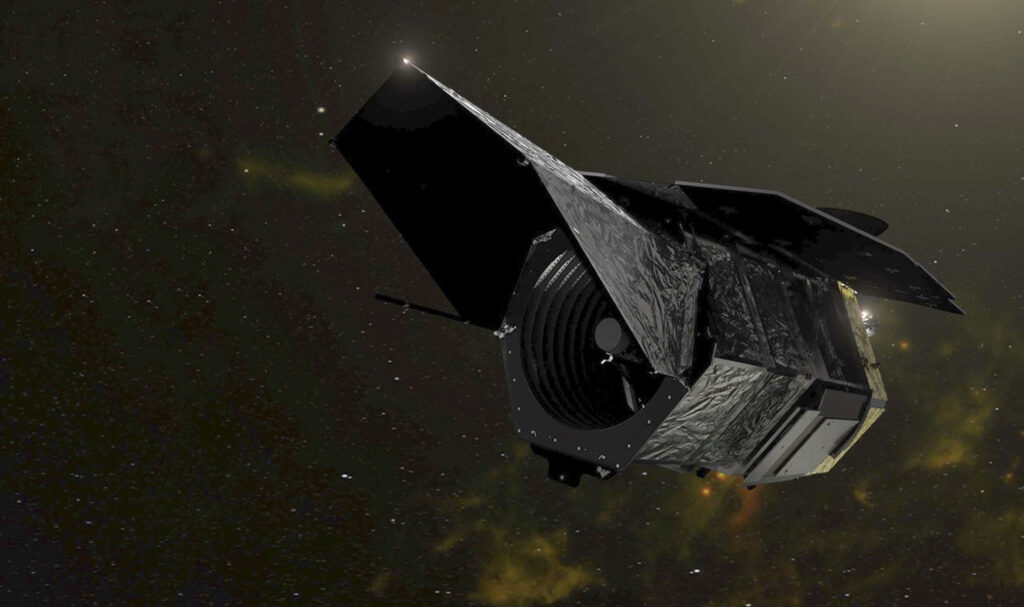
Roman, which was formerly called the Wide Field Infrared Survey Telescope, is designed to gather high-resolution images of large swaths of the sky all at once. It’s named after NASA’s first chief of astronomy who helped plan the Hubble Space Telescope.
The new telescope will survey the skies with Hubble’s sharp vision but a field of view 100 times larger. Choi says it will hopefully allow scientists to observe the outer edges of the universe and understand how exoplanets have formed and evolved.
“With Roman, we are getting these high-resolution infrared photos across really, really wide angles,” she said. “And so, we can efficiently map out lots of the universe and gain statistics on all kinds of objects out there…, it’s a way of really gathering information across really large regions of the sky.”
For the past four years, Choi has been based out of Goddard Space Flight Center in Greenbelt, Maryland. Her work involves handling communications between engineers working on the telescope and international scientists who may have different measurements for understanding dark matter, dark energy and exoplanets.
“We have to have an ongoing conversation to make sure that the hardware that’s built is eventually able to take the kinds of observations that will reveal the secrets of the universe that we’re trying to uncover,” she said.
Roman will have no proprietary period, which means that once operations start early next year, the general public will immediately have access to the images gathered.
“There’s much easier access across a much broader community, “ Choi said. “ It could be anything from amateur astronomers to students who are really just starting to learn and get excited about science.”
NASA says the Roman Telescope will scan the skies for at least five years, orbiting the sun from a location about a million miles away from Earth.