

URBANA — After a decade under its previous executive director, Illinois Public Media has new leadership.
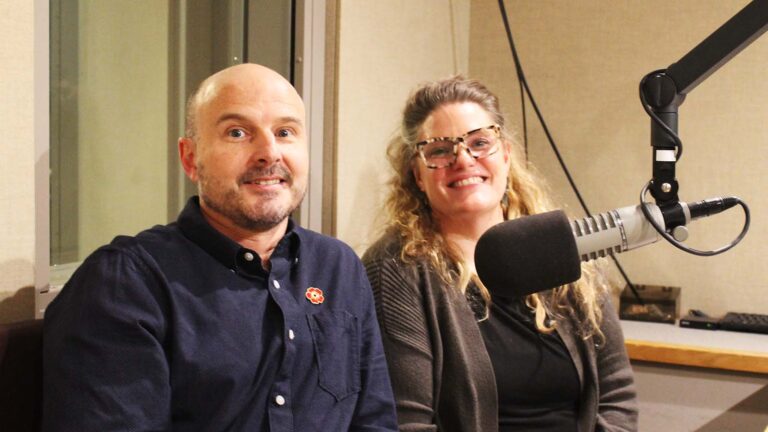
Lillie Duncanson and John Steinbacher officially began leading the Urbana-based station on Sunday.
The College of Media at the University of Illinois Urbana-Champaign announced last week that the dean was ending Moss Bresnahan’s term as head of the public television and radio station. The college is employing him instead as a special advisor to the dean.
The move came as a surprise to employees at the station.
Bresnahan said he is being transferred out of his leadership role at IPM because of a difference in vision from the dean of the college. Dean Tracy Sulkin declined to comment on Bresnahan’s situation, saying it was a personnel matter.
Duncanson and Steinbacher are longtime employees and leaders at IPM.
Duncanson began at what was then known as WILL in 2004 as a TV traffic manager. She rose through the ranks to become director of operations. She now adds director of content to her title.
Steinbacher worked at the station as the membership director for almost a decade before his promotion to development director in 2022. He will now add director of budget and resource planning to his title.
IPM’s Emily Hays sat down with both of them last week to talk about their vision and how they expect to allay staff concerns about the change.
This interview has been lightly edited for clarity.
EMILY HAYS: When did you become aware that this decision was happening, that Moss [Bresnahan] would be leaving IPM?
JOHN STEINBACHER: I guess about two weeks. October 30th.
EMILY HAYS: In terms of Moss [Bresnahan] being removed, is that something that was a College of Media decision?
LILLIE DUNCANSON: We can’t talk about personnel and he’s not removed. He’s just — onto another location on another position on campus with the College of Media. But we can’t talk about personnel, and — I don’t think we know the whole process.
JOHN STEINBACHER: We’ve been told it’s a personnel decision and it’s HR, that kind of thing.
EMILY HAYS: How was it decided that you all would take on these new roles? Did you have input into that?
JOHN STEINBACHER: We were presented with the opportunity for these new roles. It was presented by the dean and the staff of the College of Media.
We were told based on our extensive history here at the station. We figured out together we have more than 30 years of experience at IPM alone that we were good candidates to fill the new leadership role.
EMILY HAYS: Tell me a little bit about your goals as leaders of IPM.
LILLIE DUNCANSON: I think there’s a lot happening in public media, with the [federal] funding issue.
My goal always, as someone that has worked in public media, is to be here for our community and be the news, the place maker, and part of the community not only for our PBS and NPR content, but mostly for our local content — being the mirror for the community on the air and however they reach us on all of our platforms.
I have many goals, short-term and long-term. We’re in the middle of a strategic plan that I think will really help us with some of the bigger goals. And then there’s other goals that we can do in the short-term that are more operational. Making sure that we basically are a well-oiled machine on creating content and being there for the community.
JOHN STEINBACHER: In my role in development and resource management, my goal would be to continue to ensure the operations and content are well funded, that we are spending within our means, but also continuing to reach out to our incredible community to continue to support this station.
You know, Emily, and I think people who might be listening would know what an incredible resource we have with the Friends of WILL, who have been donating and supporting the station for more than 50 years. We discussed a little bit about the funding cuts. So far this year, while we lost $1.5 million in federal funding, we are currently almost $600,000 ahead of where we were last year during the fiscal year.
So my goal would be to continue to help Lillie and the rest of the staff do their job through different resources and continue to work with just an amazing community of donors, continue a 103-year history of an innovative and creative public media station.
EMILY HAYS: A question that I’ve heard from some staff is that the timing of this seems strange. Why are we starting the strategic plan and then immediately ousting our top executive?
JOHN STEINBACHER: The federal funding situation as it were is the impetus to start this strategic plan to try to put ourselves in a good position to continue to provide the community with news, information, classical music, R&B, and so many other things. Regardless of what the leadership currently looks like, this is exactly the time to be doing a strategic plan.
I think it gives the entire staff the opportunity to have input and thoughts about how we move forward.
EMILY HAYS: One question that I know a lot of staff are anxious about is will there be more layoffs with this current funding cut?
JOHN STEINBACHER: I would definitely say there are no strings attached to our positions. We were not given any, ‘You need to do this, you need to do that,’ in terms of these new roles.
I think it’d be crazy to say never. Never say never about anything. But as of right now, there are no plans for any layoffs. We’ve not been told that we need to eliminate any positions, nor do we plan to do it.
Given the current funding situation, the future is uncertain for everything, depending on how we fundraise through the next 12 months.
EMILY HAYS: How important do you think it is for IPM to be editorially independent and to make decisions about its team and staffing structure independent from the university and College of Media? How much independence do you think is important in that partnership?
JOHN STEINBACHER: Illinois Public Media has been part of the University of Illinois for 103 years. They’ve always been incredibly supportive of the organization.
We’re very lucky to have all the resources available to us — this building, the technology — thanks to our ongoing relationship with the university and the College of Media. We think it’s really important that as a station we are working with future journalists and other university students to prepare them for the world.
However, the university, the College of Media does not dictate or make any decisions, especially editorially with the newsroom day-to-day, nor would Lillie and I ever want that.
Certainly, the way the station has operated since we’ve been here is always somewhat independent of the university and the college. [There’s] no indication that they would like that to change anytime soon.
EMILY HAYS: Anything else you want to say?
JOHN STEINBACHER: In the 103-year history of Illinois Public Media/WILL/WRM, I don’t think there’s ever been a woman in an executive leadership position as Lillie is and I think that is an important detail and worthy of mention or congratulations.
Because the transition is internal, we’re not planning on doing a big press release or anything like that. It’s maybe too late and I feel kind of weird because I’m also – the way it worked is not 100% [her control] – but I think it’s amazing and well deserved for Lillie, so I just wanted to share that.
LILLIE DUNCANSON: Same with John. I have enjoyed working with John for the last 12-13 years. I’m really excited. I think our strengths, I think we yin and yang each other pretty well.
In my new role as head of the content, my job is not to tell people what content to create, it’s to give them the tools and the efficiencies to make the best content that our viewers, listeners and audiences want to hear and want to be a part of.
I think public media not only is important in news deserts — or for Ken Burns specials and kids programming. I think public media is part of the sonder of people’s lives.
Public media is a source and a solace. I think we also are really lucky to have a new station. We have a classical music station. We’re one of the only R&B, soul stations out there and then we have a TV station.
JOHN STEINBACHER: The university and the College of Media could have picked someone from academia to take over or they could have looked externally for someone to come in from another station. The fact that they picked two people within the organization who had been working here for so long says that they have a lot of confidence not only in Lillie and I, but in the entire team and in the direction that Illinois Public Media has been heading.
Leadership transitions are always stressful, but any concerns people have, I would hope that would allay some of them, knowing that we have been given no mandate and the leadership transition is internal.
EMILY HAYS: Lillie, John mentioned that you will be the first female executive of IPM. What are your thoughts on that?
LILLIE DUNCANSON: I’m really excited, because public media has been my career choice from the first day I ran master control at my first station in Bloomington, Indiana. Right now, there’s a lot going on with federal funding and public media. We talk about the next generation of listeners and viewers. I’m grateful to be part of the next generation of leadership because I started as a 19-year-old.
Going to different PBS conferences, in 2004-2005, the men were engineers and the men were the managers. The women were the traffic managers and the marketing people, and I get to be someone that walks to that other side.
As a woman, it’s pretty cool. I’m proud of myself. I’m thankful for the women I’ve watched do it. And hopefully there’s people that will see me and are like, ‘I want to be a woman leader too.’
Editor’s Note: No member of upper management or any news executive reviewed this story under IPM’s internal reporting guidelines.