

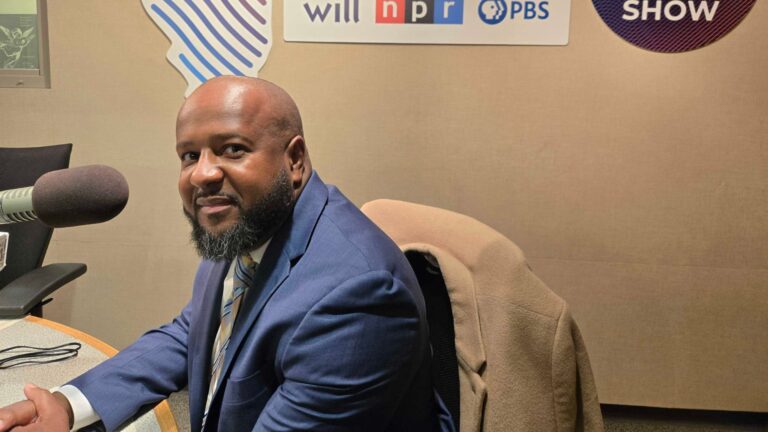
Sean Brown is one of ten candidates running in the Democratic Primary for a seat in the U.S. Senate in Illinois. He is a native of Chicago’s South Side and a lawyer.
His studies took him to Iowa, where he earned a bachelor’s degree in sociology and philosophy from the University of Dubuque. After that, he started a career as a paralegal in Chicago and in 2009 he went back to law school, earning a law degree from Mississippi College School of Law. For more than five years, Brown was an assistant state’s attorney in Cook County. He went into private practice in 2018.
Brown joined the 21st show recently to discuss his views on immigration issues, healthcare policy reform, and Political Action Committees.
Interview Highlights
On working for the Cook County State’s Attorney Office
“I started off doing appellate work, so I was writing appellate briefs. I did Child Support Enforcement. I also worked in prosecuting misdemeanors and DUI cases. I did Grand Jury work, where we would indict, you know, serious cases, first degree murders, sexual assault offenses. And then I went to juvenile delinquency, where, again, you know, pretty much prosecuting every type of case, from, you know, from small, you know, school fights up to first degree murders.”
On ICE
“I mean, whether you abolish ice or replace it with something else, there still has to be some entity, some agency that has to enforce our immigration laws. So, I mean, I think, you know, abolishing it is more so semantics. What really is going to happen is we have to be able to reel in how ICE is operating. That’s what it really boils down to. Nobody really has a problem with ICE? I mean, it’s just the matter in which these operations are being conducted.”
On healthcare policy proposal
“So the program that I that I’m pushing, it’s similar to a Medicare for all, but there’s a public, excuse me, there’s a private option. So essentially, everybody starts off with the public option, which I call it the universal care plus the it includes comprehensive hospital coverage, emergency room coverage, mental health coverage, and then if people want to opt out and take private insurance, they can that way, you maintain freedom of choice, and you still have the competition in the marketplace, which is going to be beneficial for both sides.”
On PAC donations
“All of my money is, you know, it’s coming from individual donors, and I’m self-funded, so when you look at, you know, these individuals that are taking the corporate PAC money. I mean, obviously they’re not giving their money to, you know, an individual that doesn’t have their benefit at heart. So you know, voters have to be aware that, you know, when you have these people who are receiving this corporate money, you know, there’s going to be some strings that come along with that, there’s going to be some, you know, some endorsements that come along with it because people don’t support or give money to individuals that don’t endorse or support their ideologies or their goals.”
The primary for the U.S. Senate race is March 17.