

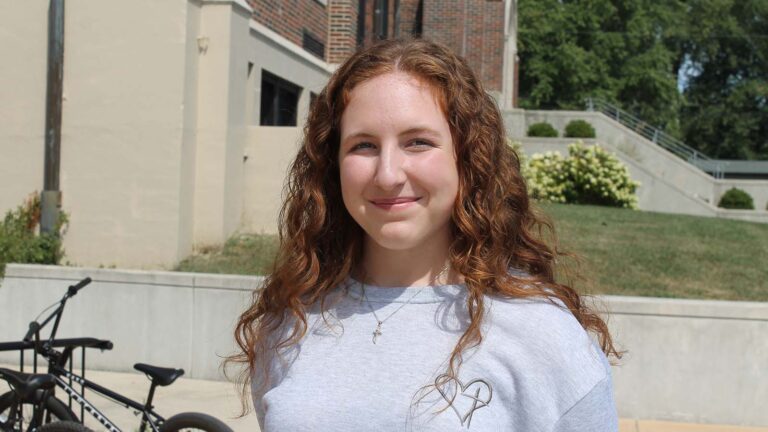
CERRO GORDO — Ninth grader Khloie Waterhouse wrote her poem about the difference one family member or friend can make.
Waterhouse’s poem, “Storm’s Coming,” won the 2025 Gwendolyn Brooks Youth Poetry Award. Illinois Humanities sponsors the contest and awards up to two winners and one honorable mention for each grade. Students from all over Illinois participate in the contest.
“It’s about people watching you and letting you fail without helping,” Waterhouse explained. “The flower at the end is meant to symbolize a person, like a friend or a family member, coming in and assisting you in whatever you’re struggling with.”
She wrote and submitted the poem for a class while still in eighth grade at Cerro Gordo Junior/Senior High School in rural Piatt County. She said she was just hoping for an A. Instead, she won against other eighth graders across the state.
According to Illinois Humanities, there were 867 submissions from 187 schools. The winners receive monetary awards and are invited to read their poetry at a ceremony in Chicago. The event will take place on September 13 this year.
Waterhouse said she is starting to imagine doing more writing in the future. She is starting to like her own writing, even on English tests.
“We had to write a full-page story for the test, and it was good, in my opinion,” she added.
Waterhouse has gained new confidence since her big win, according to her mother, Roxy Waterhouse.
“She’s not second guessing herself. ‘It’s not any good.’ This is what I like,” Roxy said. “She has the confidence to continue on.”
Illinois Humanities vows to continue contest despite federal cuts
Illinois Humanities has used federal funding to host the contest in the past. This year, the organization had to pool state and private dollars to make up for federal funding cuts.
In April, the Trump administration notified the official humanities organization in each state that they were canceling their current and future funding.
The administration said that canceling the grants eliminates wasteful spending and that future grants will focus on understanding America’s founding principles.
“It’s really important to keep in mind that this wasn’t a regular grant where we have an idea and compete for funding”, said Illinois Humanities Executive Director Gabrielle H. Lyon.
“We were established as a partner for the federal agency called the National Endowment for the Humanities to make sure tax dollars come back to Illinois and get redistributed.”
A federal judge has ruled that the administration’s actions in canceling the state grants were unlawful and that the administration cannot spend the money elsewhere while the case goes through the court.
Lyon said this is an encouraging beginning to a long legal battle.
Illinois Humanities was supposed to receive $2 million this year from the federal government, making up about a third of the nonprofit’s budget. She also said they had to let two of their “extremely beloved and highly impactful” team members go because of the shortfall. The full team is about 20 people.
Lyon said while they will have to scale back on programs and give out fewer grants to local humanities groups around the state, she is protecting the contest as a signature program.
“I cannot tell you how heartening and invigorating it is to read the words of young people from very different parts of this state, people growing up in very different kinds of communities, and to see what those young people share, to see what those young people are asking of us as adults,” Lyon said. “It’s a breath of fresh air.”
What do the students think?
All of the central Illinois winners liked the experience of the contest.
Maddy Willard is also a ninth grader at Cerro Gordo Junior/Senior High School. She won honorable mention for her poem, “Sculpted Lies,” about the trapped feeling of a wooden puppet. She drew from her and her classmates’ feelings that as teenagers, someone else is pulling their strings.
Willard said she doesn’t have opinions about whether the federal government should fund Illinois Humanities.
“Obviously, I think kids should be able to submit their poems and have a chance to do that. But obviously money can go to other things as well, so I don’t really have a straight opinion,” Willard said.
Waterhouse said she thinks the contest should continue, but she isn’t into politics.
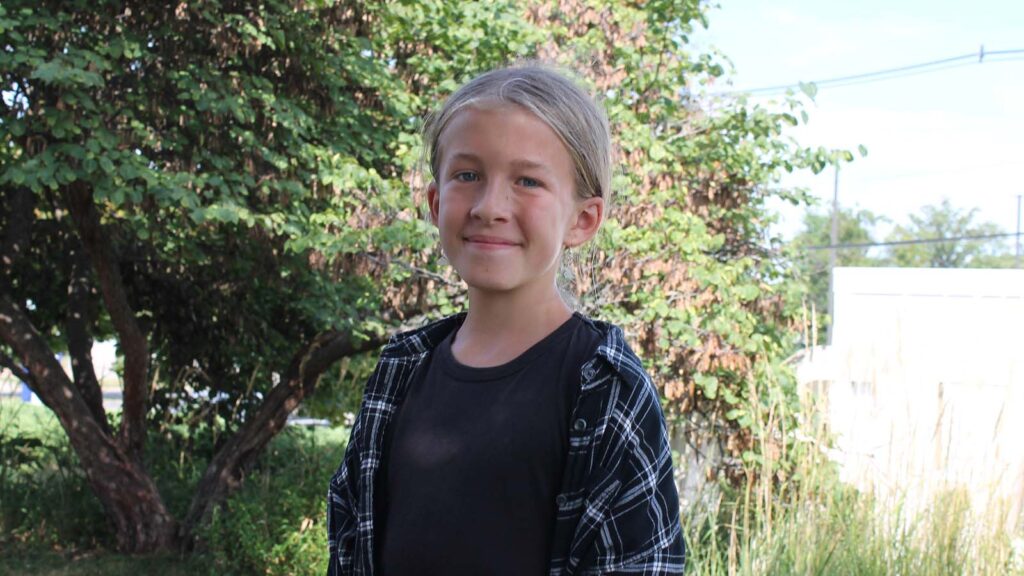
Champaign eighth grader Eli Teper won his grade’s award for his poem, “A Last Effort,” about how he wishes his cat’s last moments had gone.
The Jefferson Middle Schooler said the Trump administration’s shift away from spending on the arts towards its priorities like immigrationenforcement is wrong.
“Letting our freedom of press and our freedom to express ourselves be taken away is not right, and I don’t think that any good president would do that and then say that it’s constitutional and correct,” Teper said.
Teper said that he feels honored and happy to have won the poetry contest for his grade. He plans to put three-quarters of the prize money into his savings account and spend one-quarter on himself now, on a home engineering or art project.
“Recently, I’ve been planning a project that’s a vacuum-powered, ping pong ball cannon that shoots a ping pong ball at like 500 miles per hour. So I’m really excited to get money that I can use to work on that,” Teper said.
Teper loves writing outside of school. His career plan, though, is to combine his love for making things and for ecosystems by becoming a mechanical or environmental engineer.