

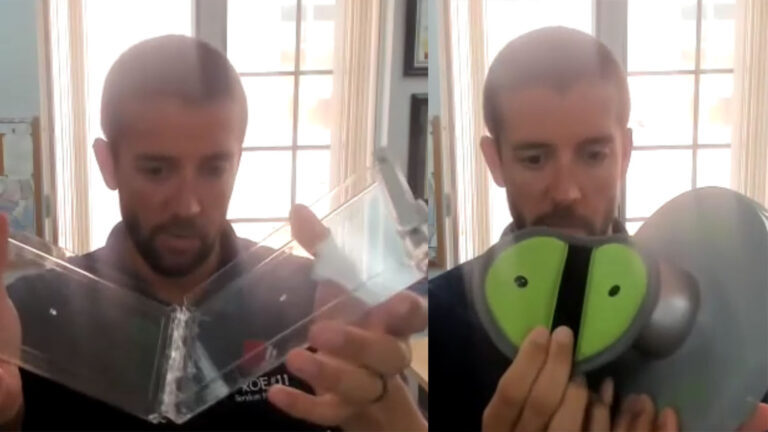
CHARLESTON — School started in Martinsville and Windsor last week — without cell phones.
Seventh through twelfth grade students in the two central Illinois districts have to lock their phones away during the school day.
Kyle Thompson is the superintendent for Regional Office of Education 11. He has been pushing the idea of phone-free schools.
“You’re going to have better academics without cell phones in schools,” he said. “You’re going to have fewer discipline issues, and student mental health will improve.”
Phone-free schools have been a growing national movement. Thompson got on board after making some observations while walking through some classrooms a few years ago.
He is the regional superintendent for seven counties and conducts safety inspections for about 80 school buildings a year. In his walk-through, he started noticing more and more cell phones.
“I walked into a classroom once where a teacher was literally up front teaching a topic, and no one was watching.”
Thompson read about the effects of smartphones on teens in the popular 2024 book, “The Anxious Generation.” Then at a conference, he met representatives for Yondr, a lockable cell phone pouch company.
Back home, he told local districts the regional office would support them in purchasing devices to lock student phones away during the school day. Martinsville and Windsor took him up on the offer and split the costs 50-50.
Democratic Governor JB Pritzker promoted a bill while in Champaign this spring that would require districts to ban phones during class time. Thompson says most districts already have this policy. He thinks locking phones away for the whole day is more effective, so teachers do not have to bear the burden of disciplining students for breaking the rules.
“18 states now have banned cell phones entirely in schools, in red and blue states. It’s a bipartisan issue — it’s agreed upon on both sides of the aisle, which is rare,” Thompson said.
Thompson was first elected to ROE 11 in 2018 as a Republican. He said he prefers less regulation, so he would like to see districts taking this initiative on their own. But he understands they might want cover from state law if parents push back.
Some parents are concerned about how they will reach students during an emergency, like a school shooting. Thompson said he tells parents that cell phones will not prevent the shooting, and schools will communicate quickly to parents anyway.
Pritzker’s bill did not pass in this state assembly session. Democratic State Senator Meg Loughran Cappel, who chaired the Senate Education Committee, said in a previous interview with IPM News that some lawmakers opposed the bill because they worried it would increase disproportionate punishment of Black and brown students. Cappel said that she hopes the bill will come back in a later session.
Updated Aug. 21, 2025 with the correct number of counties covered by ROE 11.