

This story is part of America @ 250: The Questions Before Us, a series from IPM News and the Illinois Student Newsroom.
CHAMPAIGN — A birthday is a time for celebration and reflection: Where have we been? Where are we right now? And where are we going?
IPM is marking America’s 250th birthday by inviting people from across east-central Illinois to share what they think are the most important questions facing our nation at this historic moment.
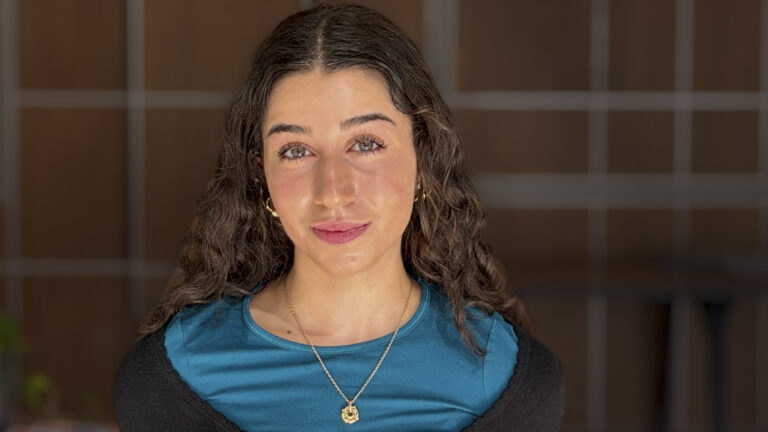
Ani Apresyan is a political science and economics major at the University of Illinois Urbana-Champaign. She’s currently Student Board President and a Democracy Fellow and Student Engagement intern at the University YMCA.
Before coming to the U of I, she lived with her parents, younger sister and Armenian grandparents in Aurora.
The following transcript has been lightly edited for length and clarity.
I was a super big Hamilton fan when that first came out. And all the Founding Fathers were so young compared to nowadays. And they’re standing up to this institution, like Great Britain, that’s been around forever, and it’s so powerful. And they’re like, ‘You know what? We’re going to turn this around. We’re going to make our own country,’ and that country ends up being America.
If we were to put today’s young people and today’s old people back then, today’s old people would be like, ‘God. These young people are so annoying. Like, look at them. They think they can change things.’
And they actually did change things.
I’m not calling for a revolution, but I am calling for modernization. Things are changing and the older generation doesn’t really fully understand the extent to which things are changing. They have very limited understanding of today’s most advanced technology — social media, artificial intelligence — and when you have people who are making decisions around technology, who struggle to understand technology, that’s probably not going to lead to the best outcomes. And having more young people would help develop policies and strategies that are actually going to benefit the most people in the country.
I think that seems intuitive, and if we’re going to call ourselves a representative democracy, it’d probably be best to include a diverse range of opinions on those things. But that’s also on younger people, because I was an election judge when I was in high school — because it was like an easy way to make $250 — and I think I saw under ten people who were like 18 to 25 come and vote. And I remember that day, I just went home and I was so angry because I was really frustrated by the fact that people my age –seemed to talk a big game about how politically engaged they are and stuff.
But I do think young people have become disillusioned with politics because they see that it’s not working and they don’t see themselves being represented. So they’re like, ‘How could I possibly create change when like, older people they just won’t listen to me, they won’t take me seriously?’
There’s a lot of friction around generational change and letting go of things. But I was just thinking, like, my grandma gave me one of her most prized possessions when I turned 18 — a ring that she’s had since she was very young. And she wasn’t holding on to the heirloom and being like, ‘Don’t take this. You can’t take this from me. Like, this is a relic of my youth. Like, I don’t want you to have this.’ She was very generous. She gave it to me. She told me a story surrounding the ring, and it’s now one of my prized possessions.
So I think older people, instead of being like Gollum and holding onto these prized possessions, they should be sharing the stories of their conception of America with the younger people, and then having faith that the younger generation will take those things into account as they envision America moving forward, while also continuing to modernize it and keeping it up to date and with the times.
In a perfect world, if young people can show that they can organize in a way that has a clear goal and isn’t just fighting the establishment for the sake of fighting the establishment — in a fit of youthful rebellion or something — then maybe someday the older people will genuinely sit down at the table with younger people and be like, so what do you care about? What can I do for you?
Things are incredibly divided right now. People are polarized. And that’s not something that’s original or unique to say. But if we want to make genuine progress towards the conception of the American republic that we’ve been working towards for 250 years now, I don’t know if there’s one universal question that Americans across the board should be asking themselves.
But I think young people should be asking themselves why they’re not pushing harder to get involved in politics.
And then I think old people should take a step back and think about what they’re doing to discourage young people from getting involved with politics. Because just even the way that they talk about young people and their beliefs or whatever it may be, I think that old people are doing things, even if they’re not aware of it, that are discouraging young people from becoming civically engaged, and they need to reflect on what they’re doing and how they can stop that and encourage more young people to get involved.
This story was reported by University of Illinois Journalism Professor Charles “Stretch” Ledford. If you have an idea for the America @ 250 series or would like to be featured in an upcoming story, please contact Stretch at stretch@illinois.edu.