

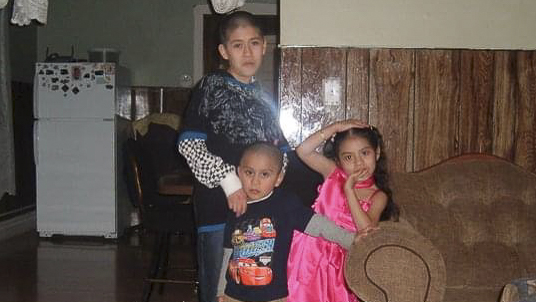
CHAMPAIGN — Jules Alvarez-Leyva still remembers the night she found out her brother had been arrested by U.S. Immigration and Customs Enforcement.
She was re-posting information she’d seen on social media about an arrest on the southwest side of Chicago. Soon after, she learned that it was her older brother, Oswaldo Alvarez-Leyva, who’d been detained.
“And for me, it was really shocking and devastating at the moment, because I usually repost it just to keep people alert and… I never imagined it would have been someone that was close to me that would have gotten detained,” Jules said.
In October 2025, her brother tried to sell his truck to someone he connected with online and agreed to meet the buyer at a Home Depot parking lot. That’s where federal agents pulled up and arrested him.
Jules said her parents had been preparing her for this kind of scenario since she was a little girl.
She was 9 years old during President Trump’s first term and said her parents put emergency contacts in her backpack in case they ever got detained.
“You always have a plan, but when it actually comes down to experiencing that, you don’t know what to do,” she said. “For me, in that moment, I didn’t know what to do. My first instinct was like, I tried to hold my emotions, but I couldn’t.”
Jules, a junior studying political science at the University of Illinois Urbana-Champaign, said her brother’s detainment – and eventual deportation – have made things difficult for her family back home in Chicago.
The whole situation has also made it hard for her to focus on school and take care of her own mental health.
Jules’ experience is one example of the many ways the aggressive immigration raids carried out by the U.S Department of Homeland Security over the past year continue to have ripple effects on people and communities across the nation, including in Champaign-Urbana.
‘I felt really helpless’
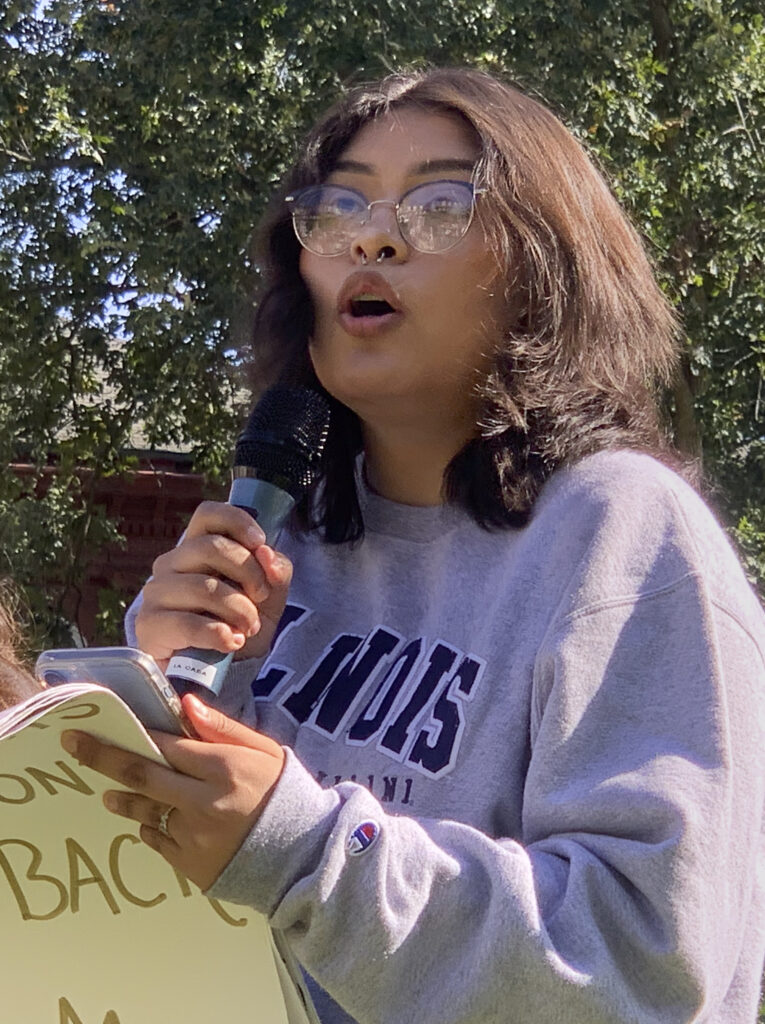
After Jules discovered what happened to her brother, she emailed her professors to tell them she’d leave school for two weeks to support her family in Chicago.
When she arrived at home, she said she saw firsthand how Oswaldo’s detainment had affected her family.
Jules said her mother has health issues and Oswaldo had been the one supporting her by picking up her medication and groceries. For the first few days she was home, she said her mother was depressed and would break down randomly.
“I knew that her not having my brother around would be extremely difficult for her, because she would depend on him for a lot of things,” Jules said. “So I felt really helpless, because I didn’t know what exactly she needed or what I could do to make her feel better.”
Oswaldo’s detainment was also hard on his children. He has a 1-year-old son and a 6-year-old-daughter who asked nonstop where her father is.
Oswaldo is among the roughly 1,600 people who were arrested by ICE in the Chicago area last fall, many of whom were detained, according to an analysis of federal data by the Marshall Project. Over a period of several months, DHS conducted aggressive immigration raids in Chicago known as “Operation Midway Blitz.”
According to the federal agency, the operation involved targeting “criminal illegal aliens who flocked to Chicago and Illinois” due to Gov. JB Pritzker’s sanctuary policies.
The DHS website states that the agency’s targets include gang members, rapists, kidnappers and drug traffickers. But federal data analyzed by the Deportation Data Project shows about one-third of the 75,000 people arrested by ICE in the first 9 months of Trump’s second term did not have a criminal record.
In response to questions for this story, a spokesperson for ICE said in an email that Oswaldo was arrested and detained because he entered the U.S. unlawfully and because of his past criminal history in the Chicago area.
Court documents show that in 2016, Oswaldo Alvarez-Leyva was sentenced to 12 months of supervision, including anger management, following an incident of domestic battery; and in 2021, he was sentenced to two years of probation, including 60 hours of community service, for charges including drug possession and defacing the serial number of a firearm.
As a child, Oswaldo had been protected from deportation by DACA, or Deferred Action for Childhood Arrivals, which protects people who were brought to the U.S. at a young age from deportation. But he said his DACA status expired when he dropped out of high school in May 2018.
Oswaldo was detained in an Oklahoma Detention Center for over a month before the court ordered him to be deported to Mexico in December. He now resides in Morelos, Mexico, where he helps his sister run a small agricultural supply business.
He said the hardest part is being away from his children.
“I really want to be over there, I want to see my kids, hug them, spend time with them, but it’s not like that,” Oswaldo said.
How ICE raids in Chicago have affected U of I students
Jules Alvarez-Leyva is not the only student who has been affected this way by the ICE raids in Chicago.
Other U of I students have posted on social media about their loved ones being detained and have launched GoFundMe Campaigns to help pay for legal aid.
Emilia Mancero is a U of I senior and the president of I-CAUSE, a student organization that aims to support undocumented students.
She’s said she has also been personally affected by the actions of ICE. Mancero said her elderly aunt decided to self-deport alongside her husband and other family members.
“I think selfishly I wanted her to stay,” Mancero said. “But you can’t force these people to be in these kinds of positions.”
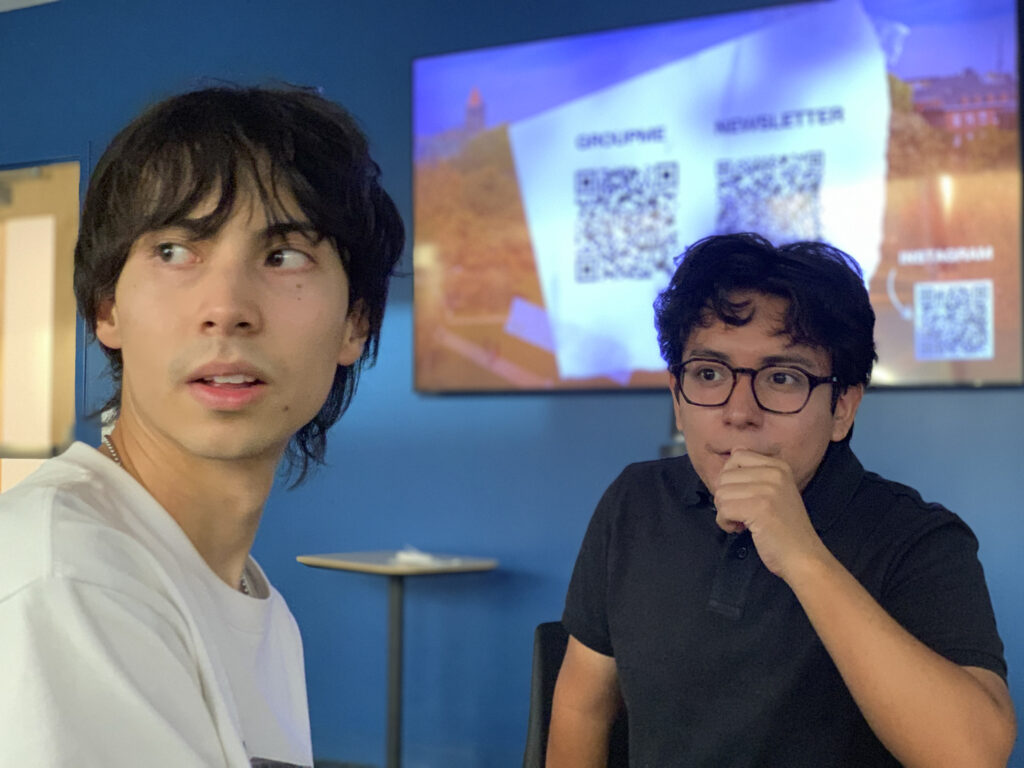
Darwin Mizhquiri, vice president of I-CAUSE, said when he saw clips of detainments in Chicago on social media, it made him feel frustrated by how the actions of ICE agents instilled fear in the Latino community.
“It doesn’t feel real that we are in a world today where people are genuinely terrified to live their daily lives,” Mizhquiri said. “And picturing that in my community that I’ve lived my whole life, it brings me sadness.”
Even though Mizhquiri’s parents are documented, he said he still fears they would get detained because of reports of federal agents arresting legal citizens based on their appearance or ethnicity. He made sure to remind them to have their documentation with them at all times.
“These are people who genuinely have no regard for human life, and they’re going to racially profile you,” Mizhquiri said. “They’re going to just look at the color of your skin and make a decision from there.”
Another U of I student, sophomore Viviana Hernandez, said the ICE raids in Chicago impacted her mental health and academics.
“It’s like, always something I can’t ignore,” Hernandez said. “It’s a part of my everyday life, that fear of like, ‘What’s gonna happen?’”
Mancero is also a mentor for undocumented students at the University of Illinois Office of the Vice Chancellor for Diversity, Equity and Inclusion.
She said a few students whose loved ones have been detained have come to the office in person, seeking help. But she suspects there are more who are struggling on their own.
“Who knows if there’s more students that maybe just haven’t created campaigns or haven’t made it public that their families are being impacted by ICE?” Mancero said.
The U of I directs these students to resources like counseling, academic support and financial aid to help navigate these challenges.
Taking it one step at a time
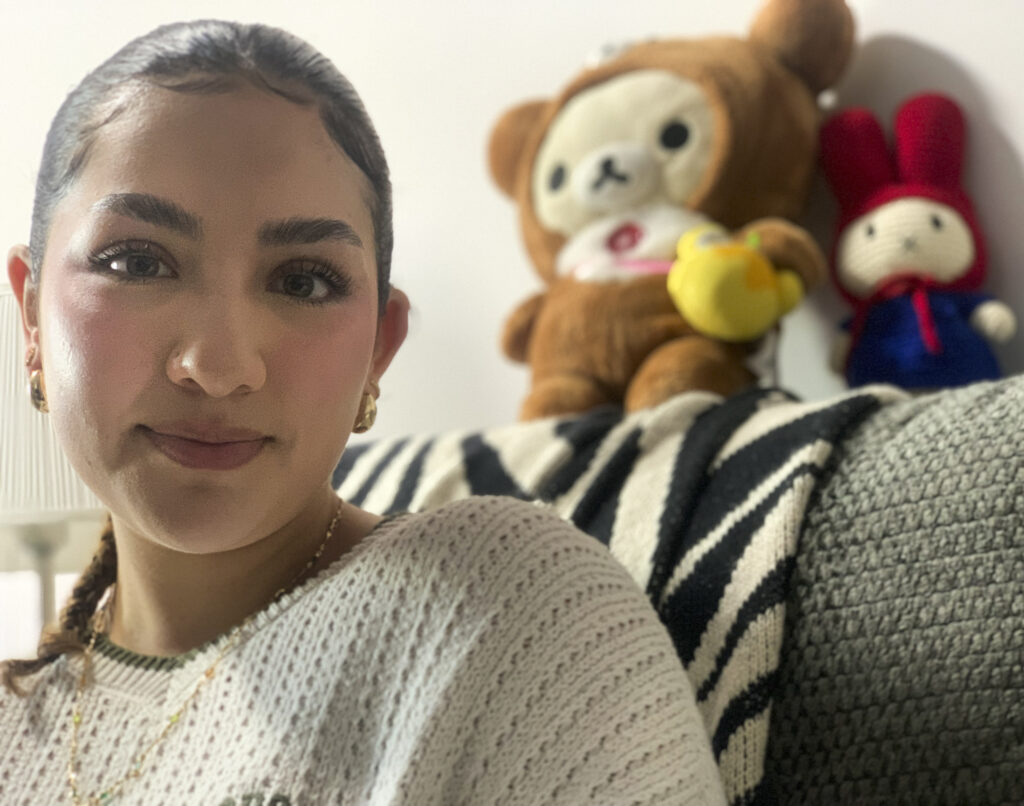
Jules said she continues to support her family any way she can. She tries to visit Chicago once a month to do grocery runs and accompany her mother to doctor’s appointments.
“I have to just adapt to this new situation and be there for my parents,” Jules said. “Even if it’s something that’s going to be difficult, I have to step up and take that role.”
She has struggled to focus on school, and at times, has felt like her emotions are all over the place.
“It’s been difficult to even get out of bed, go to my classes, do homework and or even go to work,” she said. “I kind of have to force myself to get out of bed.”
While ICE agents have scaled back their presence in Chicago, Jules said she remains on edge.
“I started, kind of like, creating another plan with my parents, making sure I communicate with them whenever I have free time,” she said.
It all weighs heavily on her mind, but she tries not to let it consume her.
Right now, she’s focused on taking care of her mental health and just making it through this semester.