

This story is part of Illinois Student Newsroom’s series: Champaign’s Honorary Streets: the Stories Behind the Signs.
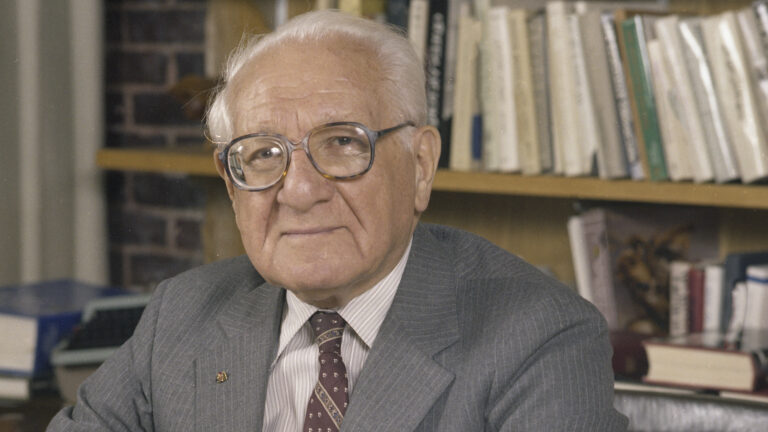
CHAMPAIGN — At the corner of John St. and Fifth in Champaign, an Honorary Street is designated to Abram Sachar.
Illini Hillel Executive Director Erez Cohen submitted an application to the City of Champaign to designate the 500 block of East John Street, where the Hillel building is located, as Honorary Abram Sachar Way in 2023, as Hillel at the University of Illinois Urbana-Champaign was preparing for the 100th anniversary of its founding.
Sachar was a part of Hillel from 1929 to 1955 and is credited with growing it from the world’s first Hillel into a movement that now has grown to 850 chapters in 18 countries.
How Illini Hillel came to be
Sachar arrived at the University of Illinois Urbana-Champaign to join the faculty of the history department in 1923.
The young scholar had been offered a teaching position at Indiana University, but the offer was quietly rescinded due to antisemitism, according to several sources who knew him closely, including his youngest son, renowned gastroenterologist Dr. David Sachar.
In Champaign, the elder Sachar met a growing number of Jewish students facing their own barriers. Cohen said most student organizations in the early 20th century required members to be “a churchgoer on Sunday,” meaning Jewish students were excluded by default. For them, Hillel provided a safe, inclusive community.
“This small dream to help out 200 students has grown into an international effort to really provide the same level of resources to Jewish students all around the world,” Cohen said.
Rabbi Ben Frankel founded Hillel in 1923 with support from the local Jewish community and later from B’nai B’rith, the oldest Jewish service organization in the U.S. Frankel and Sachar were roommates, Cohen said, and Sachar was involved in Hillel tangentially. When Frankel died unexpectedly in 1927, Hillel was left without a leader. Cohen said that’s when Sachar stepped in.
“Abram Sachar becomes immediately highly involved in supporting Jewish students at the University of Illinois,” he said.
Sachar took on the role of director while continuing to teach at Illinois. Sachar’s son David was a small child at the time. He said his father’s lectures were famous.
“He was a very popular professor. They loved his speeches, his lectures,” he said. “The classrooms were full to overflowing.”
But it was Abram Sachar’s work outside the classroom that transformed Hillel from a local community organization into a global institution.
Sachar’s vision for Hillel
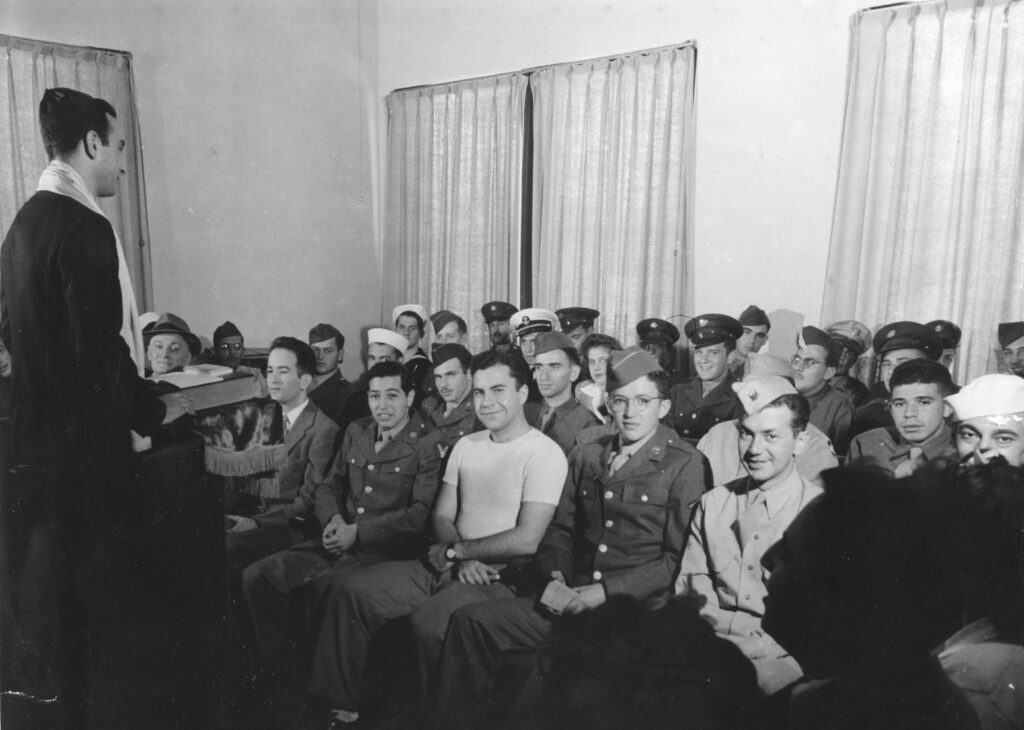
According to Cohen, Sachar saw Hillel as a “laboratory for Jewish leadership.” It would be a place of intellectual thriving, cultural connection and belonging for Jewish students.
“He said to everyone that he met with, ‘If you want this, I will build this with you, but you will be the leader of such a program,’” Cohen said.
One early Hillel student initiative helped sponsor Jewish refugees during World War II. According to Cohen, Illini Hillel worked with two students who were members of a Jewish fraternity on campus to hold several fundraisers and sponsor German Jewish refugees to study at the U of I.
Around the same time, Abram Sachar was able to leverage his national position to further support Jewish refugee scholars fleeing Europe and provide them with jobs, according to David Sachar.
“He was trying to rescue academic Jews from the displaced persons camp,” David Sachar said. “The visa situation was such that they wouldn’t let displaced persons in from Europe unless they had a job waiting for them. So Dad went to many campuses around the country and… brought over 100 people.”
During his two decades as Illini Hillel’s executive director, Abram Sachar expanded his vision for the movement. Cohen said that under Sachar’s leadership, Hillel spread to 167 campuses across the country.
Leaving a mark in higher education
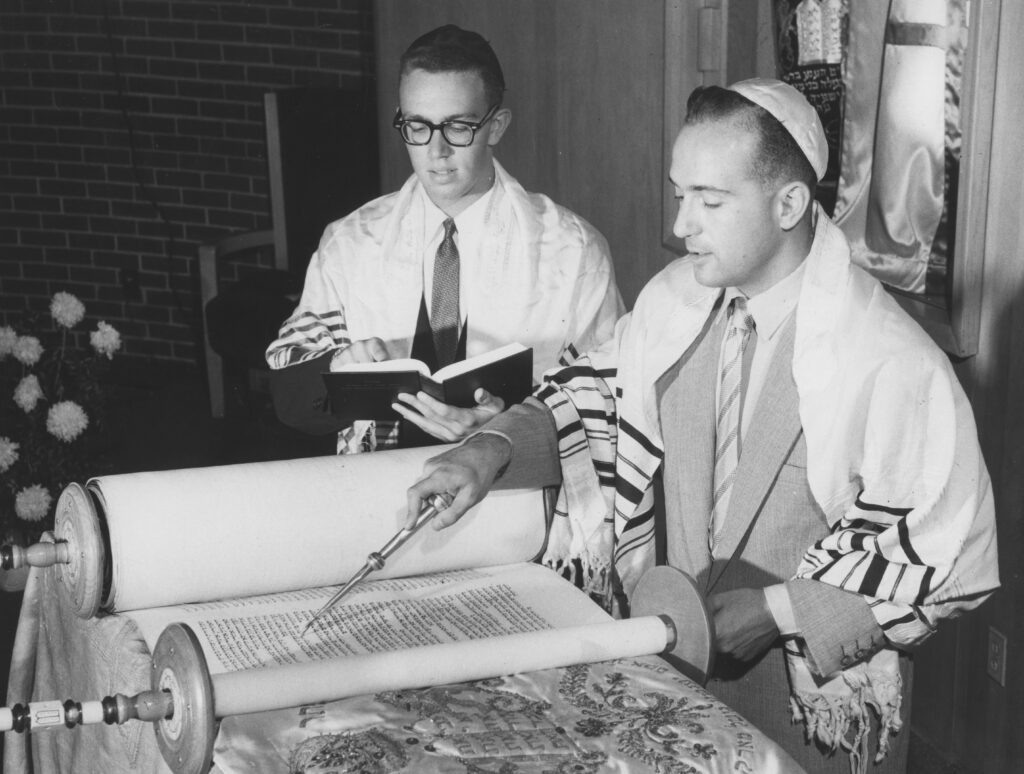
After WWII, Sachar began advocating for a new kind of university, one that would be open to Jews without restrictions. At that time, Jewish students faced visible and invisible barriers due to antisemitism in higher education, including a quota system that limited the number of spots available for some ethnoracial groups, including Jews.
This work would lead to the founding of Brandeis University, the first Jewish-sponsored nonsectarian institution of higher learning in the U.S. Sachar was the institution’s first president, its first chancellor and, later, chancellor emeritus. His grave is located on Brandeis University campus.
“The thing that unites those experiences between working at Hillel and working at Brandeis was that he cared deeply about the Jewish people and wanted to see them represented in American higher education,” said Eitan Marks, special assistant to the president of Brandeis University.