

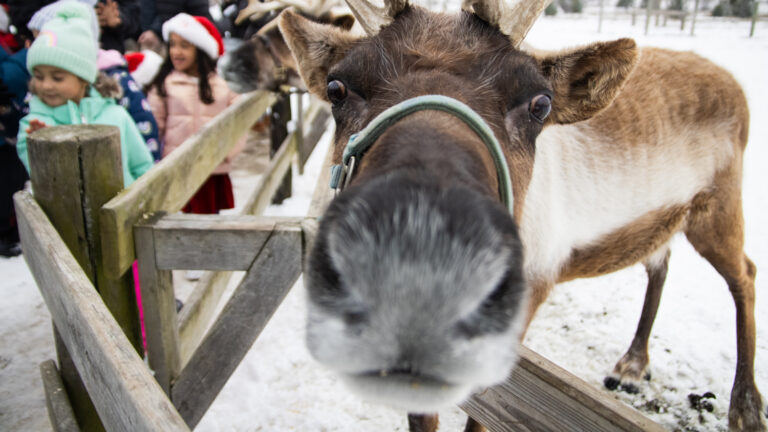
RANTOUL — Around the holidays, reindeer become a familiar sight: on cards, in movies and pulling Santa’s sleigh. But here in central Illinois, reindeer aren’t a myth or a cartoon. They’re livestock, cared for year-round.
Mark Hardy has been raising reindeer for 30 years. But his 60-acre ranch didn’t actually start with reindeer at all. After leaving dairy farming, Hardy said he planted Christmas trees, planning to sell them out of his garage. That changed after he met his wife, Julie.
“She found out we could get reindeer, so she talked me into getting reindeer and building a shop,” Hardy said. “And we have ever since then never slowed down.”
During the winter season, the ranch draws thousands of visitors – from across the globe — selling Christmas trees, hosting events, and offering reindeer tours that have become the main attraction.
“A lot of people don’t think they’re real,” said Olivia Cenzano, a staff member who gives reindeer tours at the ranch. “A lot of people think they’re like unicorns.”
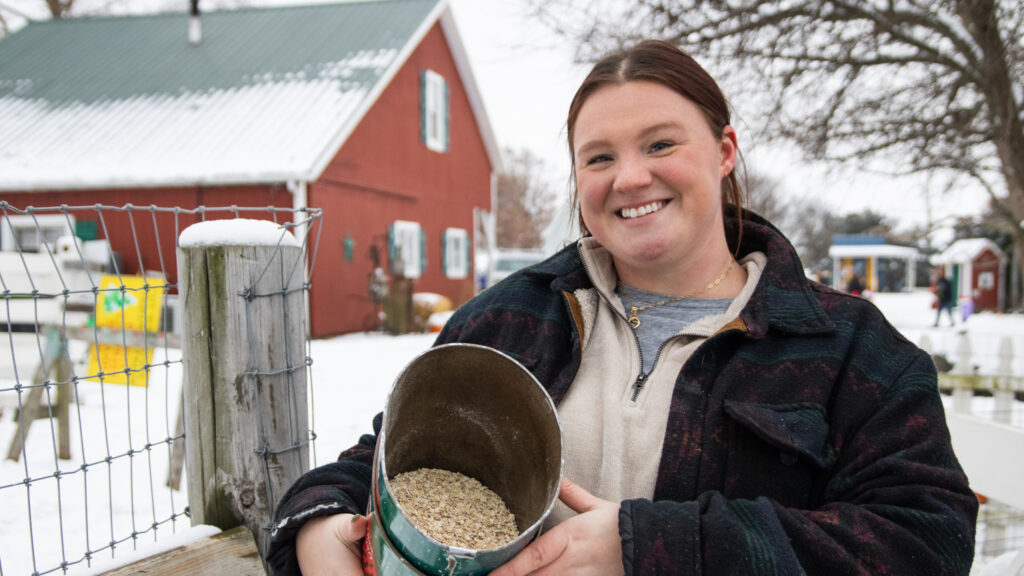
The best part of the reindeer tour is the reindeer kisses, according to 10-year-old Bear Taylor from Peoria.
“You basically just put a graham cracker in your mouth and they bite it out and they take it,” he said.
Many people return year after year. Bear’s mom, Megan Taylor, said it’s their family’s holiday tradition.
“We’ve been coming here since my daughter was one,” she said. “14 years.”
But for Hardy, reindeers aren’t just a seasonal attraction.
“The reindeer stay here,” he said. “We have 20 reindeer and they are here all year round.”
That means adjusting care with the seasons.
“During the summer, they have a very short coat, like a summer coat. When it gets above 90 or so, I have fans running on them. They go in a barn and they stay in there during the day and stay cool,” he said.
In winter, Hardy said the reindeer are in their element — the coldest days mean nothing to them.
“Their winter coat is good to 50 below. It’s amazing. We don’t have to worry about them during the winter,” he said.
Hardy said even the way they stay hydrated changes: “They don’t drink much water, they eat snow.”
Hardy said he feeds them like he would a cow: twice a day with alfalfa hay.
“They like beet pulp — soaked beet pulp — which is high in fiber, and then a grain mixture. And then for treats, we give them oats and graham crackers,” he said.
The ranch has three generations of reindeer; the oldest reindeer is 16.
“She’s a sweetheart,” Hardy said. “Her name’s Holly. She has a baby named Jolly, and then Jolly has Dolly.”
Hardy said they don’t sell any reindeer. For them, keeping the herd together is important. They calve in April and May.
“When ours are born, we start familiarizing them with us or with people, and that way, they’re friendly,” Hardy said. “We have some of the friendliest reindeer there are.”
But he also balances the human connection with nature. A reindeer calf is not bottle-fed unless its mother doesn’t have milk.
“The best thing you can do for that animal is get it back on the mother. It’s the best milk,” Hardy said. “You don’t want an animal that thinks it’s not a deer. You want it to think it’s a deer.”
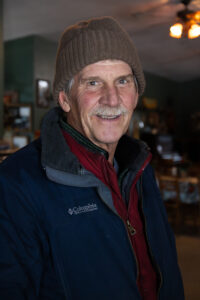
As a reindeer rancher, Hardy has learned a multitude of interesting facts about these animals.
“There’s a song about, ‘Up on the rooftop, click click click,’” Hardy said. “They ‘click’ when they walk, which is very unique to reindeer.”
The “click” sound is caused by a special tendon in their back feet, which snaps over a bone. Hardy said this natural sound serves as an important communication tool, allowing herd members to locate each other in poor visibility like snowstorms.
For Hardy, raising reindeer is much more than a holiday tradition. It’s a way of life.
“I’ve always had livestock and they’re more fun than a cow,” he said, laughing. “I enjoy these animals. They’re friendly. They’re fun to watch. They’re curious. They’re beautiful. I hope everybody enjoys them, and we’ll do it as long as we’re capable of doing it, and do the best job we can taking care of them.”