

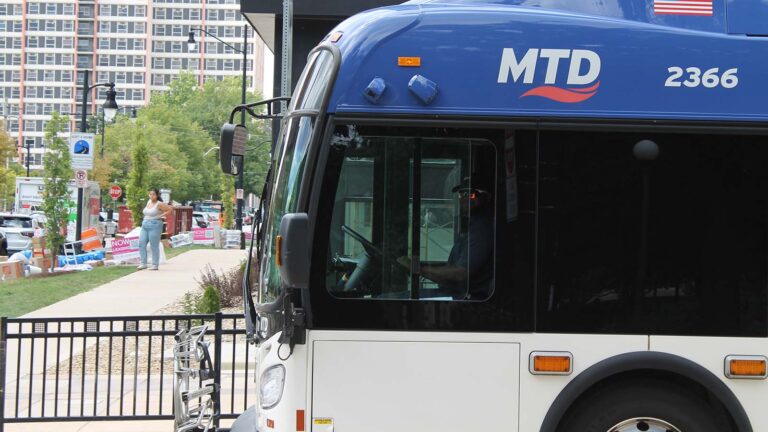
Local bus service in Champaign-Urbana could expand after the Illinois General Assembly approved a package during veto session this fall to invest millions of dollars in public transit across the state.
The bill directs $130 million dollars from the state to downstate transit authorities to help them balance their budgets and avoid cuts to service.
Karl Gnadt, managing director of the Champaign Urbana Mass Transit District, said without extra support from the state, downstate transit agencies were projecting they could have faced insolvency during the 2027 fiscal year.
“We would have seen broad-based cuts at transit agencies, rural and small, urban, all across downstate Illinois,” he said.
With additional funding now secured, Gnadt said the agency is continuing to plan a new bus route to reach the Carle medical facility on Curtis Road and Mattis Avenue in southwest Champaign.
He said the MTD also wants to improve service on some of its existing routes.
“Instead of a bus coming every 30 minutes, maybe it comes every 20 minutes, or every 15 minutes,” Gnadt explained. “It’s a more robust frequent service for the passengers, but those are going to be down the road.”
Those who do not ride the bus will also see benefits from the bill in the form of reducing traffic, he added.
“If there are service cuts, you have more pedestrians or more bicyclists that you have to navigate your car around, or there are additional cars on the street creating congestion and so all of those things are things that you don’t have to worry about as a as a non-user either.”
Lawmakers adjusted several funding sources to raise revenue. That includes sales tax increases in Chicagoland and redirecting motor fuel sales tax revenue and interest from the state’s Road Fund to support public transit.
Though lawmakers appropriated $130 million for downstate transit, the investment is less than the $200 million agencies were hoping to receive from the state.
Gnadt said the difference could mean the state may have to confront transit funding shortfall in about 20 years.
“That will have to be addressed somehow, and it could be addressed with finding additional funds, or it could be addressed with making cuts.”