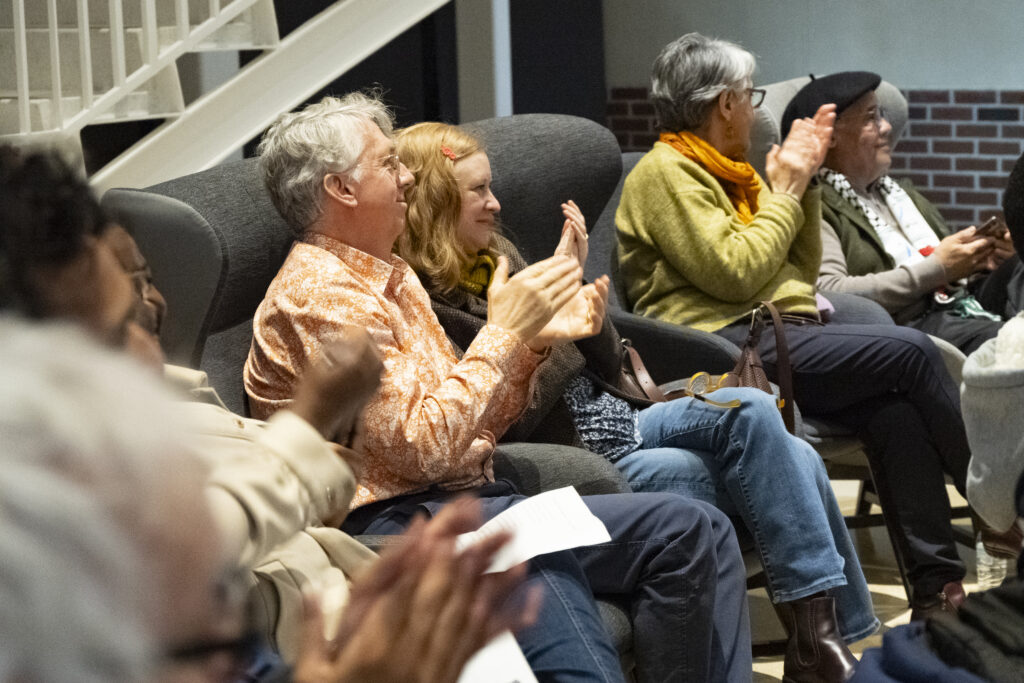

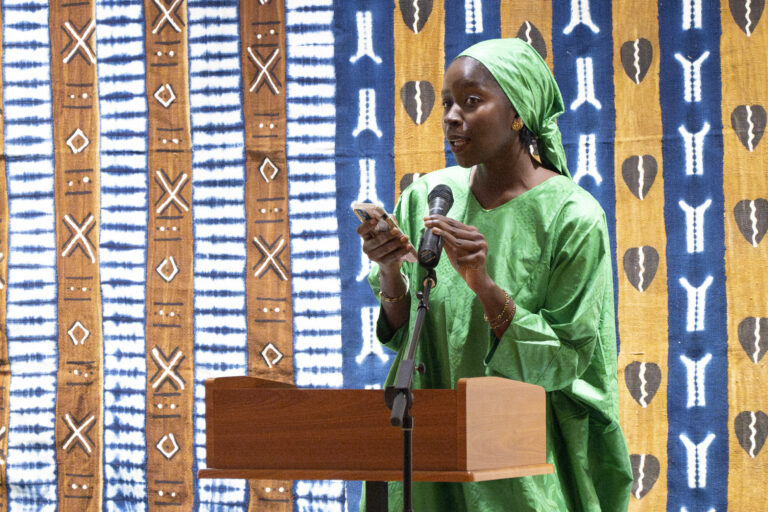
URBANA – The 8th annual “Word is Seed” event at the Spurlock Museum in Urbana highlighted the beauty of language, featuring speakers presenting their poems or songs in their own language.
This year’s event on Oct. 30, hosted by the Center for African Studies, featured cultures and languages including Swahili, Russian and Yoruba.
Adéyínká Àlásadé, outreach coordinator for the Center for African Studies and event organizer, said Word is Seed encourages speakers not to translate the poetry, but share the poetry in its original languages. She encouraged audience members to focus on the sound and rhythm.
“You can hear the beauty of the language, even if you don’t understand,” Àlásadé said. “95% of the music I listen to is not in English, but I enjoy it. Do you enjoy it less? So that’s the idea with the poetry.”
She said even without understanding the language, the meaning and emotion comes through in the gestures, facial expressions and sounds of the spoken word.
Àlásadé said Word is Seed started before the pandemic, and it began as a platform for speakers to share African languages. Then the event expanded to allow greater diversity of language and culture.
“We start off with African poetry because we want to promote African language poetry and new African poets,” she said. “Within that context of an African language celebration, we then invite the world of languages and poetry to celebrate this sort of literary collection.”
She said there are many stereotypes for African poetry, so the purpose of the event is also to eliminate the stereotype that there are no great poets in Africa.
Throughout the event, audience members shared poetry, songs and readings in their original languages.
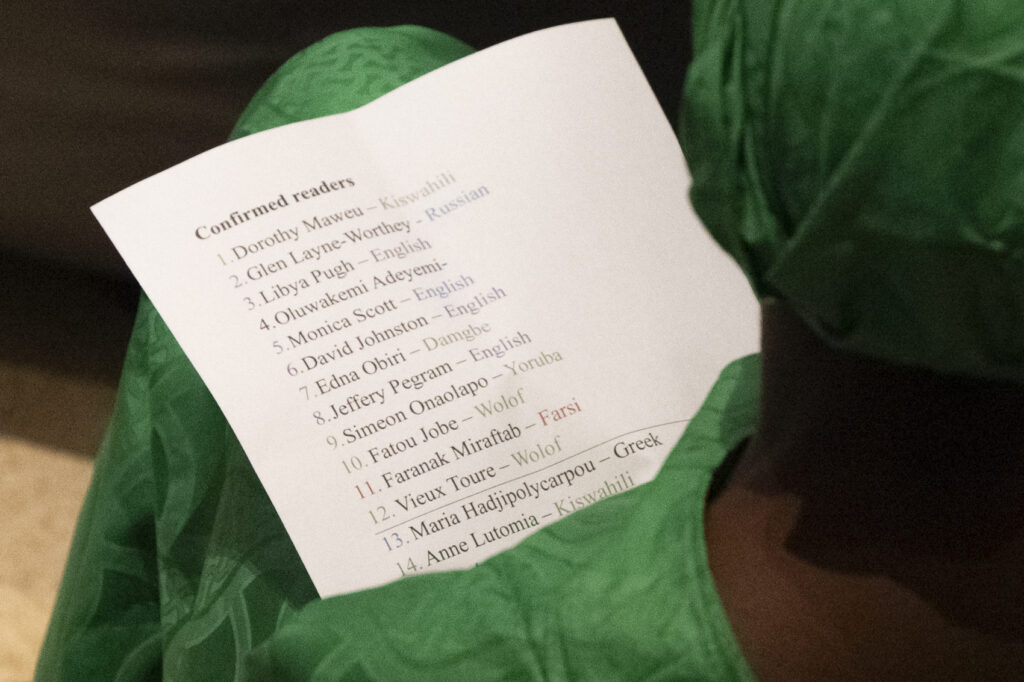
Anne Lutomia, a postdoctoral researcher at the U of I who focuses on Indigenous studies, sang the Swahili song “Njiwa Peleka Salamu,” which is about love, challenges and reunion.
“I’ve been enjoying this song cause there are now new renditions of it by younger people,” Lutomia said. “Though I sang using memories of the old versions of me that I had as a child, it’s a piece that just keeps on giving.”
She said the song was commonly played on the radio in East Africa when she was a child and it reminded her of growing up in Kenya.
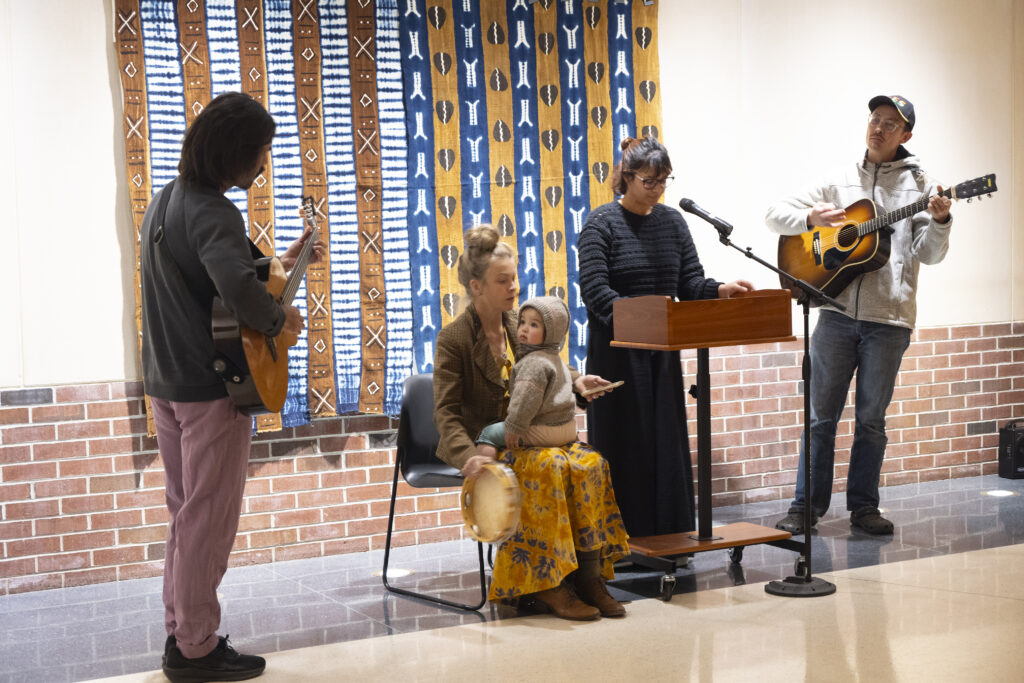
The band “La Bandita” performed the song “Ay porqué,” which was written during the COVID-19 pandemic. Adrian Wong, Lila Ann Wong, Claudia Grisales Bohorquez and Manuel Pérez-Troncoso got together outside to write and practice songs in a garden.
Lila Ann Wong said they performed primarily for friends and family members in Urbana.
“Our group expanded, and we would get together every week or two to practice, rehearse and perform for each other for friends at a party,” she said.
She said this was the band’s first time performing at the event.
The song started with a poem, which is a popular genre in Chile, followed by melody and guitar rhythms; the song reflected the band members’ personal experiences and the broader world around them.
Àlásadé said the goal of the event is to connect the audience through the beauty of poetry.
“In this fast-paced world, we forget to stop and embrace literature,” she said. “So, I find that when I do this program, I go to certain cultures and I invite all these cultures from Asia or Middle East. They’re more than happy to show all the classical poetry.”