

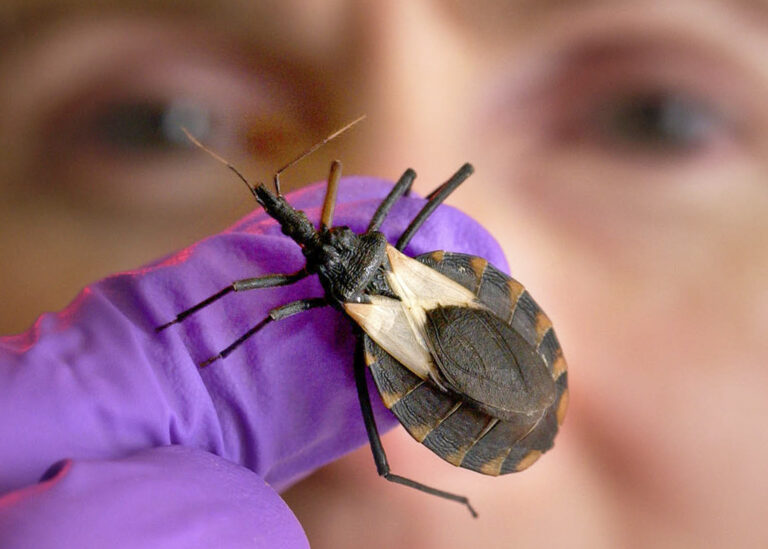
SPRINGFIELD — An estimated 300,000 people in the U.S. have been infected with Chagas disease, a parasitic illness transmitted by triatomine bugs, also known as “kissing bugs.” Left untreated, the disease can cause serious heart and digestive problems.
The estimated number of U.S. cases is likely an underestimation because of minimal reporting, lack of education and awareness of the disease for medical providers, according to research published in the National Library of Medicine.
Last month, a group of infectious disease experts published an article calling on health authorities to label Chagas disease as endemic, or regularly occurring, in the U.S. — to help improve surveillance and research.
In Illinois, the risk of Chagas disease is low. There are no reported human cases of Chagas in the state and the parasite is considered to be hypoendemic in the U.S., or present at a low level, according to the Illinois Department of Public Health officials.
“Most cases in the U.S. result from exposures that occur outside the country, and exposures within the country are primarily in Southern states,” said James Leach, IDPH public information officer, in an email. “We would be more closely involved in the event of a ‘cluster’ or outbreak of cases.”
Chagas disease is a serious illness
Illinois health care providers and agencies are not required to track Chagas disease. Christopher Dietrich, an entomologist from the Illinois Natural History Survey, said he agrees with the researchers who sounded the alarm about Chagas.
“I think it’s good that these scientists are advocating for the disease to be classified as endemic,” Dietrich said. “That could result in more resources being devoted to monitoring of the insects as well as the disease itself.”
Tracking the insect and the disease can be crucial for predicting outbreaks, he said. According to his research, rising temperatures caused by climate change could mean insects like kissing bugs will become a bigger issue in the future.
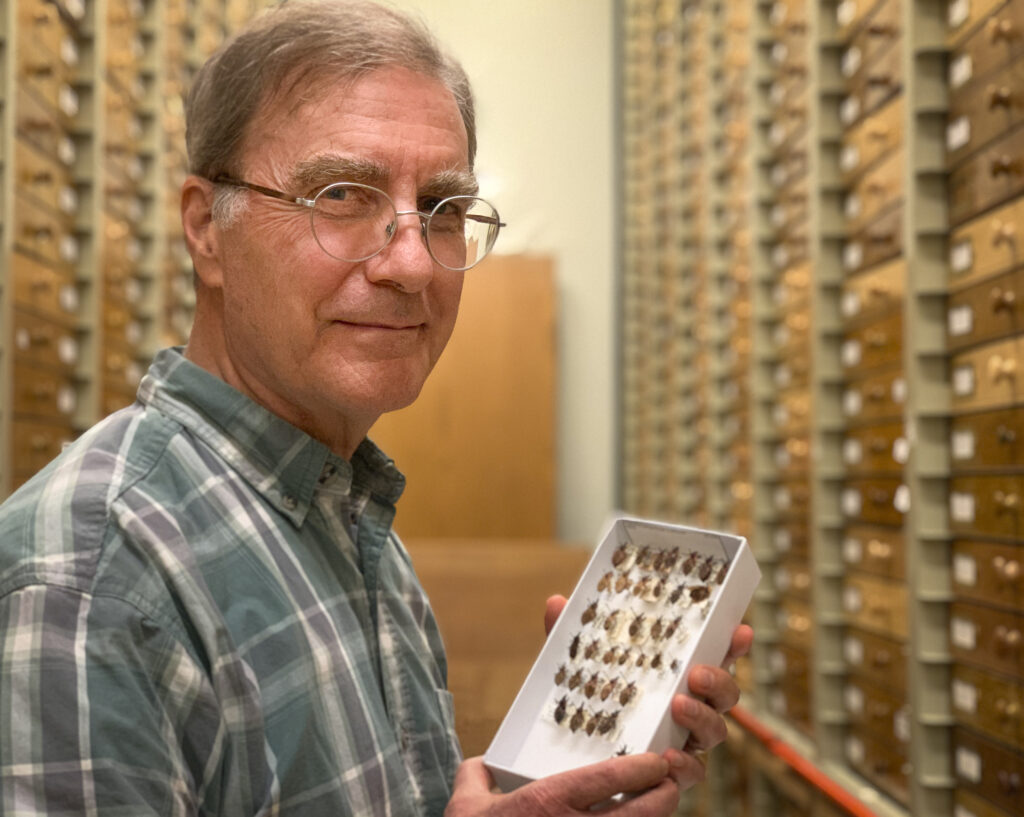
“There could be some risk that they spread farther north,” Dietrich said. “Unfortunately, there’s nobody out there that actually is monitoring these [insects] in any systematic way, so we don’t really have any good idea of whether that’s happening, or to what extent.”
Chagas disease is transmitted after kissing bugs bite a host and defecate or urinate into the wound. The disease can be a brief illness with mild-flu like symptoms like fever, body aches, diarrhea and vomiting. If it is not treated, it can become a life-threatening condition.
Sometimes, symptoms don’t appear until decades after the infection begins, making early detection difficult.
“Chagas disease is a serious illness that can cause really serious, debilitating problems in humans,” Dietrich said.“The bite of the insect itself can cause an allergic reaction in some people that could potentially be fatal.”
Are kissing bugs a threat in Illinois?
Kissing bugs are not new to Illinois. According to Dietrich, a species known as triatoma sanguisuga is present in the state. In the Natural Resources Lab, Dietrich said they have a collection of kissing bugs that dates back to the early 1900s.
The bugs target pets and wildlife, and Dietrich said there isn’t a lot of evidence they are spreading Chagas disease to humans in Illinois.
“Its preferred hosts are small mammals, like rodents,” Dietrich said. “It’s mostly associated with rodent burrows and rodent nests.”
According to Robert Davies, director of planning and research from the Champaign-Urbana Public Health District, the transmission of the Chagas disease is low in Illinois because of their feeding behaviors.
“These types of kissing bugs will eat and have a delayed defecation,” Davies said. “It might eat, move away from the feeding site and then defecate, therefore lowering the risk of transmission.”
The reporting of Chagas disease is mandatory in only seven states, including Arizona, Arkansas, Louisiana, Massachusetts, Mississippi, Tennessee, and Texas.
The U.S. currently focuses on the prevention of the spread of Chagas disease through blood transfusions, organ transplants and from pregnant women to their babies through tests.
According to the IDPH, they can consider making Chagas disease reportable in Illinois if it were a nationally notifiable condition as recommended by the Council of State and Territorial Epidemiologists.
The agency would need to justify the costs and benefits of making the conditions reportable, followed by two public opinion periods before its final approval through the State Board of Health and the Joint Commission on Administrative Rules.
“Additionally, it is reportable in high-risk settings where screening is required based on exposure risk, such as blood donation and organ transplant,” Leach said in an email.
Raising awareness of Chagas disease
Davies said some people who donate blood might be notified by the blood bank that they had a positive result of Chagas disease. If this happens, he said health care providers can contact the public health district to help facilitate testing for Chagas disease through the CDC.
“We just work with that health care provider to make sure, if they have a high index of suspicion, that we can test for that and confirm that for the provider,” Davies said.
While the risk of Chagas disease is low in Illinois, Davies said he thinks there should be increased awareness to prevent local transmission.
“I think it’s still important to talk about Chagas disease like we are today, because it is a neglected public health challenge,” Davies said. “Having conversations about Chagas disease raises awareness, especially among medical providers who may encounter infected patients.”