

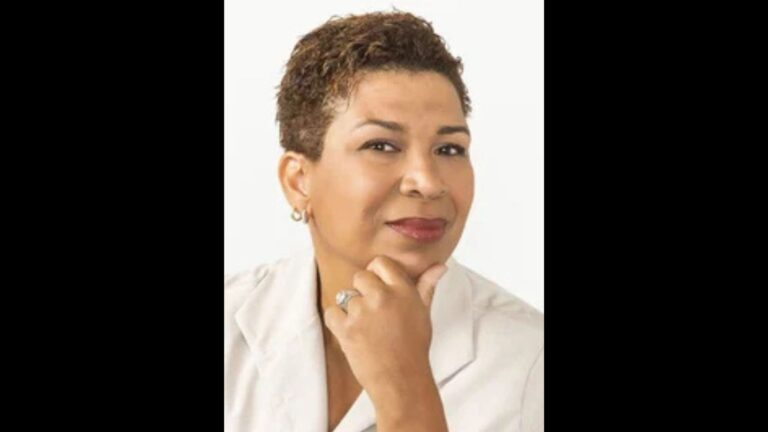
IPM Morning Edition host Kimberly Schofield sat down with one of her counterparts at NPR, Michel Martin. She asked her how she prepares for the early hours of the program — and how she’s thinking about the role of public media in the wake of the federal funding cuts.
This interview has been edited for clarity and conciseness.
KIMBERLY SCHOFIELD: Michel, your career is incredibly expansive, but after being at ABC News and hosting, Tell Me More and then later, weekend All Things Considered, how are you handling the hours of Morning Edition now?
MICHEL MARTIN: Well, you’ll have to ask my colleagues, but, well, I’ll tell you this, my husband has always been more of a morning person than me. In fact, when I met him, you know, I was at ABC’s Nightline, which at the time, was on at 11:30. Right now, I think it’s on at 12:30, which is even later. When Monday Night Football was on ABC News, sometimes we wouldn’t get on the air till 1:00 in the morning. So that’s like the total other end of the broadcast day. So I feel like, you know, now I’ve come full circle from being late at night to early in the morning, from some vampire hours to like, the other end of the day. So I remember when I first told my husband I was thinking about…that they had asked me to consider moving into this role from weekends — he was always the early one in our relationship — he goes, “You know what? I should do that job because I get up before you. You’re not…” I’m not gonna lie, the struggle is real. The struggle is real. All about the mission, right, Kimberly?
SCHOFIELD: Absolutely, I know. I bartended forever, and I said, “I can do that. I’ve been up really late before. This will be, this will be fine,” but goodness, you wake up and it is just so early.
MARTIN: It’s totally different. It’s totally different.
SCHOFIELD: How early do you have to get up and then be so fresh?
MARTIN: Well, I get up at 2:30.
SCHOFIELD: 2:30?!
MARTIN: Again, that’s for others to judge how fresh I am, but I get up at 2:30. I’ve got it down to a system now. I lay everything out the night before, my clothes, everything I’m going to wear, including my lunch, my breakfast, because, remember, there’s nothing open. So I pack everything up, I’m ready to go, and I’m in the office at 3:30 a.m., and we go on the air, of course, at 5:00.
SCHOFIELD: Yes.
MARTIN: Well, let me ask you, as a person who bartended, how do you do it? What do you do?
SCHOFIELD: So I also ran, and I used to run very, very early, very early, like, 4:00 a.m. early.
MARTIN: Wow.
SCHOFIELD: And I’ve tried to do that on top of this, and it just doesn’t match. So I get up, I bring everything here too. I love tea and there’s a microwave, so you just make your own little home for the morning.
MARTIN: Right? You do. Honestly, I grew up with this because my dad was a firefighter, and so many other people on my dad’s side of the family are cops, were or are, right? And so this idea of shift changing and getting up in the middle of the night and doing all that, you know … I grew up with it, but I never thought about how hard it is. And now that I think about … like we were little kids, and, you know, little kids want to make a lot of noise, and here we are, my dad’s trying to sleep, and I remember him distinctly saying, “All right, you kids. All right, you kids.” And our being like ‘whatever,’ you know, we’re kids. We’re doing our thing. And now I’m thinking, ‘wow, I wish I could apologize to him.’ Sadly, he’s passed on, as has that whole first generation, but you know, I took it for granted when I was a kid, like, ‘they’ll be fine.’
SCHOFIELD: Yes, absolutely, we are tired, just so everybody knows.
MARTIN: We’re tired. Just to let everybody know.
SCHOFIELD: Michel, this is an uncertain time in public broadcasting. How do we, or how do you think that we as journalists and as hosts, meet this moment to go forward?
MARTIN: Well, thanks for asking that. First of all, I’m comfortable with the fact that it’s an uncertain time, because the reality of it is, a lot of people are living uncertain lives. So to a certain extent, this just, once again, brings us into community with people who are living something similar. And as a journalist, I find that it’s never comfortable, but it’s always useful. Like I remember when I’ve gone through certain, you know, personal tragedies in my life. You know, I wrote about this on the air so this is not a secret, that I have a family member that I lost to suicide, and I wrote about it, and I must have gotten like hundreds of letters from people saying how meaningful it was that I shared that, and how … just to have the opportunity to talk about what this family member meant to me and how sad I was about it. And I have, literally for years afterward, people would come up to me and say, ‘I am glad that you shared that, because I was going through something.’ And so I guess what I’m saying is, we are going through something here. There is no point in pretending that we’re not. On the other hand, a lot of people around the world are going through something, and this brings us into communion with them.
Now, having said that, this is a moment for us to, I think, remind people of the service we offer. Because one of the things that I think distinguishes public media from other media, and I’ve worked in other media, and I have tremendous respect for them, and I’m grateful to all of them, but we are here for the audience and nobody else, okay?
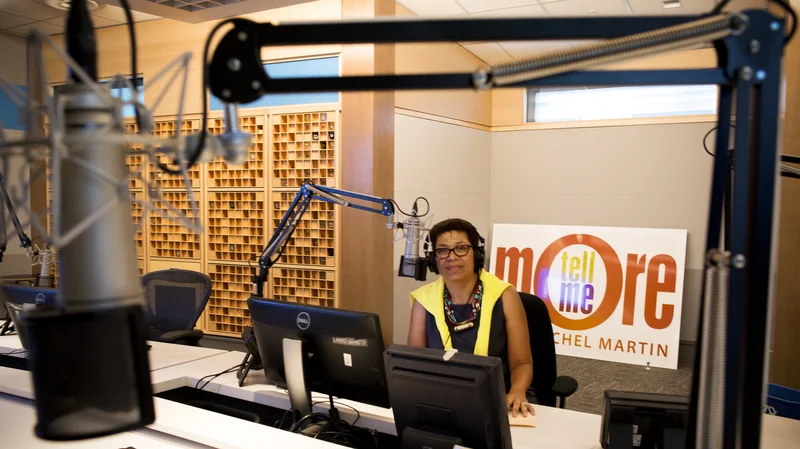
We are not here to serve the business interests of some particularly wealthy individual. We are not the kind of, the, sort of, the small division of some big company that does a million other things and we’re an afterthought. We are not here to ground somebody’s ideological acts. We are not here to align ourselves with somebody’s political interests. We are here at the service of the audience, and that is why the public supports us, and that’s what puts the public in public media.
And that goes for all of us.
Our member stations, whether they’re chartered independently, whether they’re chartered to universities, for here at headquarters, our public media partners, you know, around the country, it’s audience first. So, we’re here to offer the audience what we think they need on any given day, what we think would make their lives better, what we think would keep them informed.
And as I’ve said, you know, to other places, you know, having started in local news myself, I know that local news is the glue that holds communities together. People want to understand what’s going on with their neighbors. People want to understand what’s going on with their schools. People want to understand what’s going on in their local governments. And there’s a lot of research that supports this, for people who care about that. There’s a lot of research that shows that our kind of civic engagement really falters when we don’t have robust local news. So I think that this is a service that is, it kind of wraps itself around you, right, like a blanket from every stage in your life. There’s something here for you.
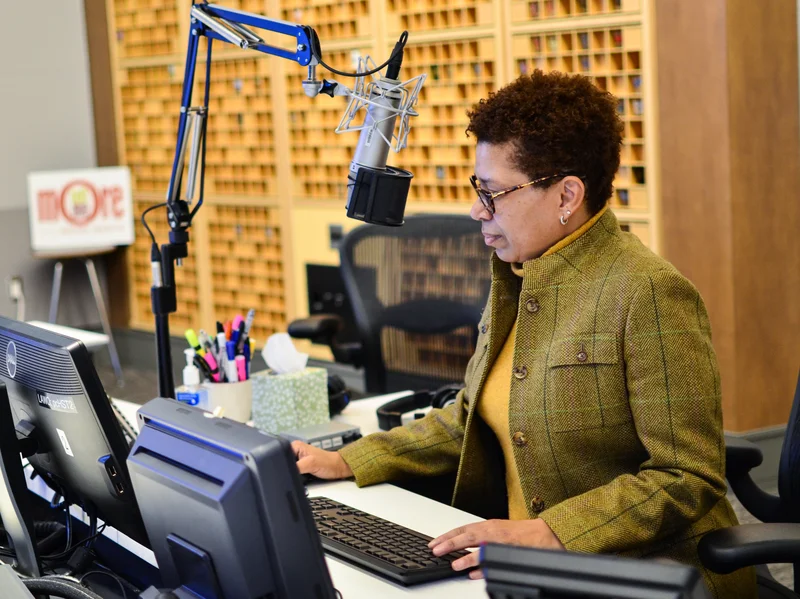
I was actually telling one of my other colleagues this. When this terrible war on Ukraine started, this full out war started three years ago, you know, some of our colleagues went to Poland, some of our colleagues obviously went to Ukraine, I went to Romania. And I was at the train station in Romania, where a number of the refugees were coming in, you know, from Ukraine. And I had my microphone flag, and it had NPR on it, and a group of these young people rushed over, and they were like, ‘Tiny Desk, Tiny Desk!’ And they didn’t know a lot of English, but they knew Tiny Desk, right? So I’m just saying we have something for everybody, and that is what keeps me going. I bet that’s what keeps you going, and I’m hoping that’s what keeps our audience supporting us. I hope they are understanding, and if they haven’t had a chance to think about it, they’ll think about it now what the service means to them, especially in places where there aren’t a lot of independent news offerings. I mean, there are some parts of the country that truly are news deserts. There really is no functional paper, the independent — independent news organization, let me emphasize that — is not aligned with the political party, that isn’t there at the service of some particular group or business interest, that is really there to present, you know, the news and our cultural offerings as best we can, 24 hours a day, seven days a week, and that’s what we are, and that’s what we’re here for. And as far as I’m concerned, that’s what we’re going to keep doing with your support.
SCHOFIELD: Yes, I agree completely. We just created a radio station that serves the Black community here in Champaign-Urbana and when we did a survey when we were creating it, we asked people, ‘what shows do you know?’ And I tell you, Tiny Desk. It is amazing. There really is something for everyone and it’s nice to be able to relate to the people presenting the information.
MARTIN: It is, it is. We’re not just here to reinforce what folks already know. We’re here to kind of expand when you want that, when you’re ready for that. I mean, this is one of the things that I really appreciate about our network, is we have local partners like you who are really connected to your community. You know what’s going on there. You know what folks there want and need to know about. But when you want to and when you’re ready, we also connect you to the world because we have people all over the world who are telling you what’s going on there. And one of the things that always amazes me, you know, when I go overseas or when I travel, is just how people are thinking about the same things. They’re worried about the same things. They want a decent place to live. They want to be safe. They want their kids to go to school and have a good and decent school. They want nutritious food to eat. They want, you know, clean air to breathe. And I just think that hearing those concerns and hearing how people are connected, I don’t know. I just think it kind of brings you into connection with your own humanity. And I just think it, it just kind of reminds us of what it is to be human. And I think that that’s partly what we’re here for.