

URBANA — The budget for Champaign County’s next fiscal year includes some big changes, including an increase in spending for AI platforms and digital accessibility tools, plus $250,000 to help support the development of a skilled nursing facility in Champaign County.
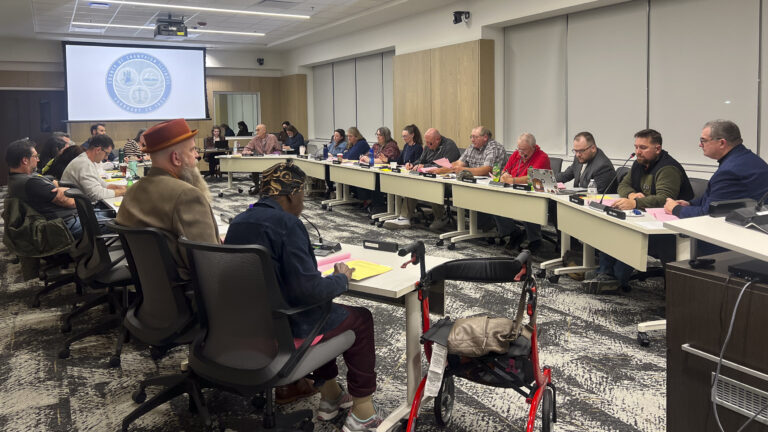
On Thursday, the County Board voted 12-to-8 to pass its FY2027 budget, which takes effect Jan. 1.
The budget has a $759,000 deficit, largely due to personnel expenses for county employees, said John Farney, a Republican representing District 3 and the vice chair for finance. The county will use money from its fund balance, which operates as the county’s savings account, to make up the difference.
Farney says health insurance for county employees is one of the biggest drivers of the county’s deficit spending.
“If we didn’t have a million dollar health insurance increase, we’d be in much better shape and we actually could be much closer to having a truly balanced budget,” he said.
Other large changes to this year’s budget include a roughly 36% increase to the Information Technology department to implement AI governance policies, AI risk management and oversight platforms as well as other digital accessibility tools.
The new budget also includes a revenue increase of 3.6% in state sales tax and income tax shares and a decrease of just over 6% in state grant funding.
An allocation of $250,000 to Advocates for Aging Care will help support the development of a new skilled nursing facility.
The county is also looking to hire new positions and fill vacancies, including one full-time Accounting Clerk and one court security officer. The budget includes funding for a new part-time Access to Justice Coordinator and three Traveling Energy Auditors to assist agencies with weatherization production.
Flock no longer funded through Cannabis Regulation Fund
Previously, the county’s contract with Flock surveillance technology was funded through the state’s Cannabis Regulation Fund.
State statute requires the money from this fund to be used for “crime prevention programs, training, and interdiction efforts, including detection, enforcement, and prevention efforts, relating to the illegal cannabis market and driving under the influence of cannabis.”
Some County Board members say they believe this funding has been misused because Flock does not specifically support prevention efforts.
“Bottom line, it’s not a responsible use of the cannabis funding,” said Jenny Lokshin, a Board member representing District 4.
Instead of funding Flock, a portion of the cannabis regulation funds will be used to pay for specialized training for a Drug Evaluation Classification Program, organized by the state police, to train officers to identify drug impaired drivers, and distinguish between impairment caused drug use and symptoms resulting from medical conditions.
The program will cost $15,000 for six officers; the rest of the money from the state’s cannabis fund will sit in a savings account, Farney said, and the Champaign County Sheriff’s office will have to find money in its general fund to pay for the county’s contract with Flock. The sheriff’s office did not respond to questions about how Flock services will be funded going forward.
Large and/or hyperscale data centers advisory question
Voters in Champaign County will be asked to provide input regarding the development of large or hyperscale data centers.
The board unanimously voted to place an advisory question on election ballots in April 2027.
The question will ask if Champaign County should “support the development of large and/or hyperscale data centers, defined as larger than 10 megawatts of total power, within Champaign County.”
Denise Arres, a Democrat representing District 6, says it’s better to focus on the amount of energy data centers use instead of focusing on their size.
“The more megawatts that these buildings can be, the more impact on the grid, the more impact on people, the more impact on noise, the more impact on the environment, the more impact on livestock and our farmland,” she said.
The advisory question is non-binding so it won’t force policy change. But board members say it will help them understand how residents feel about data centers.