

This story is part of America @ 250: The Questions Before Us, a series from IPM News and the Illinois Student Newsroom.
CHAMPAIGN — A birthday is a time for celebration and reflection: Where have we been? Where are we right now? And where are we going?
IPM is celebrating America’s 250th birthday by inviting people from across east-central Illinois to share what they think are the most important questions facing Americans at this historic moment.
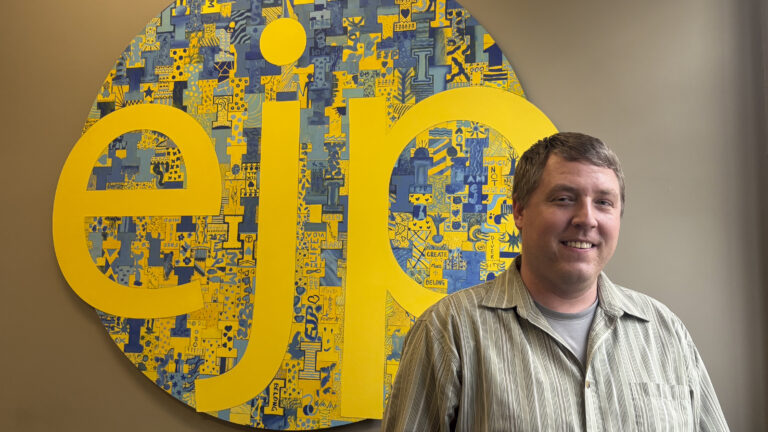
Chad Rand is outreach coordinator for the University of Illinois Education Justice Project, where he supports people across the country who are coming home from prison or facing detention and deportation.
The following transcript has been lightly edited for length and clarity.
I’m a white male. I’m openly gay. I’m polyamorous. I’m an avid video gamer and gardener. I like to consider myself a cook. I was incarcerated when I was 25. I spent 13 years behind bars.
It may not surprise people, but being gay in prison is not necessarily a virtue. One of the things about being incarcerated is that you’re forced to live in very close quarters with people who oftentimes you don’t know. In many cases, you don’t have anything in common with, in some cases you completely disagree with.
There were certainly times where I was forced to move into a cell with somebody who was very hostile. More than once I was told in no uncertain terms that if you’re still here tomorrow, I will kill you. And in those times you can’t feel, I think, more helpless. I could potentially try to get an officer’s attention and tell him what just happened. But in that case, I’m also now snitching on someone, which puts me even in further danger of harm. I was able, luckily, in all those situations, to get myself moved before anything happened.
Twenty-two hours a day, you were locked in your cell, which was a room that was about six foot by eight foot. A few times a day, the cell doors would open and you could come out and kind of be in open rec space, which was really just an open room with some tables. That’s where people played cards or board games. And so, philosophically speaking, you’re also kind of given, I’ll call it the gift of time, where you have nothing to do but to pass the hours.
And so I found myself, over the course of kind of playing cards or listening to music, maybe cooking together, I was introduced to so many different lifestyles and backgrounds and belief systems, and that really kind of widened my view of what the world held and what the universe encapsulated vis-a-vis human beings.
I was asked not too long ago whether or not I considered myself a patriot. And I really had to wrestle with that question, because I’m not sure that I know what it is to be patriotic. I mean, I know kind of in broad strokes, kind of, you know, loving your country and being really proud of being an American and being willing to like, fight and die and, and glorify your country and the people in it and being really proud of its ideals and its promises.
And I’ve come to doubt that any of that is worth celebrating. I’m not sure that I’m at all proud of what my country is doing nowadays. So I found it very hard to decide whether or not I would call myself patriotic.
But I think I’ve come around to a different view of that because I think what makes a country a country is the people in it. And I think that part of being patriotic is loving the people who live in your country. And in that sense, I consider myself incredibly patriotic, because all I want is for everyone in this country to feel seen and loved and heard and respected, and to be able to live out their individual lives in whatever way makes them happy.
I think a central question for our nation is: Where do you want to see our country 50 years from now? You know, for people who are maybe more conservative, do you want to live in a world where nobody is different, where we all look the same and speak the same and act the same and believe the same things? I would find that world incredibly boring.
I don’t know why anybody would not want to live in that kind of society, where you can run into so many people with so many diverse backgrounds, and yet we all exist, ostensibly, on an equal footing.
So I think even though things have gotten really rough in the last, what, year… year and a half… I almost hope that we are in the death throes of the old guard.
The generation who unfortunately is still in power, I think are beginning to realize that they’ve lost the longer fight. And when there’s nothing you can do to kind of save your legacy, the only thing you can do is shout and scream and throw things. And I feel like that maybe what we’re seeing right now, or at least I hope that’s what we’re seeing right now.
This story was reported by A. Oishii Basu and produced for IPM News by Charles “Stretch” Ledford. If you have an idea for the America @ 250 series or would like to be featured in an upcoming story, contact Charles “Stretch” Ledford at stretch@illinois.edu.