

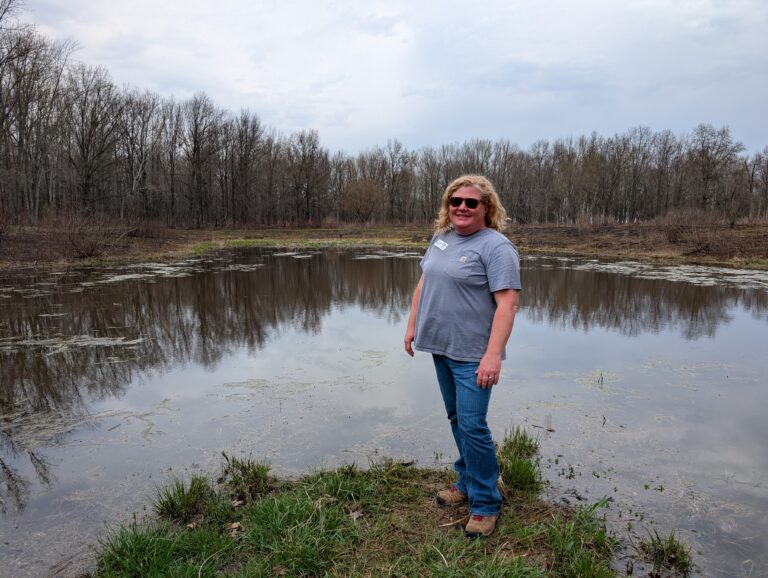
HOMER – On a drizzly day at Homer Lake Forest Preserve east of Champaign-Urbana, Morgan Duerksen-Balk walked around a wetland where frogs normally mate this time of year. The loud and constant trill of the frogs’ calls permeated the air.
Mating season for frogs and toads kicks off in the spring in the Midwest, spurred by warmer weather, more rain and longer days, and that means volunteers across East Central Illinois are out exploring local watersheds like Duerksen-Balk to collect data on frog populations that paint an important picture of ecosystem health.
“It’s amazing how loud an individual frog can be,” she said, pointing in the general direction of the loudest trill.
Duerksen-Balk is a public program specialist with the Champaign County Forest Preserve District, and she helps run the local chapter of FrogWatch USA with the University of Illinois Extension. It’s a national program with more than 100 local chapters.
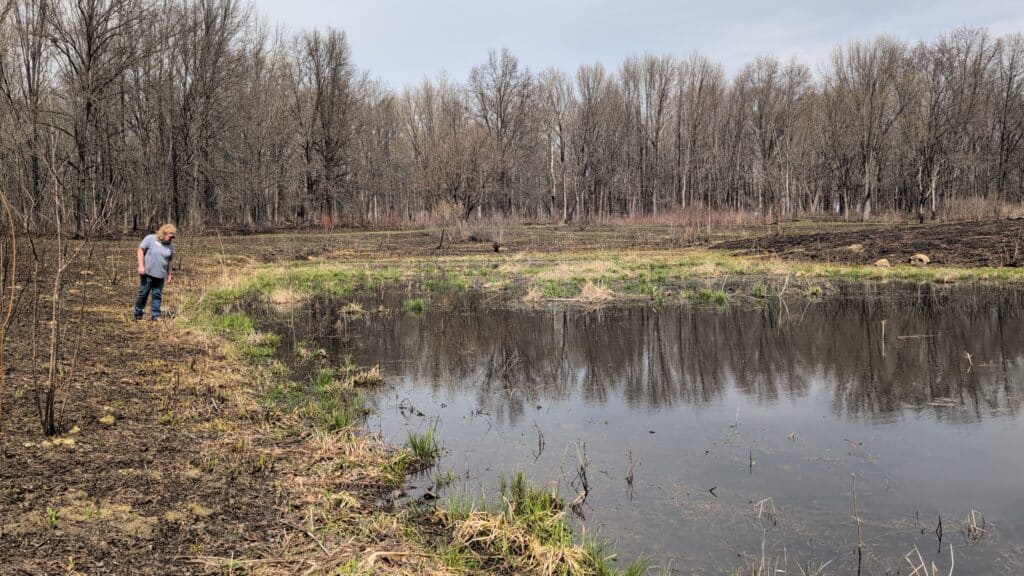
The program trains volunteers to monitor frog calls, by identifying the types of frogs they hear and how dense the population is, Duerksen-Balk said. Is it just one very loud frog calling, or a chorus of several?
“That data is tracked and submitted to a national database,” she added, “so any researcher or municipality or land manager can use that to make educated decisions about land use.”
That data is important, because frogs are an indicator of ecosystem health. They are very sensitive to changes in their environment, according to Duerksen-Balk.
“If you have a sharp decrease in frog species, that’s a good indication that something is going wrong in that watershed,” she said.
Many things can cause frog populations to decline, like habitat loss, deadly fungi, pollution and invasive species. Even large weather events caused by the climate crisis, like the drought that just ended in the region, can have a negative impact on populations, Duerksen-Balk said.
“If frogs have reproduced and then their tadpoles aren’t able to survive in that body of water, there isn’t that generation that year.”
To monitor the frog calls, volunteers find a watershed they can access at night. Frog calls tend to ramp up around dusk, so volunteers are instructed to do their monitoring after sunset.
On a recent Friday night, Connor Ross and Eloise O’Leary headed out to listen for frog calls in Busey Woods in Urbana.
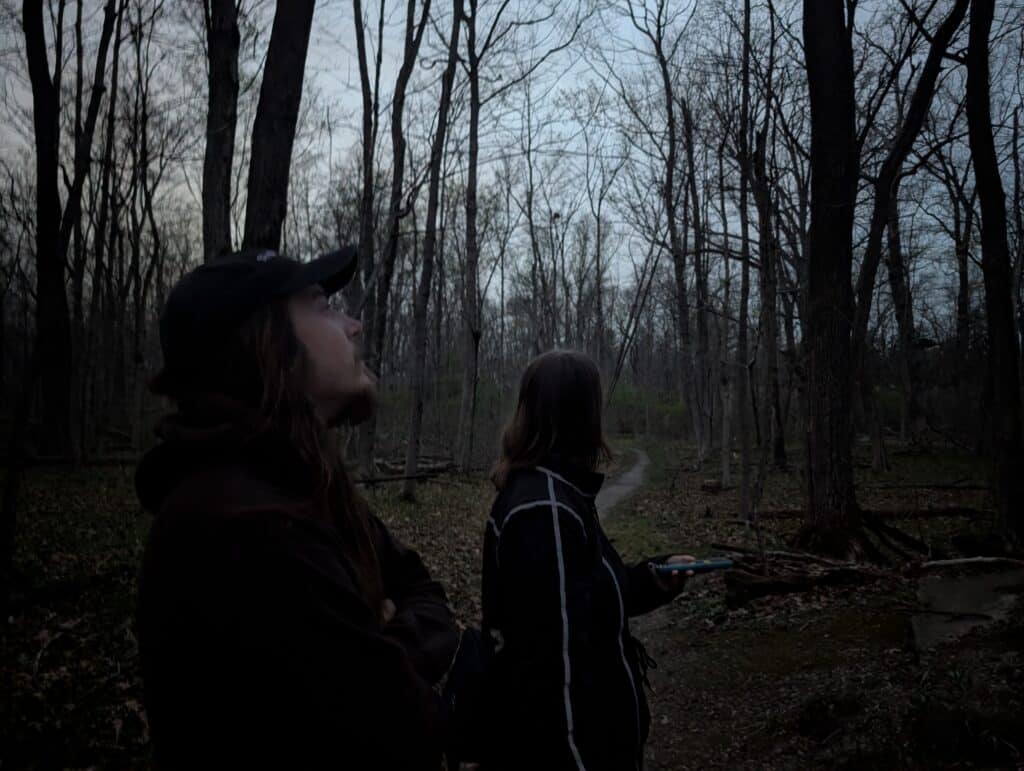
“Taking notes on the weather right now,” Ross said, typing data into his phone.
The pair checked how recently it rained, how strong the wind is and the temperature – all data points that could impact frog activity. Then, they hiked out to a creek to hopefully hear some frogs.
O’Leary pulled up a stopwatch on her phone, and they waited in silence for two minutes. That’s the acclimation period the program mandates, so the frogs and toads can get used to the presence of people.
Then, they stood in silence for another three minutes, the monitoring period all volunteers across the country follow. But that night, they heard no frogs.
Ross and O’Leary think that it could have been too cold or too early in the season for frogs to be at this creek. Or the frogs could have just been quiet while they were there. The data is still important to report, and the two will continue monitoring the creek through this summer.
Before they head out to monitor frogs, volunteers must get trained on the program’s procedures, including memorizing the calls of more than a dozen frog species. About 20 eager volunteers crowded around tables at Homer Lake to start learning at a training session earlier this spring.
“We’ll be learning about the 15 frog species that we have here in East Central Illinois, but also the density of those populations, which is really important,” Karla Griesbaum, the other chapter coordinator with the University of Illinois Extension, said. “That’s something that will indicate how healthy the environment is.”
Duerksen-Balk played each of the calls to help new volunteers memorize them, starting with the green frog.
“Their sound is often described as like a loose banjo string,” she said. “That’s how I remember that’s the green frog. Let me play the call and see what it sounds like to you.”
She pressed play on a laptop, and the slow ribbits of the green frog reverberate around the room.
The key is to associate each frog sound with something else that reminds you of the call, Duerksen-Balk said. That’s exactly what the group did when they practiced with the Blanchard’s cricket frog’s call. Their call sounds less like a traditional frog “ribbit.” The staccato like bursts are more akin to a chirp.
“That one sound like anything that you can describe to anybody?,” Duerksen-Balk asked the volunteers.
“Marbles,” one woman replied.
Duerksen-Balk nodded in agreement. The frog does sound remarkably like a bag of marbles clinking together.
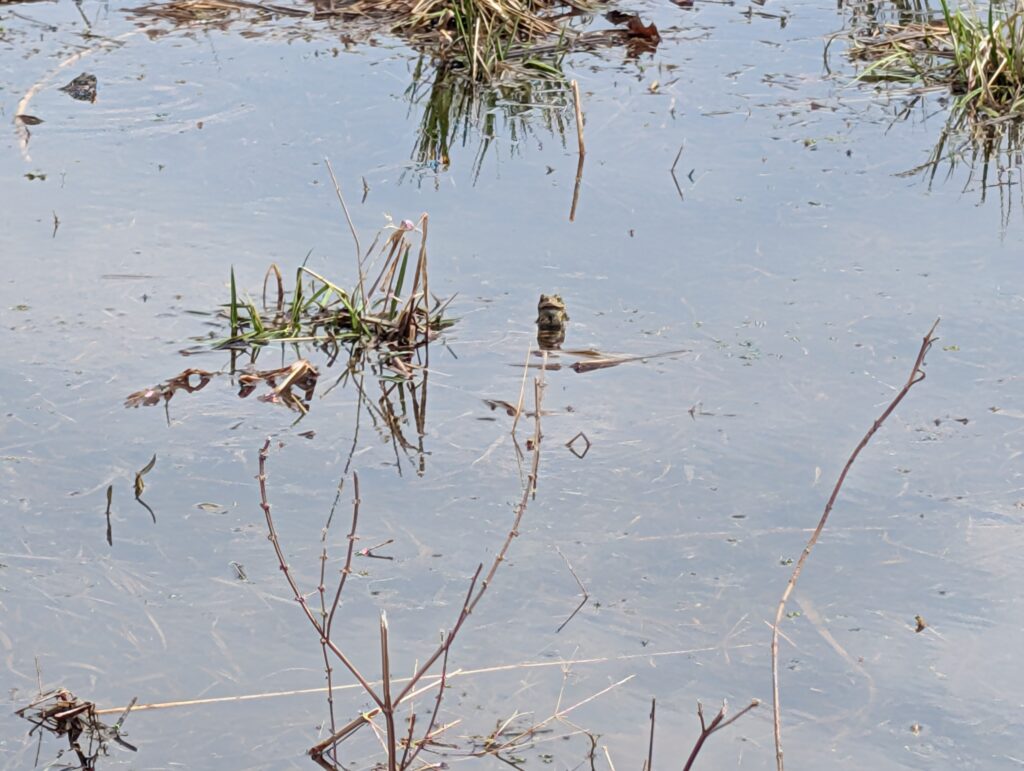
Duerksen-Balk said it’s more important than ever to have this data on frog species,. Many previously abundant species have experienced dramatic population declines in recent years.
“I don’t know of any species that are doing super well right now,” Duerksen-Balk said. “Everything is kind of hanging in there a little bit.”
But with this data, she hopes communities can help to curb population decline.
“Tracking them is really important,” Duerksen-Balk explained, “because we can see the changes in their populations and then maybe start to address some of those threats.”
After all, healthy frog populations are not only a benefit to the environment. They’re also a benefit to humans. Frogs eat insects that can transmit diseases, and researchers are studying compounds in their skin for anti-cancer and anti-HIV properties.
Duerksen-Balk hopes the FrogWatch program will help people better understand how much of an impact these small amphibians have on our ecosystem.