

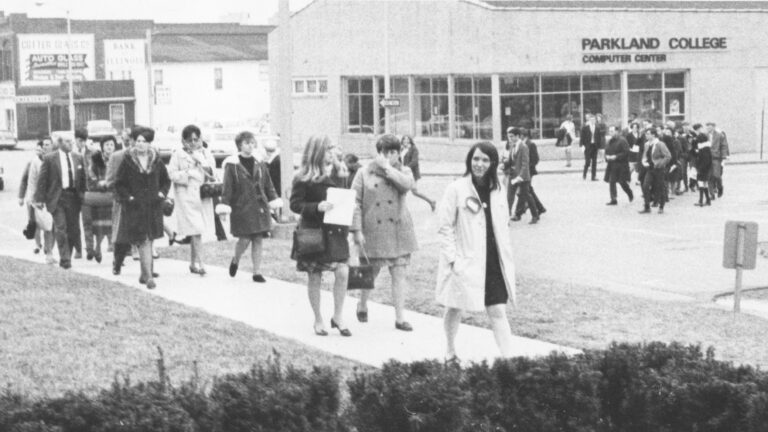
CHAMPAIGN — Parkland College is marking its 60th anniversary this year and taking the opportunity to reflect on decades of growth shaped by the needs of the Champaign-Urbana area.
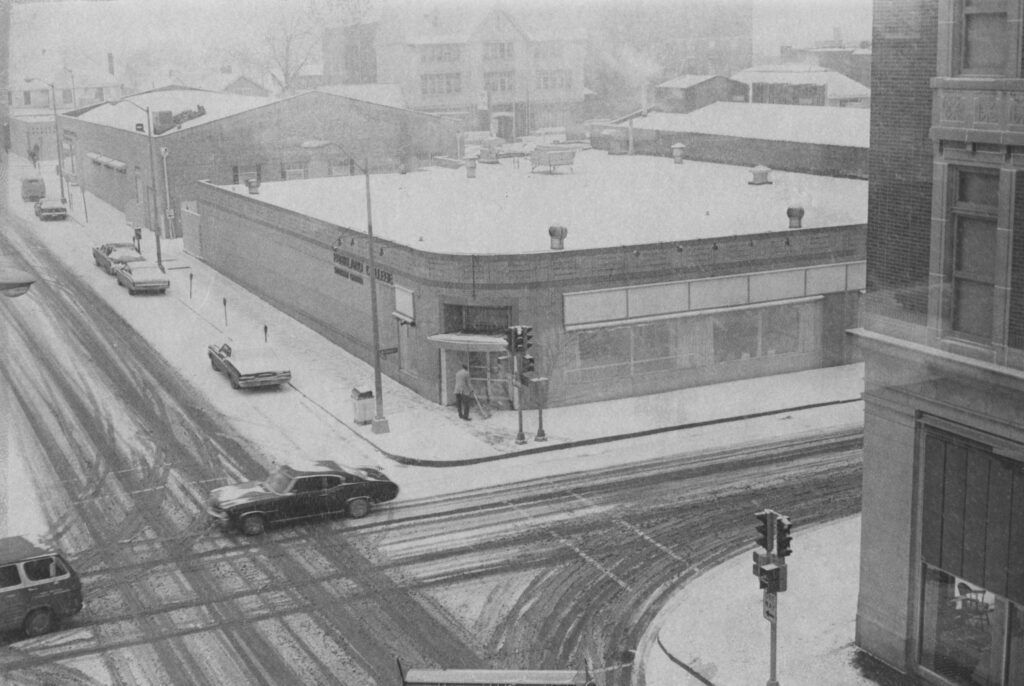
The community college was established in 1966 and, in its first year, enrolled more than 1,300 students who attended classes in leased buildings across downtown Champaign.
Today, the college serves about 9,600 students and offers more than 130 degree and certificate programs.
Amy Penne, an English professor at Parkland College, said one of the defining features of community colleges, and Parkland in particular, is their ability to adapt.
“A community college can move very quickly with times,” Penne said. “There’s a nimbleness about community colleges that doesn’t exist at the university setting.”
Parkland College anniversary celebrations began March 12 with a Day of Giving and will continue throughout the year, ending with the Diamond Jubilee Gala on November 19.
Providing opportunities for education over the years
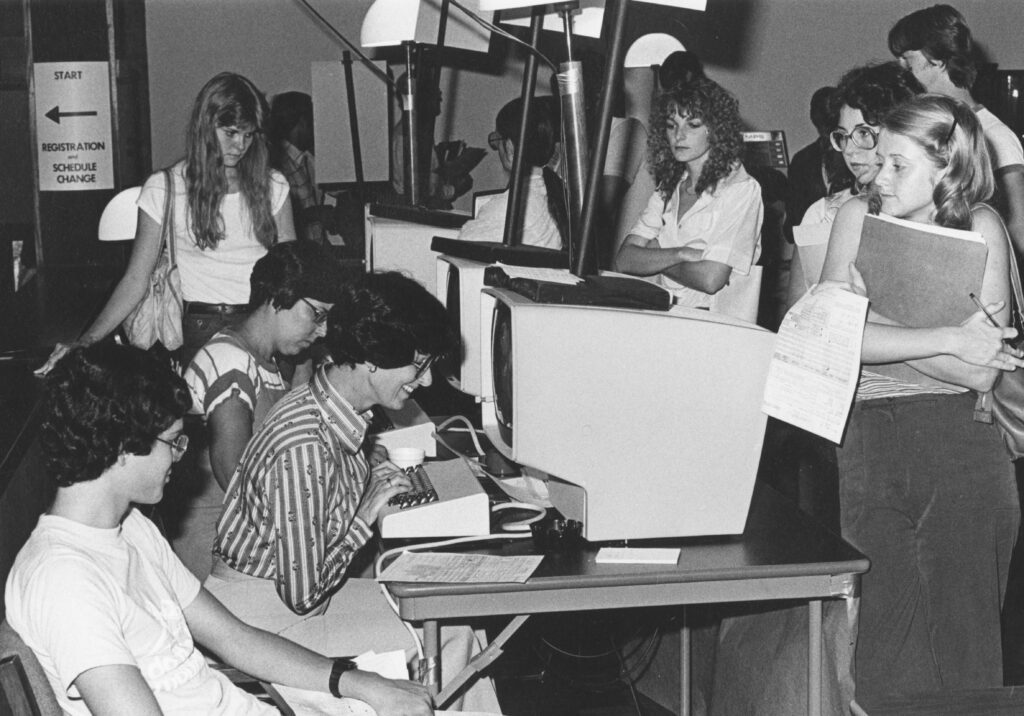
Parkland College’s origins trace back to the early 1960s, when a planning committee identified the need for expanded vocational and technical education in the area. The effort gained momentum after the Illinois Public Community Junior College Act passed on July 15, 1965, allowing communities to establish and fund two-year colleges in the state.
Later that year, a regional steering committee formally proposed the creation of a community college district. Voters approved the referendum on March 12, 1966, marking the founding of Parkland College.
The college opened its doors in the fall of 1967, enrolling 1,338 students. The campus moved to its permanent location on Bradley Avenue in 1973.
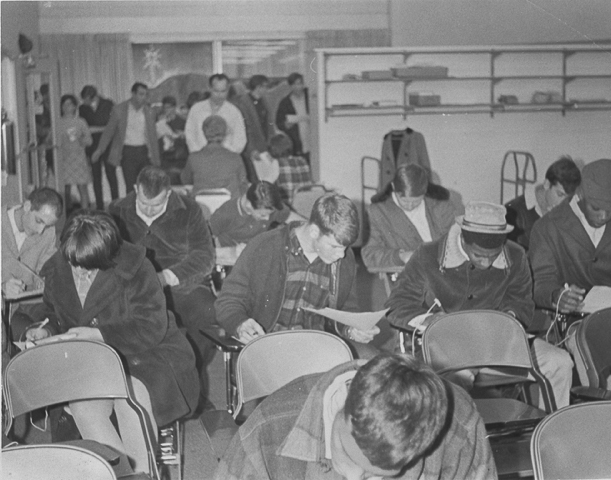
In its early years, the college was rapidly building its foundation — developing curriculum, hiring faculty and planning for a permanent campus, according to Amanda Avery, Parkland’s archivist and learning technologies and collections librarian.
“There was a lot of excitement because of the innovation and just the newness of the concept,” Avery said. “Everybody was kind of buzzing and the faculty were excited, administrators were excited. It was a good atmosphere.”
Avery said that dedicated focus on serving the community has remained consistent ever since. Archival documents and letters depict early efforts of faculty aiming to reach a wide range of students, including veterans, adult learners and recent high school graduates, she said.
“I look at those letters and I’m like, ‘We’re still doing this today,’” Avery said. “We’re still looking at these people and making sure that they are having opportunities that they need to make their lives better.”
Adapting to change to meet the needs of the community
Over time, Parkland expanded its offerings to meet changing workforce and education demands, responding to needs as they arose.
She pointed to the COVID-19 pandemic as an example, when faculty across departments had to quickly shift to online learning.
For hands-on programs like dental hygiene and nursing, Penne said, the change was a big adjustment.
Parkland’s ability to respond quickly to conflict reflects a broader mission and is “a testament to the faculty and the administrators and board members of Parkland that we’re able to pivot and change and adapt so quickly to the needs of the district.”
Community colleges also play a broader role across the state, according to Illinois Community College Board Executive Director Brian Durham.
Durham said community colleges serve a majority of undergraduate students across all sectors in Illinois and provide an affordable option for students who want to stay in their communities.
Institutions like Parkland also serve adult learners and students looking to transfer elsewhere, with statewide agreements allowing general education credits to transfer to four-year universities.
“Community colleges sometimes get lumped into this conversation about the value of higher ed,” Durham said. “But then folks look just a little bit deeper and realize, ‘Hey, I can go there and get whatever kind of training I want and it’s affordable and it’s practical and applicable.’”
As Parkland looks to the future, Penne said its mission remains the same.
“Engaging the community in learning has always been our mission, will always be our mission, and it is something that I know we value and that we’ll keep promoting for the next 60 years,” she said.