


CHAMPAIGN – The City of Champaign is taking steps to amend its municipal code, to more easily allow bike-share programs to operate in the area.
Lily Wilcock, an associate planner with the city of Champaign, has been leading the city’s bike-share initiative since it began in 2017.
“It’s providing such a huge part of the transportation gap for a lot of people, especially if they don’t own a car in our community,” Wilcock said.
Wilcock is drafting language to standardize regulations for electric bike companies like Veo and others that may want to operate in Champaign in the future.
As part of that change, Veo has agreed to expand its geographic region to include areas West of I-57, which will make the e-bikes available to 9,000 additional residents, Wilcock said.
The city expects to finalize the agreement by July.
Damian Vergara, a sophomore at the University of Illinois Urbana-Champaign studying music education, said he uses Veos almost everyday. He said the convenience and speed trump the cost of renting the Veo bikes.
“I’m often almost late to a bunch of rehearsals and they’re just like everywhere,” Vergara said. “It’s pretty convenient.
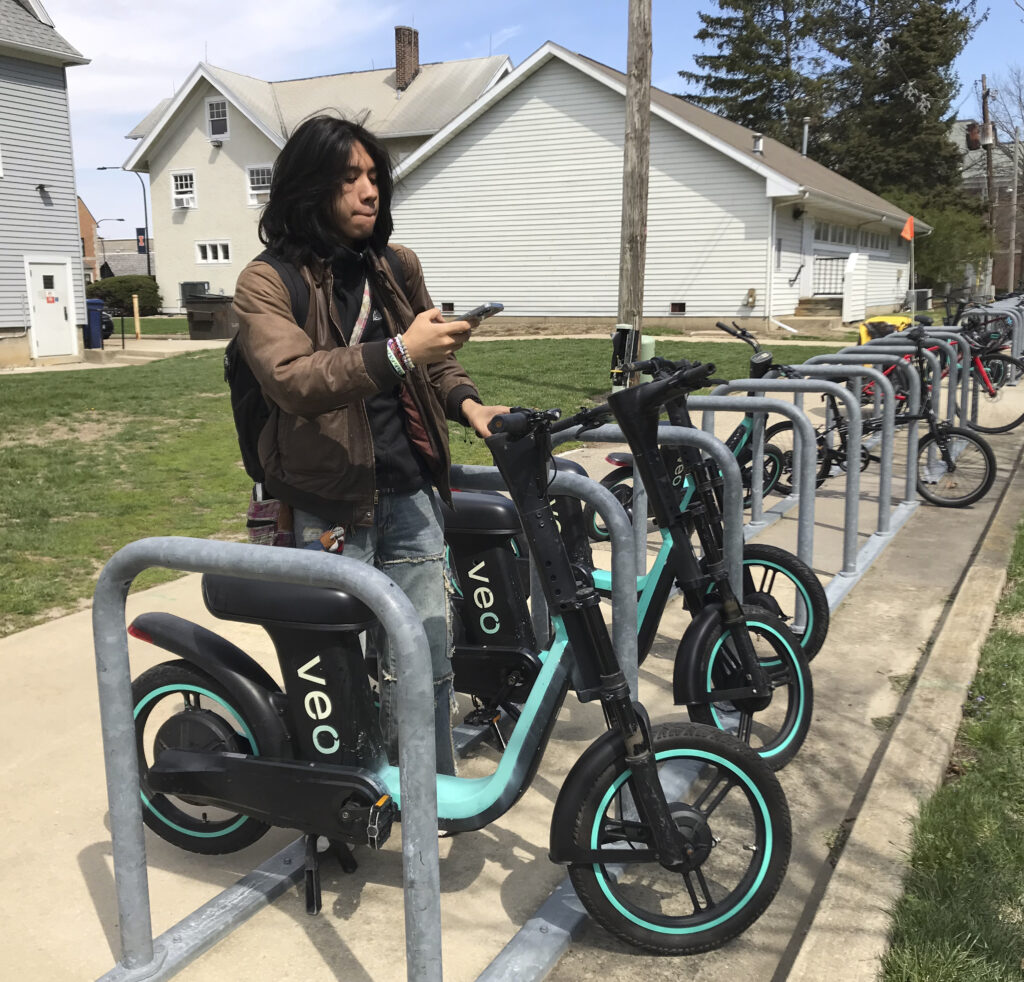
Bike-share companies pay the city a one-time application fee to operate, and then charge users to rent the bikes. Veo e-bikes cost $1 to unlock, plus around 50 cents per minute to ride. Subscription plans are also available for frequent users.
Wilcock said local residents surveyed about why they use Veo’s electric bikes say the number reason is to save money on transportation; But others cited the cost of renting an e-bike as a reason they don’t use them.
Nationwide, Veo users report that their likelihood to choose a scooter or bike over driving increases as gas prices increase, according to Veo’s spring 2026 Rider Survey.
U of I’s campus is relatively condensed compared to the rest of Champaign-Urbana, making it easy for students, in particular, to use Veo’s services, according to Wilcock.
She said rides outside of campus make up 40% of all rides taken.
Veo has been operating in the Champaign-Urbana area since 2018. In 2023, Champaign created a pilot program, which Wilcock said has allowed the city to test out standards and regulations for bike-share operators.
In February, Champaign City Council voted to put those regulations into the city’s code.
Wilcock said many community members have safety concerns regarding the use of the Veo bikes.
“There are plenty of people out there who say e-bikes they’re too fast. They’re dangerous,” she said. “Well, let’s get one thing very abundantly clear: All the data shows that only the most dangerous thing for all bicycle riders is speeding cars.”
The city has many requirements for e-bike companies, she said, including safety regulations that include keeping bikes consistent with Illinois’ Class 2 E-Bike definition, which caps the maximum speed at 20 mph. Veo bikes cap at 15 mph and they have a low center of gravity and wide tires, Wilcock said.
Bike-share companies are also required to share data with the city and residents when requested, and to cap bike fleets at 1,000, which helps incentivize other bike-share companies to operate in the area and offer competition.
Last summer, Veo had its biggest bike fleet in Champaign at around 900 bikes with over 450,000 rides taken, Wilcock said.
“There have always been people who struggle with the cost of living in this community,” Wilcock said. “When you have something where a person can pick one of these up and take it wherever they need to go, regardless of cost, it really could be a lifesaver.”