

CHAMPAIGN — It’s AgTech Week in Champaign-Urbana, a celebration of the community’s ag tech industry centered around the University of Illinois Research Park’s AgTech Summit. This year’s festivities included discussions on artificial intelligence and agriculture, biomanufacturing, sustainable aviation fuel and more.
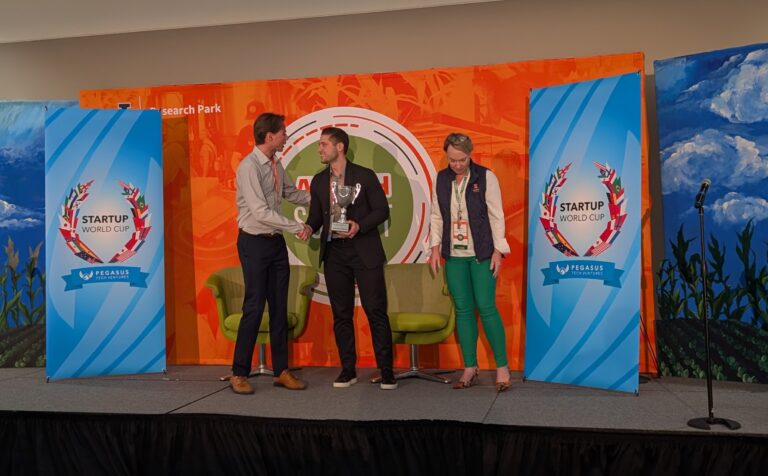
Tuesday’s summit culminated in an ag tech company conducting research at the University of Illinois and winning a regional pitch competition. That paved the way for the company to compete at a national competition later this year.
The winner, C16 Biosciences, creates fats and oils from yeast that can be used in the food, beauty and personal care industries, co-founder David Heller said.
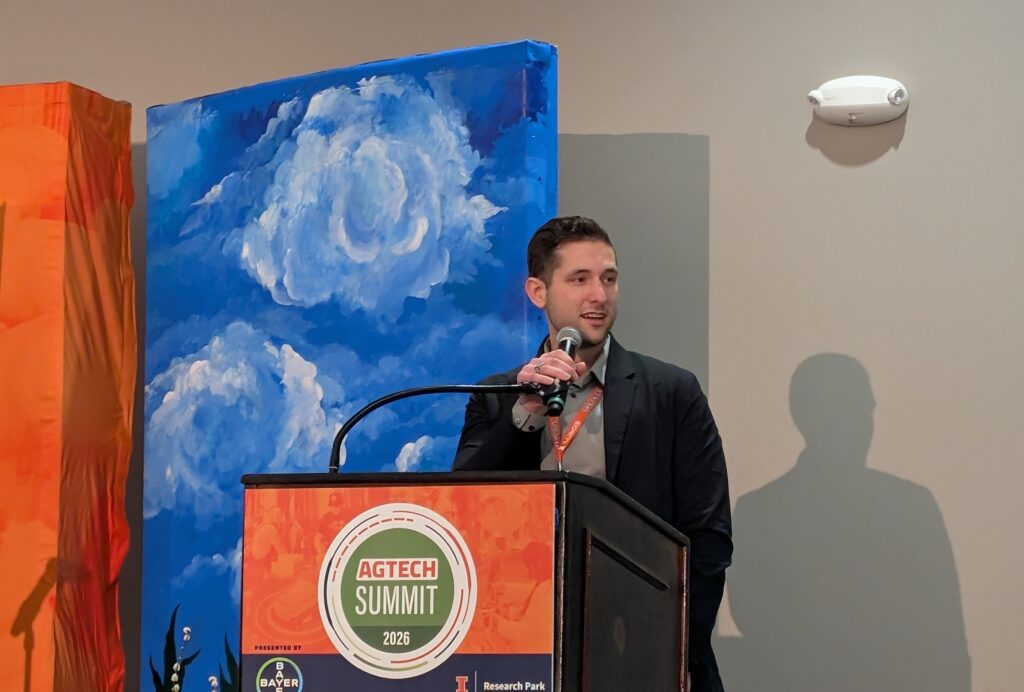
“We can create oils from yeast in scale up fermentations that are not reliant on tropical agriculture and can scale vertically very efficiently,” he explained.
The company’s first commercial ingredient is being used in skincare and cosmetic products across the globe, according to Heller.
“So far we have commercialized our first ingredient, which is called Torula Oil,” he said, “and it comes from our fermentation process.”
The oil is more sustainable and dependable than traditional fats and oils.
“Fats and oils are essential. They’re in so many ingredients and products that we use today across food and personal care,” Heller said. “It’s a huge industry, but the way they’re produced is really reliant on very volatile supply chains across agriculture and chemical manufacturing.”
He’s happy about the recognition the Startup World Cup will give the company.
“Really excited about this because it really shows that one, we’re at a stage that’s really inspiring some confidence in folks in the industry and also two, is showing that we’ve built something pretty exciting.”
The startup is currently working on ingredients that can be used in soaps and detergents, Heller added. That pilot scale work is done at the University of Illinois, and their products are produced nationwide, he said.
The company is heading to the Startup World Cup Grand Finale in San Francisco in November to compete for a $1 million investment.
Congresswoman Nikki Budzinski talks biomanufacturing
Biomanufacturing could be a $200 billion industry in Central Illinois, Congresswoman Nikki Budzinski said.
“It’s taking agricultural waste that in a lot of cases from corn and soybean production that might end up in landfill – repurposing it to make things like yoga pants,” she said.
Speaking at a biomanufacturing summit Wednesday morning, Budzinski said the new sector could help farmers as they’re hurting from the Trump administration’s tariffs.
“It’s helping our growers right here,” she added. “You’re hearing a lot about a struggling farm economy because of some of the closed-off markets that have happened for our corn and soybean growers due to the Trump administration’s proposals.”
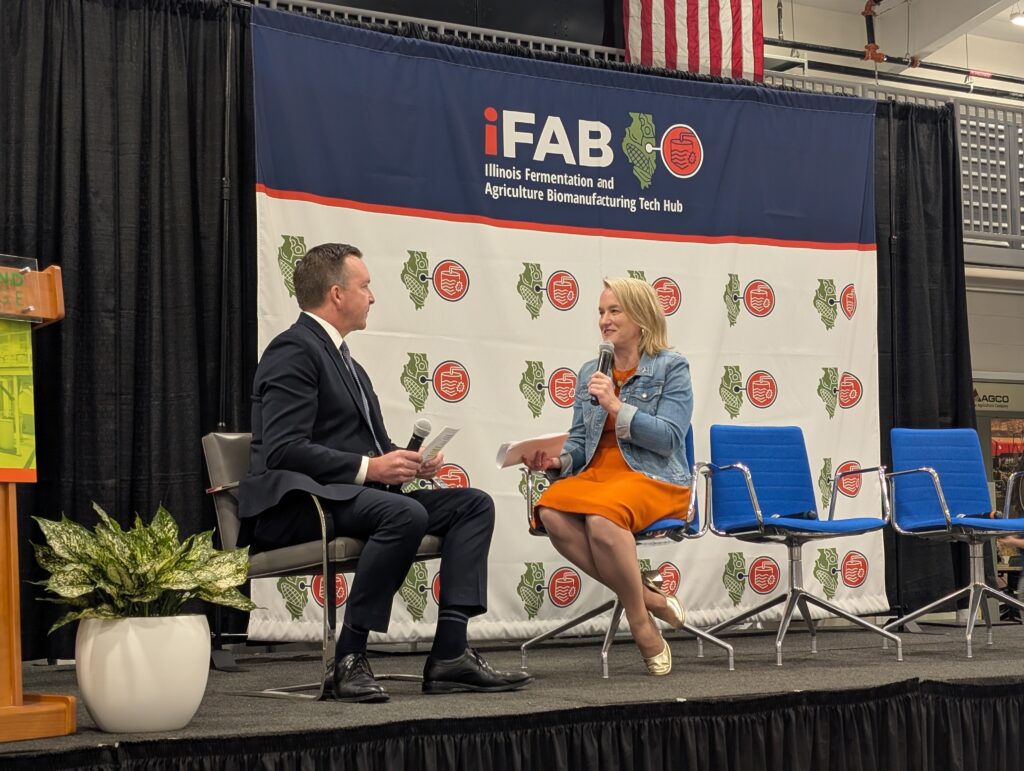
Central Illinois received more than $50 million in federal funding in 2024 through the Tech Hubs program funded by the CHIPS and Science Act. That money is being used to support research at the Fermentation and Agriculture Biomanufacturing Tech Hub on the University of Illinois campus.
“What this means for our community is not just supporting our growers who are really struggling right now in this farm economy but creating new job opportunities for people,” Budzinski said.
Budzinski highlighted the Agricultural Biorefinery Innovation and Opportunity Act that she introduced last year with Congressman Zach Nunn of Iowa.
She referred to it as “a bill that we believe will hopefully invest $100 million additional dollars in opportunities for feedstocks to be utilized to build out biomanufacturing and fermentation.”
“$100 million to 2030, to the year 2030 if we can get this passed,” Budzinski said.
The bill also updates the U.S. Department of Agriculture’s Section 9003 program to expand grants and streamline loan guarantees.